THE ADVENTURE COLLECTIVE® · Independent discovery and booking for outdoor travel

Cross a living Inca bridge made of ichu grass and experience an annual community ritual on a full‑day trip from Cusco. This excursion combines lakeside viewpoints, a dramatic Apurímac gorge, and pre‑Inca and colonial sites.
Cross a living Inca bridge made of ichu grass and experience an annual community ritual on a full‑day trip from Cusco. This excursion combines lakeside viewpoints, a dramatic Apurímac gorge, and pre‑Inca and colonial sites.
You step out of the van and the air feels thinner — a cool, grassy wind pushing along the high puna as the Apurímac river roars somewhere below. The 28‑meter Q'eswachaka bridge strung of ichu grass waits, a living rope of fibers that swings with each footstep and dares you forward.
Verified experiences and guided adventures in the surrounding area.
Operated by Machu Picchu Peru Cusco · Cusco, Cusco Region
You step out of the van and the air feels thinner — a cool, grassy wind pushing along the high puna as the Apurímac river roars somewhere below. The 28‑meter Q'eswachaka bridge strung of ichu grass waits, a living rope of fibers that swings with each footstep and dares you forward.
Built in the Inca era and rebuilt annually by four Quehue communities, Q'eswachaka is more than a crossing; it’s a ritual of engineering and reciprocity. The route from Cusco (about 2–3 hours by car) threads high Andean lakes—Pomacanchi, Asnaqocha and Pampamarca—acidic blue basins cupping the sky, then skirts a small volcanic cone before dropping to the Apurímac gorge. Geology here is sharp: carved basalt and uplifted strata that channel the river and make the bridge’s position strategic for centuries.
Culture is present at every stop — offerings to Pachamama precede the yearly reweaving, and local families maintain the fibers and methods passed down through generations. You’ll visit Rumicolqa, a stone checkpoint modified by successive Andean civilizations, and the ornate interior of Andahuaylillas chapel on the return.
Practically: the day is long (about 12 hours), mostly vehicle time with short walks on uneven, rocky ground at 3,500–3,800 m elevation. Wear sturdy shoes, layer for sun and wind, and acclimatize in Cusco beforehand. Bring small bills for local vendors and show respect for the communities who keep the bridge alive — step lightly, follow your guide, and be ready for one of the most immediate links to living Inca engineering left in the Andes.
moderate.
12 hours.
Suitable for travelers comfortable with a long day at high altitude and short walks on uneven terrain; not strenuous but requires stamina for a full‑day outing.
Expect roughly 2–3 hours each way depending on traffic and road conditions; the full excursion is about 12 hours door‑to‑door.
Yes — locals maintain the bridge and guides control crossings; it sways but is structurally sound if you follow instructions and wear appropriate shoes.
Possibly — the route reaches roughly 3,500–3,800 m; acclimatize in Cusco for 48+ hours and hydrate; those with cardiovascular issues should consult a doctor.
Most organized tours include hotel pickup, lunch and a bilingual guide, plus basic first aid; confirm inclusions when booking.
Q'eswachaka traces to the Inca road network; its annual reweaving by four local communities preserves a pre‑Hispanic maintenance practice tied to Pachamama offerings.
The bridge and ritual are community‑managed; visitors help local economies but should avoid litter, respect fiber bundles and follow guide directions to minimize wear.
Machu Picchu Peru Cusco operates guided outdoor trips and adventures with an emphasis on safety, stewardship, and memorable experiences.
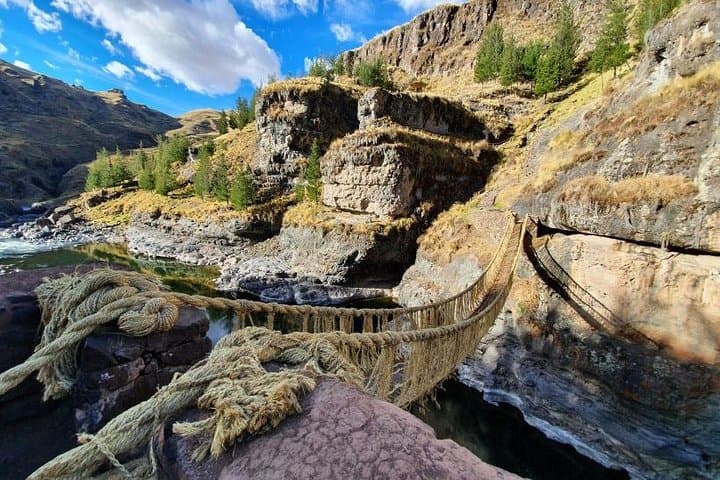
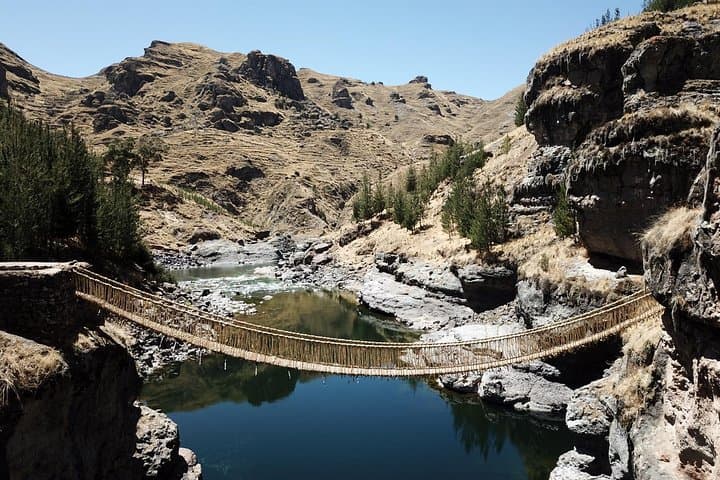
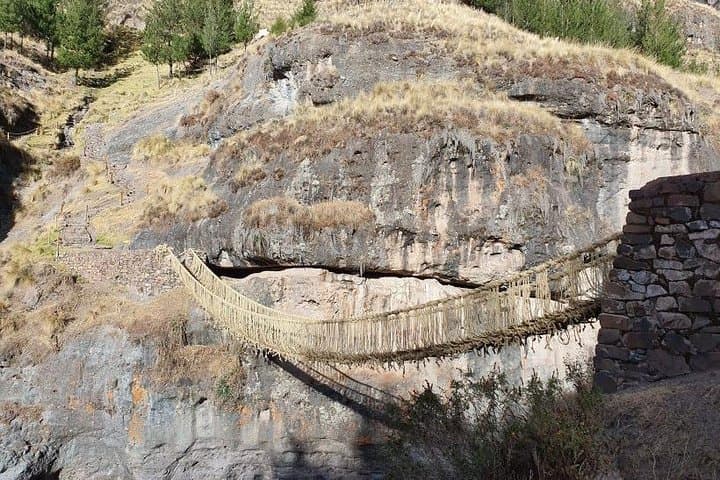
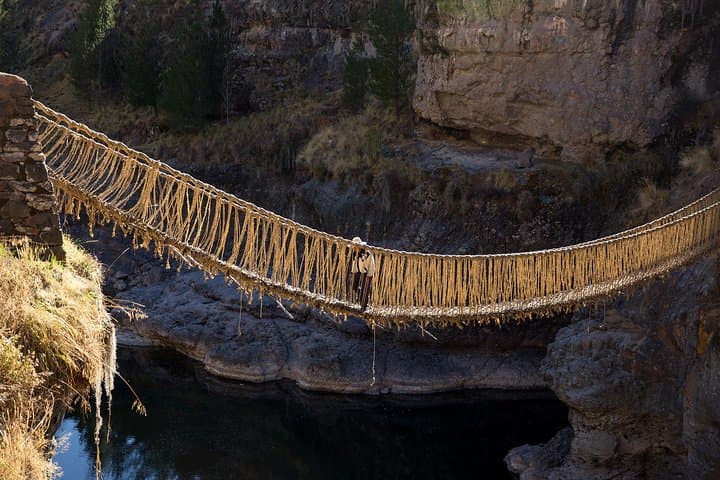
You step out of the van and the air feels thinner — a cool, grassy wind pushing along the high puna as the Apurímac river roars somewhere below. The 28‑meter Q'eswachaka bridge strung of ichu grass waits, a living rope of fibers that swings with each footstep and dares you forward.
You step out of the van and the air feels thinner — a cool, grassy wind pushing along the high puna as the Apurímac river roars somewhere below. The 28‑meter Q'eswachaka bridge strung of ichu grass waits, a living rope of fibers that swings with each footstep and dares you forward.
Built in the Inca era and rebuilt annually by four Quehue communities, Q'eswachaka is more than a crossing; it’s a ritual of engineering and reciprocity. The route from Cusco (about 2–3 hours by car) threads high Andean lakes—Pomacanchi, Asnaqocha and Pampamarca—acidic blue basins cupping the sky, then skirts a small volcanic cone before dropping to the Apurímac gorge. Geology here is sharp: carved basalt and uplifted strata that channel the river and make the bridge’s position strategic for centuries.
Culture is present at every stop — offerings to Pachamama precede the yearly reweaving, and local families maintain the fibers and methods passed down through generations. You’ll visit Rumicolqa, a stone checkpoint modified by successive Andean civilizations, and the ornate interior of Andahuaylillas chapel on the return.
Practically: the day is long (about 12 hours), mostly vehicle time with short walks on uneven, rocky ground at 3,500–3,800 m elevation. Wear sturdy shoes, layer for sun and wind, and acclimatize in Cusco beforehand. Bring small bills for local vendors and show respect for the communities who keep the bridge alive — step lightly, follow your guide, and be ready for one of the most immediate links to living Inca engineering left in the Andes.