THE ADVENTURE COLLECTIVE® · Independent discovery and booking for outdoor travel

An eight-hour private drive through Qatar’s northwest: visit Al Zubara Fort, walk mangrove-lined Purple Island, see wind-sculpted rock formations and Richard Serra’s desert sculpture. Expect multiple short walks, wildlife glimpses and a strong dose of coastal and desert geology.
An eight-hour private drive through Qatar’s northwest: visit Al Zubara Fort, walk mangrove-lined Purple Island, see wind-sculpted rock formations and Richard Serra’s desert sculpture. Expect multiple short walks, wildlife glimpses and a strong dose of coastal and desert geology.
You step out of the air-conditioned vehicle into a sun-baked panorama where stone and salt meet the sea.
The day moves in chapters: a fort that once watched pearlers, a mangrove island where tides tug at the shoreline, wind-carved rock outcrops, and a lone monumental steel sculpture set against desert horizons.
Verified experiences and guided adventures in the surrounding area.
Operated by Monster Adventures Qatar · Doha, Ad Dawhah
You step out of the air-conditioned vehicle into a sun-baked panorama where stone and salt meet the sea.
The day moves in chapters: a fort that once watched pearlers, a mangrove island where tides tug at the shoreline, wind-carved rock outcrops, and a lone monumental steel sculpture set against desert horizons.
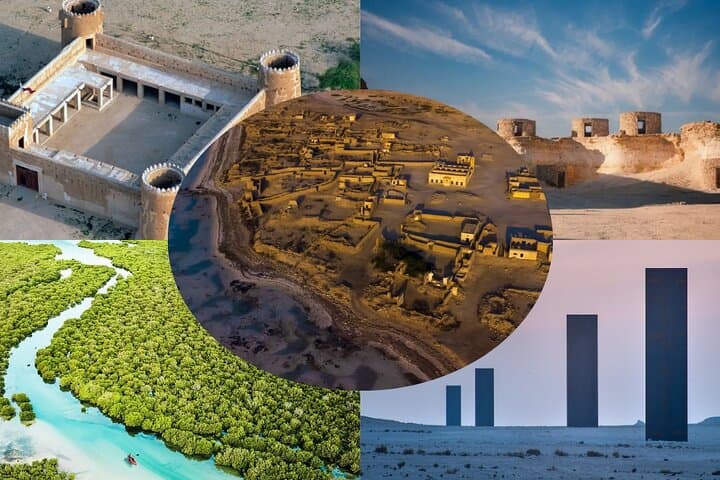
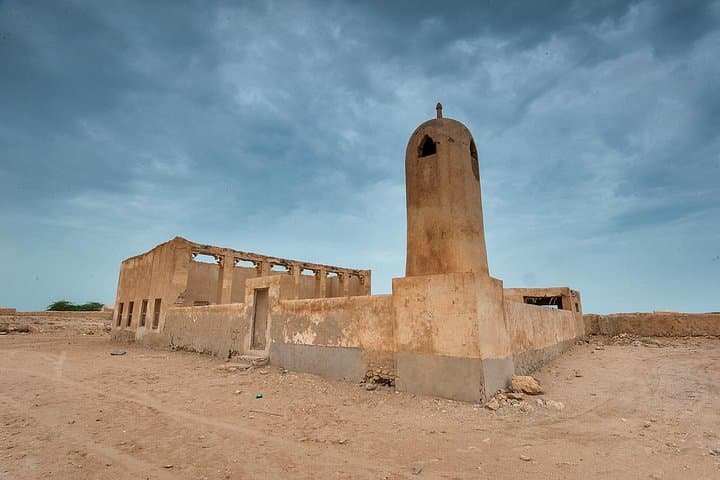
Al Zubara Fort reads like a ledger of Qatar’s trade and defense — compact limestone walls, narrow towers and the grid of an abandoned town nearby that speak to a once-thriving pearling economy and 18th–19th century settlement patterns.
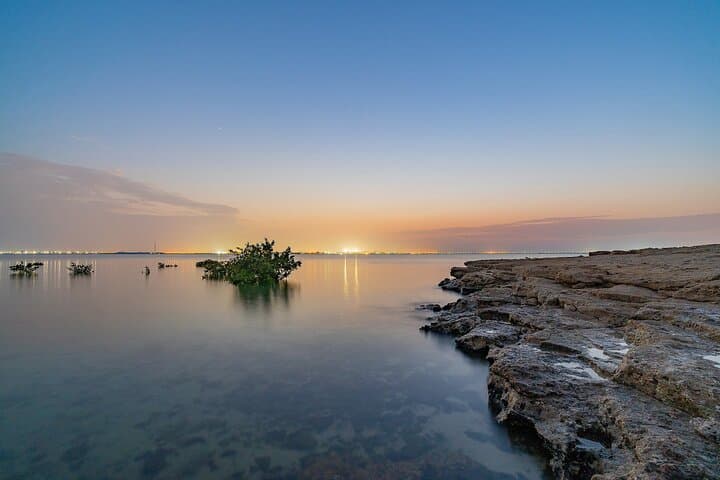
Purple Island (Jazirat Bin Ghannam) offers a contrasting ecology: mangrove fringes, tidal flats, and coastal birdlife rooted in soft soils and seawater.
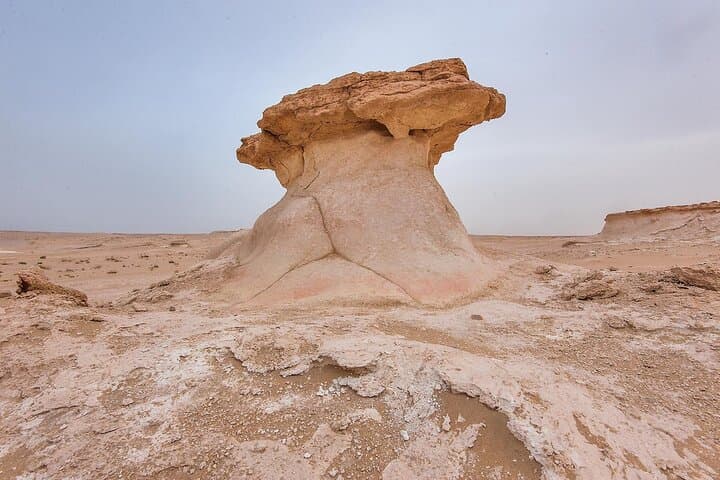
Further west the landscape turns sculptural — quartz and limestone ridges smoothed by wind, and Richard Serra’s large-scale work interrupts the desert with industrial gravity, inviting visitors to walk its planes.
Practical guidance: this private, full-day tour runs about eight hours with multiple short walks (most stops 45–90 minutes) and long drives between sites. Wear breathable, sun-protective clothing, sturdy walking shoes for rubble and shoreline mud, and bring water and sun protection; mid-summer temperatures can be extreme. Respect archaeological zones and local customs — modest dress is expected at cultural sites.
Expect mostly easy walking with uneven terrain and shallow mud at mangrove edges. Photography windows are frequent; plan for early mornings or late afternoons to avoid harsh light and the heat spike. The mix of history, geology, and coastal ecology makes this a compact primer to Qatar’s lesser-seen northwest.
easy.
8 hours.
Suitable for most fitness levels; involves multiple short walks (up to 90 minutes) and periods in a vehicle
No — the tour is suitable for all fitness levels with mostly short, easy walks and vehicle transfers between sites.
Admissions vary by provider; check your booking details but guided visits typically include walking the fort exterior and nearby archaeological viewing areas.
Yes — Purple Island mangroves attract shorebirds and small coastal life; sightings depend on season and tide.
Basic facilities and bottled water are usually provided; bring snacks if you prefer specific dietary options and expect limited services at remote stops.
Al Zubara was a maritime trading and pearling center in the 18th–19th centuries; its fort overlooked a settlement laid out in a rectilinear pattern now preserved as archaeological remains.
Mangrove and archaeological zones are sensitive — stay on designated paths, avoid disturbing wildlife, and follow guide instructions to minimize impact.
Monster Adventures Qatar operates guided outdoor trips and adventures with an emphasis on safety, stewardship, and memorable experiences.
You step out of the air-conditioned vehicle into a sun-baked panorama where stone and salt meet the sea.
The day moves in chapters: a fort that once watched pearlers, a mangrove island where tides tug at the shoreline, wind-carved rock outcrops, and a lone monumental steel sculpture set against desert horizons.
You step out of the air-conditioned vehicle into a sun-baked panorama where stone and salt meet the sea.
The day moves in chapters: a fort that once watched pearlers, a mangrove island where tides tug at the shoreline, wind-carved rock outcrops, and a lone monumental steel sculpture set against desert horizons.
Al Zubara Fort reads like a ledger of Qatar’s trade and defense — compact limestone walls, narrow towers and the grid of an abandoned town nearby that speak to a once-thriving pearling economy and 18th–19th century settlement patterns.
Purple Island (Jazirat Bin Ghannam) offers a contrasting ecology: mangrove fringes, tidal flats, and coastal birdlife rooted in soft soils and seawater.
Further west the landscape turns sculptural — quartz and limestone ridges smoothed by wind, and Richard Serra’s large-scale work interrupts the desert with industrial gravity, inviting visitors to walk its planes.
Practical guidance: this private, full-day tour runs about eight hours with multiple short walks (most stops 45–90 minutes) and long drives between sites. Wear breathable, sun-protective clothing, sturdy walking shoes for rubble and shoreline mud, and bring water and sun protection; mid-summer temperatures can be extreme. Respect archaeological zones and local customs — modest dress is expected at cultural sites.
Expect mostly easy walking with uneven terrain and shallow mud at mangrove edges. Photography windows are frequent; plan for early mornings or late afternoons to avoid harsh light and the heat spike. The mix of history, geology, and coastal ecology makes this a compact primer to Qatar’s lesser-seen northwest.