THE ADVENTURE COLLECTIVE® · Independent discovery and booking for outdoor travel

A private four-hour drive from Doha brings the raw limestone of Zekreet, Richard Serra’s monumental desert sculptures, and the theatrical spectacle of camel racing at Al Shahaniya. This concise guide explains what to expect, practical tips and local insights for an efficient, inspiring half-day outing.
A private four-hour drive from Doha brings the raw limestone of Zekreet, Richard Serra’s monumental desert sculptures, and the theatrical spectacle of camel racing at Al Shahaniya. This concise guide explains what to expect, practical tips and local insights for an efficient, inspiring half-day outing.
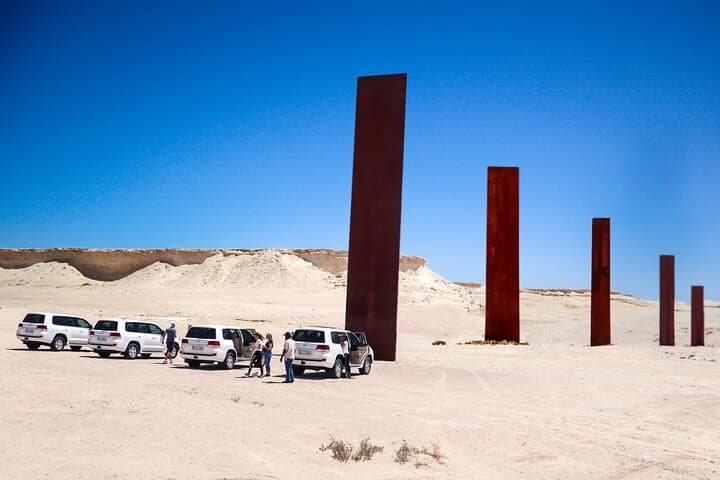
The road west from Doha quickly sheds city glass for wind-sculpted limestone and a horizon that seems to move on its own. On this four-hour circuit, a private vehicle carries travelers across salt-flat flats and scrub to Ras Abrouq (Zekreet), where Richard Serra’s East–West/West–East steel plates rise like a deliberate interruption in the desert.
Verified experiences and guided adventures in the surrounding area.
Operated by Qatar International Tours · Doha, Doha
The road west from Doha quickly sheds city glass for wind-sculpted limestone and a horizon that seems to move on its own. On this four-hour circuit, a private vehicle carries travelers across salt-flat flats and scrub to Ras Abrouq (Zekreet), where Richard Serra’s East–West/West–East steel plates rise like a deliberate interruption in the desert.
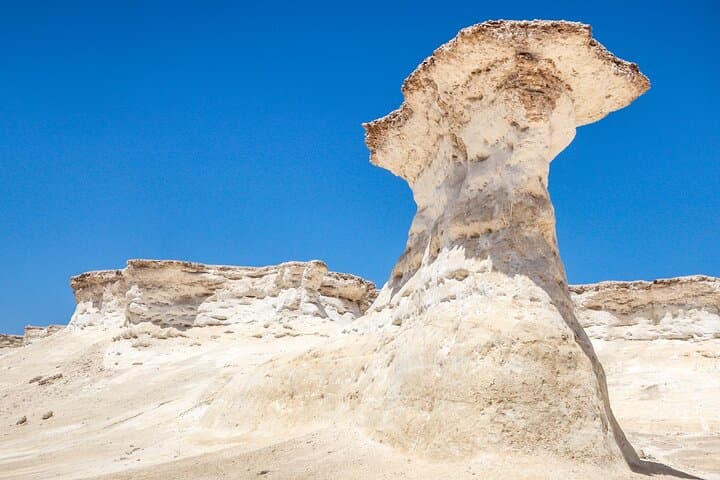
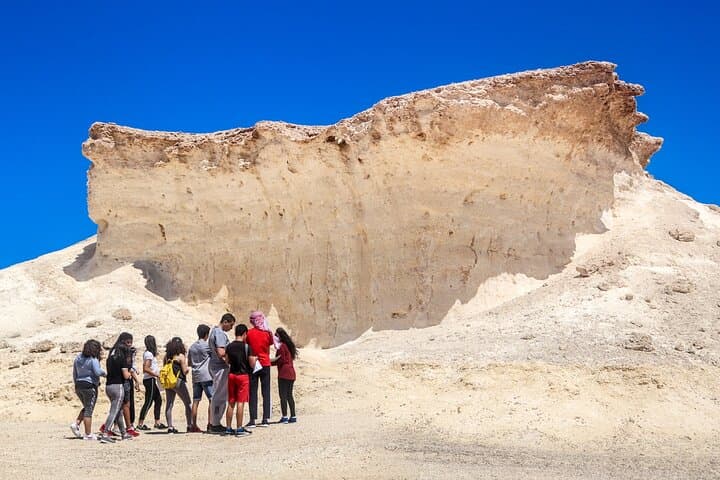
The region’s geology is raw: uplifted limestone, ancient marine terraces and eroded gypsum that give cliffs and hummocks hard edges and surprising curves. Human history here moves from pearling and nomadic grazing to oil-era industry; recent public art and modest visitor infrastructure layer contemporary culture over long-standing desert life. At Al Shahaniya an arena of cheering locals and robot jockeys keeps the camel-racing tradition alive, a modern twist on an old skill.
Expect short walks on compact sand and jagged rock to reach viewpoints, close-up looks at Serra’s four massive plates that frame the sky, and quick stops at an umbrella-shaped stone hut on a knoll. The landscape presses against you — wind pushes, gullies invite inspection, and the oryx may pause to watch.
Practical guidance: depart mid-morning to avoid peak heat, wear closed shoes for rocky surfaces, and carry sun protection and at least 1.5–2 liters of water per person. Photography is outstanding in late afternoon when low light increases contrast on steel and stone; follow local rules around protected areas, don’t climb sculptures, and keep to designated tracks to protect fragile desert crust.
easy.
4 hours.
Minimal fitness required; mostly vehicle-based with short, easy walks on uneven ground
Yes; the tour includes pick up and drop off within Doha—confirm pickup location when booking.
Restrooms are limited near desert sites; plan ahead and use facilities in Doha before leaving or at larger stops like Al Shahaniya.
Visitors can walk near the plates to view them, but climbing is prohibited to protect the art and for safety.
Yes; the tour is family-friendly, but infants must sit on an adult’s lap and parents should manage sun exposure and hydration.
The west coast marks older marine terraces and was a seasonal area for fishermen and nomads; modern art installations and camel racing reflect contemporary cultural layers.
Brouq/Ras Abrouq is sensitive: stick to tracks to prevent desert crust damage, pack out all waste, and avoid disturbing wildlife to support ongoing conservation.
Qatar International Tours operates guided outdoor trips and adventures with an emphasis on safety, stewardship, and memorable experiences.
The road west from Doha quickly sheds city glass for wind-sculpted limestone and a horizon that seems to move on its own. On this four-hour circuit, a private vehicle carries travelers across salt-flat flats and scrub to Ras Abrouq (Zekreet), where Richard Serra’s East–West/West–East steel plates rise like a deliberate interruption in the desert.
The road west from Doha quickly sheds city glass for wind-sculpted limestone and a horizon that seems to move on its own. On this four-hour circuit, a private vehicle carries travelers across salt-flat flats and scrub to Ras Abrouq (Zekreet), where Richard Serra’s East–West/West–East steel plates rise like a deliberate interruption in the desert.
The region’s geology is raw: uplifted limestone, ancient marine terraces and eroded gypsum that give cliffs and hummocks hard edges and surprising curves. Human history here moves from pearling and nomadic grazing to oil-era industry; recent public art and modest visitor infrastructure layer contemporary culture over long-standing desert life. At Al Shahaniya an arena of cheering locals and robot jockeys keeps the camel-racing tradition alive, a modern twist on an old skill.
Expect short walks on compact sand and jagged rock to reach viewpoints, close-up looks at Serra’s four massive plates that frame the sky, and quick stops at an umbrella-shaped stone hut on a knoll. The landscape presses against you — wind pushes, gullies invite inspection, and the oryx may pause to watch.
Practical guidance: depart mid-morning to avoid peak heat, wear closed shoes for rocky surfaces, and carry sun protection and at least 1.5–2 liters of water per person. Photography is outstanding in late afternoon when low light increases contrast on steel and stone; follow local rules around protected areas, don’t climb sculptures, and keep to designated tracks to protect fragile desert crust.