THE ADVENTURE COLLECTIVE® · Independent discovery and booking for outdoor travel

Explore Qasr Al Watan’s grand halls, ornate domes and cultural exhibits with a private transfer from Abu Dhabi. This 2–3 hour visit unpacks modern Emirati statecraft, craftsmanship and curated palace history.
Explore Qasr Al Watan’s grand halls, ornate domes and cultural exhibits with a private transfer from Abu Dhabi. This 2–3 hour visit unpacks modern Emirati statecraft, craftsmanship and curated palace history.
A low-drive arrives at the palace gates and the city exhales — the Arabian Gulf’s breeze threads between columns as you step toward Qasr Al Watan’s vast façade. Inside, domes curve overhead like polished shells, light pooling on carved plaster and gilded halls that once staged statecraft and now open their doors to the public.
Verified experiences and guided adventures in the surrounding area.
Operated by Muhammad Rafiq Faisal · Abu Dhabi, Abu Dhabi
A low-drive arrives at the palace gates and the city exhales — the Arabian Gulf’s breeze threads between columns as you step toward Qasr Al Watan’s vast façade. Inside, domes curve overhead like polished shells, light pooling on carved plaster and gilded halls that once staged statecraft and now open their doors to the public.
Built as part of the presidential complex and opened to visitors in 2019, Qasr Al Watan blends contemporary Emirati ambition with traditional Islamic craftsmanship. Marble floors, inlaid ceilings and a library housing rare regional manuscripts tell a recent story of nation-building; the palace’s rooms showcase governance, cultural values and the UAE’s diplomatic history.
Geologically the site sits on Abu Dhabi island’s coastal plain; the surrounding shoreline and man-made promenades cue the city’s relationship with the sea, while landscaped gardens offer contrast to the formal interior architecture. Local artisans contributed intricate woodwork, mosaic and metal detailing — a practical lesson in living crafts preserved through state patronage.
Practical guidance: allow roughly 2–3 hours to move steadily through the halls and exhibits; guided commentary deepens context but independent exploration is easy. Dress modestly (shoulders and knees covered) and carry a water bottle — the air-conditioned spaces are cool but the walk between buildings can be warm. Photography is allowed in most public areas but restricted in select exhibits; follow signage. The site is wheelchair accessible and family-friendly; book transfers that align with opening hours to avoid peak crowds. Whether you’re here for architecture, culture, or a concise primer on modern UAE identity, Qasr Al Watan offers a clear, memorable window into the nation.
easy.
2–3 hours.
Suitable for all fitness levels; involves moderate walking on flat, accessible surfaces
Plan 2–3 hours to cover main halls, exhibits and the palace library at a relaxed pace.
Yes—shoulders and knees should be covered; minimal head coverings are recommended for women in some ceremonial spaces.
Yes; Qasr Al Watan is wheelchair accessible with ramps and accessible surfaces throughout public areas.
Photography is allowed in most public areas but some exhibits are restricted—follow posted signs and staff instructions.
Opened to the public in 2019, Qasr Al Watan is part of the presidential complex and reflects the UAE’s modern governance and investment in cultural presentation.
Visitors are asked to stay on designated paths, avoid touching artefacts and dispose of waste properly; the site manages conservation through controlled access and staff monitoring.
Muhammad Rafiq Faisal operates guided outdoor trips and adventures with an emphasis on safety, stewardship, and memorable experiences.
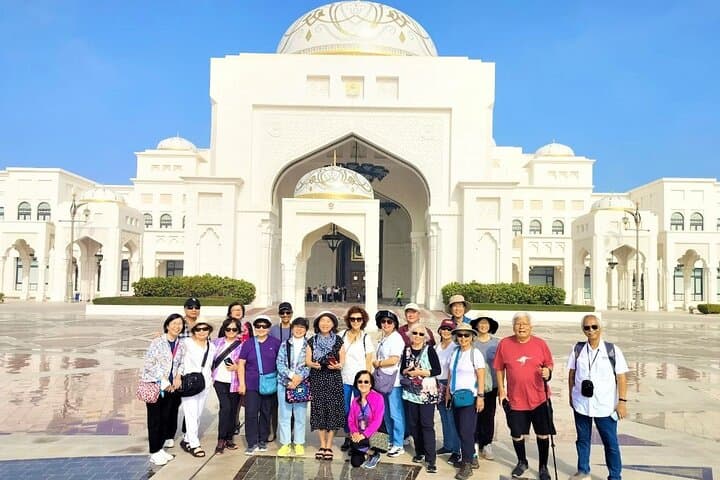
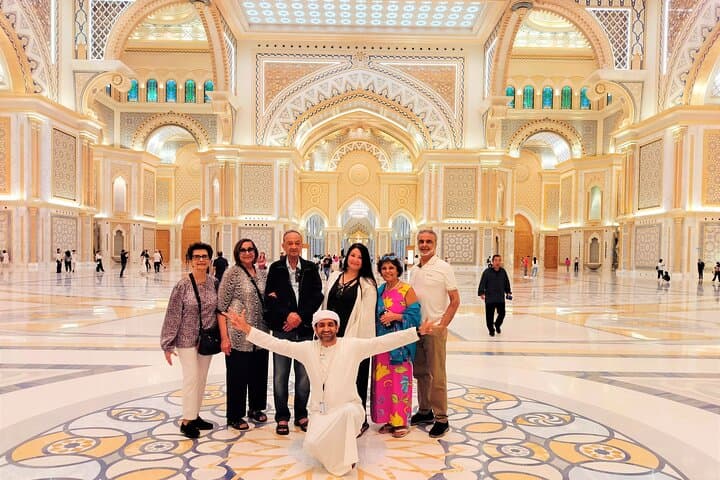
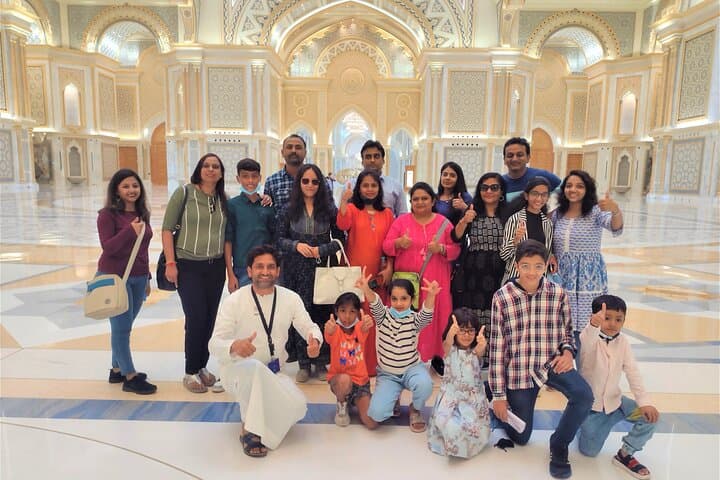
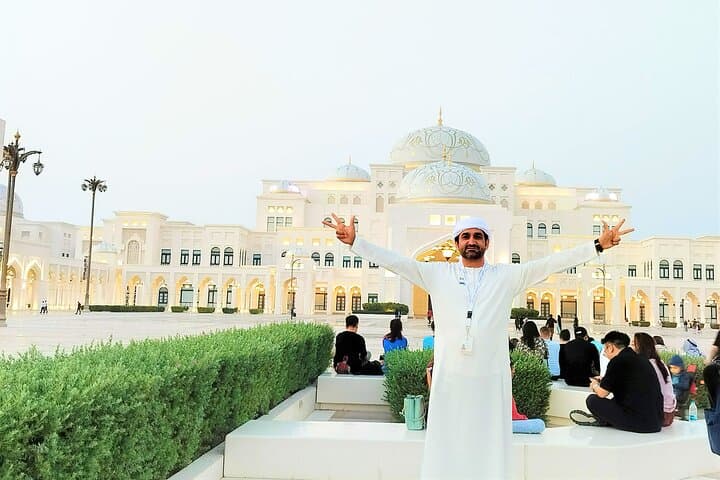
A low-drive arrives at the palace gates and the city exhales — the Arabian Gulf’s breeze threads between columns as you step toward Qasr Al Watan’s vast façade. Inside, domes curve overhead like polished shells, light pooling on carved plaster and gilded halls that once staged statecraft and now open their doors to the public.
A low-drive arrives at the palace gates and the city exhales — the Arabian Gulf’s breeze threads between columns as you step toward Qasr Al Watan’s vast façade. Inside, domes curve overhead like polished shells, light pooling on carved plaster and gilded halls that once staged statecraft and now open their doors to the public.
Built as part of the presidential complex and opened to visitors in 2019, Qasr Al Watan blends contemporary Emirati ambition with traditional Islamic craftsmanship. Marble floors, inlaid ceilings and a library housing rare regional manuscripts tell a recent story of nation-building; the palace’s rooms showcase governance, cultural values and the UAE’s diplomatic history.
Geologically the site sits on Abu Dhabi island’s coastal plain; the surrounding shoreline and man-made promenades cue the city’s relationship with the sea, while landscaped gardens offer contrast to the formal interior architecture. Local artisans contributed intricate woodwork, mosaic and metal detailing — a practical lesson in living crafts preserved through state patronage.
Practical guidance: allow roughly 2–3 hours to move steadily through the halls and exhibits; guided commentary deepens context but independent exploration is easy. Dress modestly (shoulders and knees covered) and carry a water bottle — the air-conditioned spaces are cool but the walk between buildings can be warm. Photography is allowed in most public areas but restricted in select exhibits; follow signage. The site is wheelchair accessible and family-friendly; book transfers that align with opening hours to avoid peak crowds. Whether you’re here for architecture, culture, or a concise primer on modern UAE identity, Qasr Al Watan offers a clear, memorable window into the nation.