THE ADVENTURE COLLECTIVE® · Independent discovery and booking for outdoor travel

Combine a visit to Qasr Al Watan’s ceremonial halls with the Louvre Abu Dhabi’s galleries on Saadiyat Island. This combo ticket pairs statecraft and global art in a compact half-day itinerary with timed entries and security screenings.
Combine a visit to Qasr Al Watan’s ceremonial halls with the Louvre Abu Dhabi’s galleries on Saadiyat Island. This combo ticket pairs statecraft and global art in a compact half-day itinerary with timed entries and security screenings.
You step from the sun-drenched forecourt into a cool hush: Qasr Al Watan’s carved arches frame chandeliers and corridors that speak of modern nationhood. Two hours later you’re tracing pools of light beneath Jean Nouvel’s perforated dome at the Louvre Abu Dhabi, where the roof’s lattice lets the sky fall into galleries like scattered gold.
Verified experiences and guided adventures in the surrounding area.
Operated by STAR ROYAL FALCON · Abu Dhabi, Abu Dhabi
You step from the sun-drenched forecourt into a cool hush: Qasr Al Watan’s carved arches frame chandeliers and corridors that speak of modern nationhood. Two hours later you’re tracing pools of light beneath Jean Nouvel’s perforated dome at the Louvre Abu Dhabi, where the roof’s lattice lets the sky fall into galleries like scattered gold.
Qasr Al Watan opened in 2019 as more than a ceremonial palace — it’s a working cultural institution that presents Emirati governance, crafts, and state rooms. The Louvre Abu Dhabi, inaugurated in 2017 through a cultural agreement with France, stitches global art histories into one sequence of rooms and outdoor promenades on Saadiyat Island. Geologically the islands are flat and coastal; urban roads and short drives (expect roughly 10 km or 15–20 minutes between sites) link them, not hikes or climbs. Culturally, both sites emphasize storytelling: Qasr through heritage and ceremony, the Louvre through cross-cultural collections and contemporary curation.
Practical edge: buy timed entries, allow extra time for security screening, and plan travel between sites outside peak traffic. Mornings are quieter at Qasr Al Watan; late afternoons are ideal at the Louvre when the dome’s lightplay is most dramatic. Dress conservatively for Qasr Al Watan and carry water for brief outdoor stretches. These two stops make a compact half-day of institutional architecture, curated objects, and the measured pace of Abu Dhabi’s cultural district.
easy.
4 hours.
Minimal physical exertion; suitable for all fitness levels but involves standing and walking on flat indoor surfaces
No; the package provides entry for the scheduled time but both sites have security screening—timed tickets reduce waiting but do not guarantee bypassing queues.
Photography policies vary by gallery—general photography is allowed in many public spaces at the Louvre Abu Dhabi but not in some temporary exhibitions; Qasr Al Watan allows photos in most public areas but prohibits flash and tripods in formal state rooms.
Yes; both Qasr Al Watan and the Louvre Abu Dhabi offer level access, elevators, and accessible restrooms. Contact the venues ahead for specific assistance needs.
Allocate about 2 hours per site (4 hours total) to move at a relaxed pace, with additional time for security checks, travel, and any temporary exhibitions you want to see.
Qasr Al Watan opened to the public in 2019 as a working palace and cultural site; the Louvre Abu Dhabi opened in 2017 following a long-term cultural agreement with France and is designed by architect Jean Nouvel.
Saadiyat Island hosts marine conservation efforts for nesting sea turtles and coastal habitats, and both institutions run educational programs on heritage preservation and sustainable tourism.
STAR ROYAL FALCON operates guided outdoor trips and adventures with an emphasis on safety, stewardship, and memorable experiences.
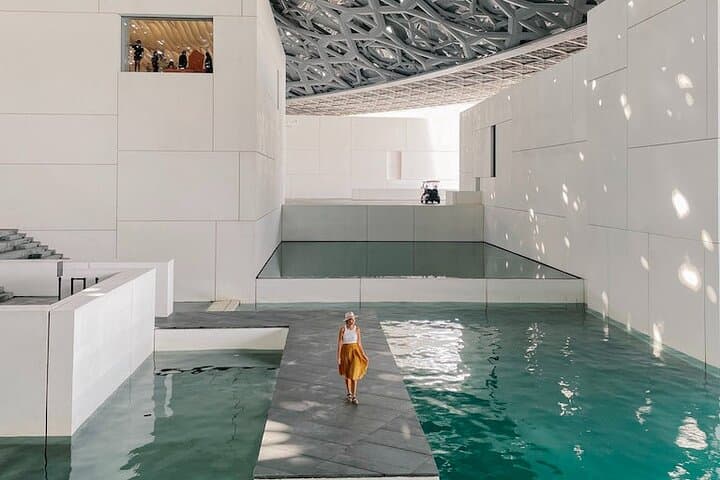
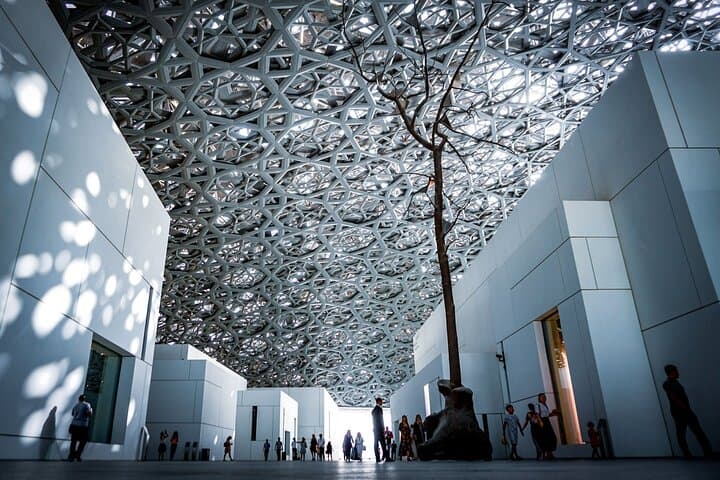
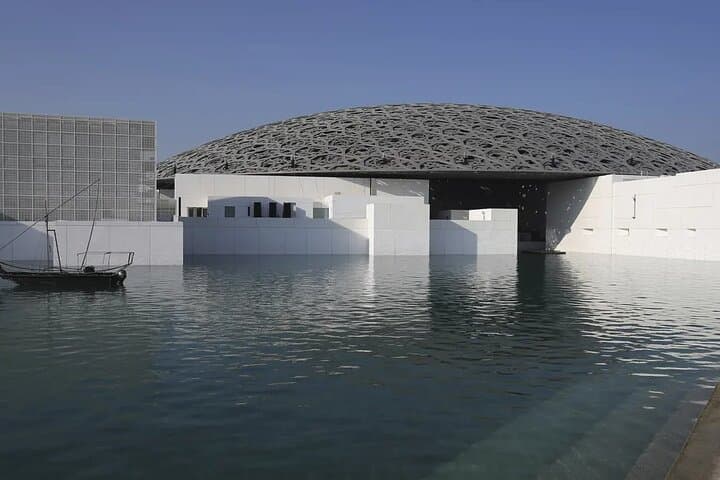
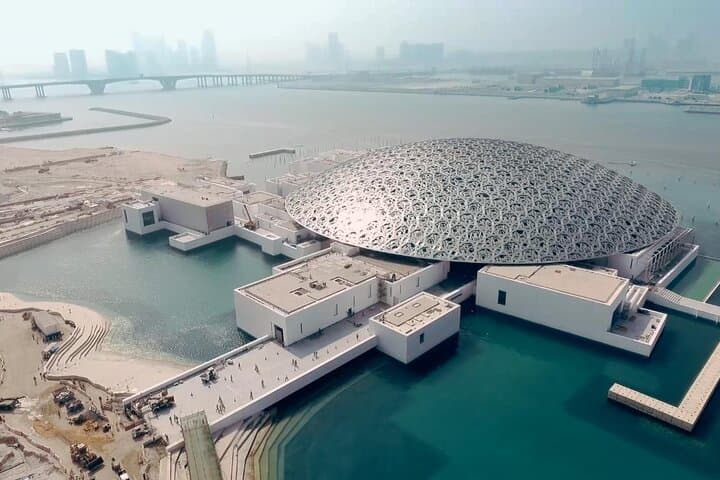
You step from the sun-drenched forecourt into a cool hush: Qasr Al Watan’s carved arches frame chandeliers and corridors that speak of modern nationhood. Two hours later you’re tracing pools of light beneath Jean Nouvel’s perforated dome at the Louvre Abu Dhabi, where the roof’s lattice lets the sky fall into galleries like scattered gold.
You step from the sun-drenched forecourt into a cool hush: Qasr Al Watan’s carved arches frame chandeliers and corridors that speak of modern nationhood. Two hours later you’re tracing pools of light beneath Jean Nouvel’s perforated dome at the Louvre Abu Dhabi, where the roof’s lattice lets the sky fall into galleries like scattered gold.
Qasr Al Watan opened in 2019 as more than a ceremonial palace — it’s a working cultural institution that presents Emirati governance, crafts, and state rooms. The Louvre Abu Dhabi, inaugurated in 2017 through a cultural agreement with France, stitches global art histories into one sequence of rooms and outdoor promenades on Saadiyat Island. Geologically the islands are flat and coastal; urban roads and short drives (expect roughly 10 km or 15–20 minutes between sites) link them, not hikes or climbs. Culturally, both sites emphasize storytelling: Qasr through heritage and ceremony, the Louvre through cross-cultural collections and contemporary curation.
Practical edge: buy timed entries, allow extra time for security screening, and plan travel between sites outside peak traffic. Mornings are quieter at Qasr Al Watan; late afternoons are ideal at the Louvre when the dome’s lightplay is most dramatic. Dress conservatively for Qasr Al Watan and carry water for brief outdoor stretches. These two stops make a compact half-day of institutional architecture, curated objects, and the measured pace of Abu Dhabi’s cultural district.