THE ADVENTURE COLLECTIVE® · Independent discovery and booking for outdoor travel

Step into Abu Dhabi’s Qasr Al Watan and see a functioning royal palace that also operates as a public museum of governance, architecture, and national history. This practical guide covers what to expect, timing, and etiquette for a two-hour visit.
Step into Abu Dhabi’s Qasr Al Watan and see a functioning royal palace that also operates as a public museum of governance, architecture, and national history. This practical guide covers what to expect, timing, and etiquette for a two-hour visit.
You walk up a broad paved approach, the palace façade looming like an argument in stone—geometric domes and carved panels catching the Gulf light as if the building itself were holding court. Inside Qasr Al Watan the rhythm changes: long colonnades give way to galleries of statecraft, a library that keeps quiet like a well-read companion, and gardens where reflecting pools cool the air.
Verified experiences and guided adventures in the surrounding area.
Operated by VEGO TOURISM · Abu Dhabi, Abu Dhabi
You walk up a broad paved approach, the palace façade looming like an argument in stone—geometric domes and carved panels catching the Gulf light as if the building itself were holding court. Inside Qasr Al Watan the rhythm changes: long colonnades give way to galleries of statecraft, a library that keeps quiet like a well-read companion, and gardens where reflecting pools cool the air.
The palace opened to the public in 2019 as part of the Presidential Palace complex, designed to share the UAE’s governing history, craftsmanship, and contemporary cultural ambitions. The architecture blends neo-classical scale with traditional Islamic motifs; beneath the marble and timber, the site sits on Abu Dhabi’s coastal plain—an engineered landscape where formal gardens meet desert climate management.
Visitors should expect curated exhibitions about governance, a ceremonial Great Hall, rotating displays in the House of Knowledge, and extensive, accessible grounds. Cultural context is foregrounded: the exhibits frame the federation’s founding, the role of leadership, and ongoing nation-building projects.
Practically, plan for about two hours to move through the main galleries without rushing. Tickets are mobile-friendly; security screening is standard. Modest dress and respectful behavior are required inside official rooms, and photography rules vary by gallery. Peak light for photos is late afternoon when shadows give the colonnades depth.
Timing your visit around cooler hours, bringing a refillable water bottle, and reading signage before touching displays will make the experience smoother. Qasr Al Watan reads like a public classroom and a ceremonial stage—both instructive and impressive, with enough open space to breathe between exhibits.
easy.
2 hours.
Minimal walking on flat, paved surfaces; suitable for almost all visitors
Most visitors spend about two hours to see the main halls, the House of Knowledge, and the palace gardens at a relaxed pace.
Yes—strollers are allowed and the site is stroller- and wheelchair-accessible; infants should sit on laps where stated in ticket terms.
Photography is allowed in many public areas but restricted in specific galleries and exhibits—follow signage and staff instructions.
A modest dress standard applies: shoulders and knees should be covered in official rooms and exhibition spaces.
Opened to the public in 2019 as part of the Presidential Palace, Qasr Al Watan presents the UAE’s federal history, leadership archives, and a contemporary interpretation of Gulf ceremonial architecture.
The palace and grounds use desert-adapted landscaping and water-management practices; visitors are asked to stay on paths and avoid touching delicate exhibits to reduce wear.
VEGO TOURISM operates guided outdoor trips and adventures with an emphasis on safety, stewardship, and memorable experiences.
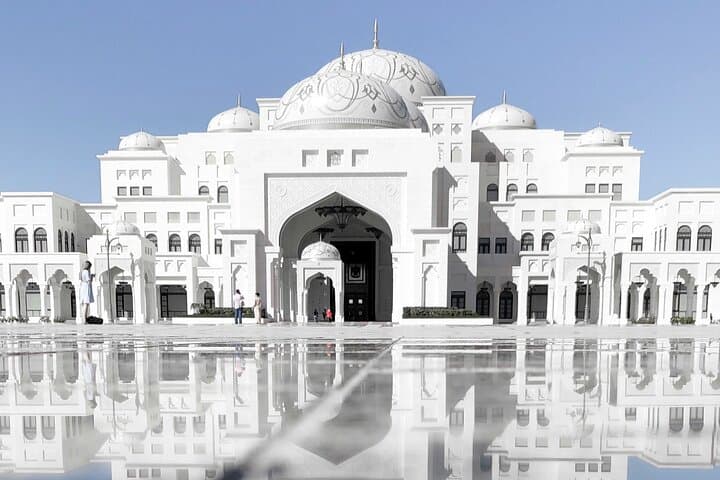
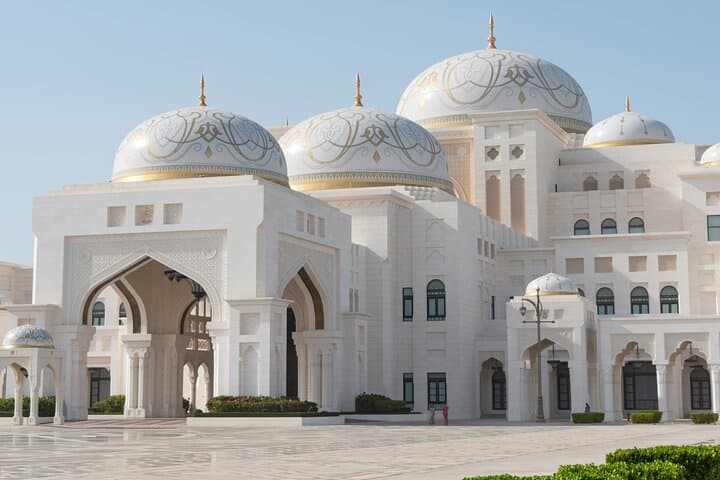
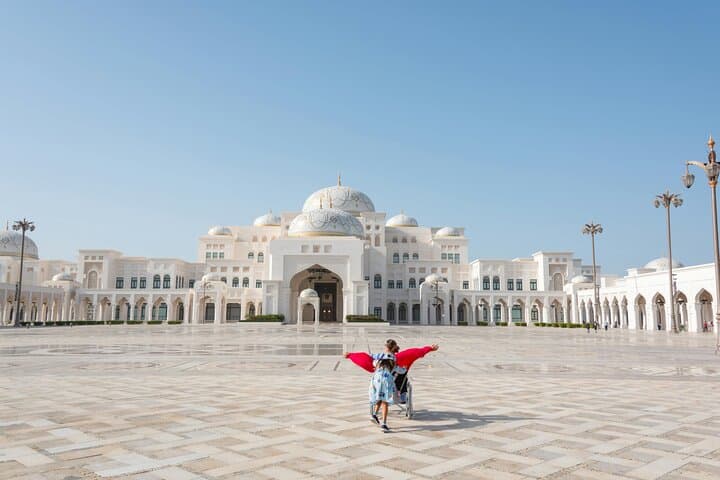
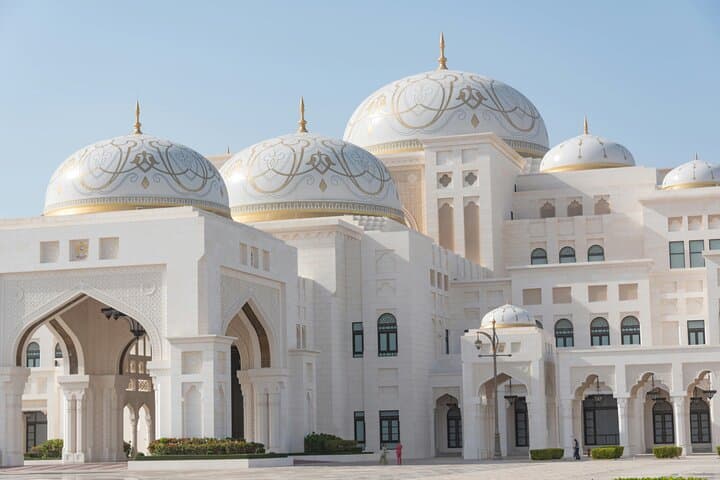
You walk up a broad paved approach, the palace façade looming like an argument in stone—geometric domes and carved panels catching the Gulf light as if the building itself were holding court. Inside Qasr Al Watan the rhythm changes: long colonnades give way to galleries of statecraft, a library that keeps quiet like a well-read companion, and gardens where reflecting pools cool the air.
You walk up a broad paved approach, the palace façade looming like an argument in stone—geometric domes and carved panels catching the Gulf light as if the building itself were holding court. Inside Qasr Al Watan the rhythm changes: long colonnades give way to galleries of statecraft, a library that keeps quiet like a well-read companion, and gardens where reflecting pools cool the air.
The palace opened to the public in 2019 as part of the Presidential Palace complex, designed to share the UAE’s governing history, craftsmanship, and contemporary cultural ambitions. The architecture blends neo-classical scale with traditional Islamic motifs; beneath the marble and timber, the site sits on Abu Dhabi’s coastal plain—an engineered landscape where formal gardens meet desert climate management.
Visitors should expect curated exhibitions about governance, a ceremonial Great Hall, rotating displays in the House of Knowledge, and extensive, accessible grounds. Cultural context is foregrounded: the exhibits frame the federation’s founding, the role of leadership, and ongoing nation-building projects.
Practically, plan for about two hours to move through the main galleries without rushing. Tickets are mobile-friendly; security screening is standard. Modest dress and respectful behavior are required inside official rooms, and photography rules vary by gallery. Peak light for photos is late afternoon when shadows give the colonnades depth.
Timing your visit around cooler hours, bringing a refillable water bottle, and reading signage before touching displays will make the experience smoother. Qasr Al Watan reads like a public classroom and a ceremonial stage—both instructive and impressive, with enough open space to breathe between exhibits.