THE ADVENTURE COLLECTIVE® · Independent discovery and booking for outdoor travel

Trace millennia in a single day: climb sand-swept paths around the Pyramids, stand before Tutankhamun’s treasures, then trade spices in a 14th-century bazaar. This private Cairo tour pairs archaeological depth with local color—ideal for first-time visitors who want efficient, explained access.
Trace millennia in a single day: climb sand-swept paths around the Pyramids, stand before Tutankhamun’s treasures, then trade spices in a 14th-century bazaar. This private Cairo tour pairs archaeological depth with local color—ideal for first-time visitors who want efficient, explained access.
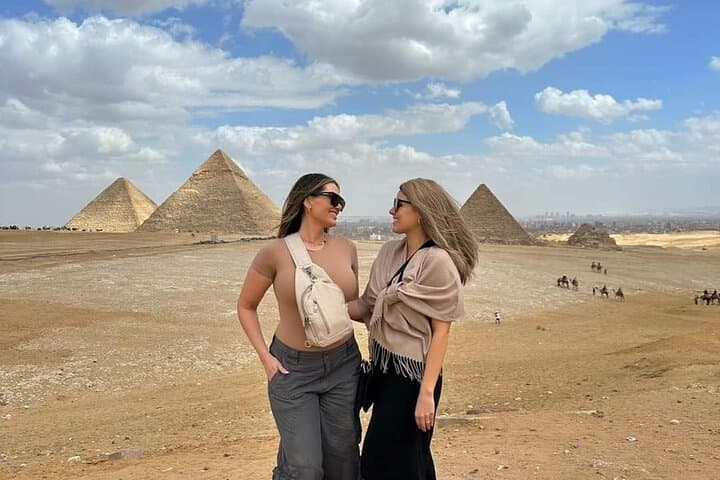
You step from an air-conditioned car into a sun-scorched plain and the profile of three stone giants snaps into view: the Great Pyramid rises like a carved horizon, the Sphinx watches the east, and Cairo hums beyond.
Verified experiences and guided adventures in the surrounding area.
Operated by AES Travel · Giza, Cairo Governorate
You step from an air-conditioned car into a sun-scorched plain and the profile of three stone giants snaps into view: the Great Pyramid rises like a carved horizon, the Sphinx watches the east, and Cairo hums beyond.
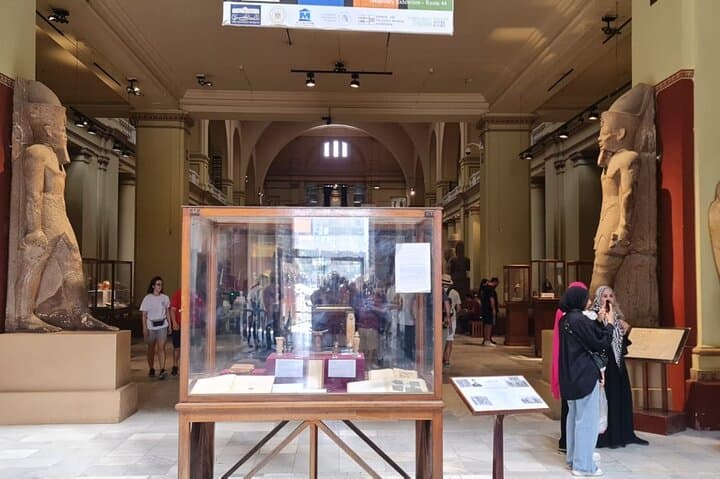
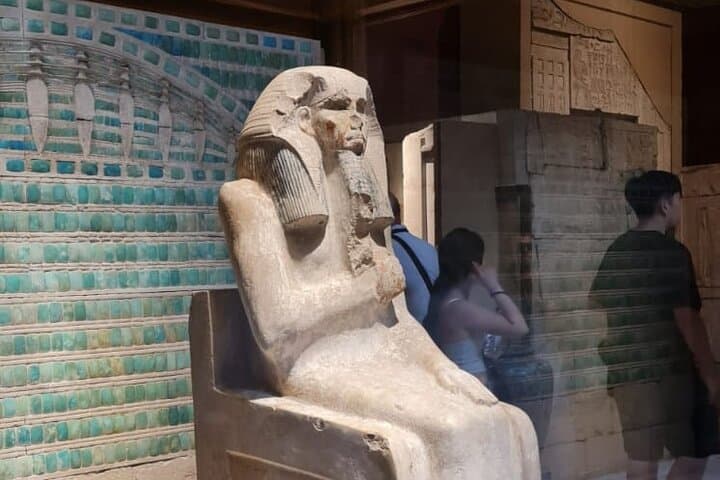
This private day tour strings together three of Egypt’s most immediate encounters with the past. The Giza Plateau records Fourth Dynasty ambition in hard-edged limestone and precise alignments; the Great Pyramid once reached 146.6 meters and still forces questions about ancient engineering. The Egyptian Museum—founded in 1902 near Tahrir Square—houses Tutankhamun’s gold and a dense sequence of pharaonic artifacts that trace burial practice, art, and administrative life. Khan El-Khalili, a market with roots in the 14th century, offers the human side: spices, metalwork, coffeehouses and the rhythm of bargaining.
Expect uneven walking, dust, and sudden bursts of commerce. Historic context matters: the plateau’s stones came from nearby quarries; museum displays reflect early 20th-century collection practices; the bazaar grew from trade routes that threaded Cairo for centuries. Local guides decode iconography, explain conservation constraints, and point to quieter corners—a rooftop tea shop, a small solar boat exhibit.
Practical guide: schedule the Giza visit early for softer light and fewer crowds, carry a refillable water bottle, wear closed shoes for loose gravel, and bring a scarf for sun and market modesty. Confirm which admissions are included (museum entry and pyramid interior often require separate tickets). Keep valuables secure in crowded souks and tip guides and drivers for good service.
easy.
6–8 hours.
Suitable for most fitness levels; requires standing, short walks on uneven stone and sand, and occasional steps.
Not always; many private tours include transport and guide but require separate entrance tickets for the Egyptian Museum and optional pyramid interior access—confirm at booking.
Interior access is usually an add-on with limited availability and extra cost; check in advance if you want to go inside Khufu's or Khafre's chambers.
Private transportation and pickup are commonly included—your booking should request pickup details and flight times so providers can arrange logistics.
Yes; the itinerary is rated easy and can be paced for families and seniors, but expect some walking and uneven ground at outdoor sites.
The Pyramids were built in Egypt’s Fourth Dynasty (c. 2580–2560 BCE); the Egyptian Museum opened in 1902 and centralized many antiquities collected across the 19th and early 20th centuries.
Heavy tourism stresses the Giza plateau and historic districts; stick to marked paths, avoid touching fragile stonework, and support licensed guides and museums to promote responsible stewardship.
AES Travel operates guided outdoor trips and adventures with an emphasis on safety, stewardship, and memorable experiences.

You step from an air-conditioned car into a sun-scorched plain and the profile of three stone giants snaps into view: the Great Pyramid rises like a carved horizon, the Sphinx watches the east, and Cairo hums beyond.
You step from an air-conditioned car into a sun-scorched plain and the profile of three stone giants snaps into view: the Great Pyramid rises like a carved horizon, the Sphinx watches the east, and Cairo hums beyond.
This private day tour strings together three of Egypt’s most immediate encounters with the past. The Giza Plateau records Fourth Dynasty ambition in hard-edged limestone and precise alignments; the Great Pyramid once reached 146.6 meters and still forces questions about ancient engineering. The Egyptian Museum—founded in 1902 near Tahrir Square—houses Tutankhamun’s gold and a dense sequence of pharaonic artifacts that trace burial practice, art, and administrative life. Khan El-Khalili, a market with roots in the 14th century, offers the human side: spices, metalwork, coffeehouses and the rhythm of bargaining.
Expect uneven walking, dust, and sudden bursts of commerce. Historic context matters: the plateau’s stones came from nearby quarries; museum displays reflect early 20th-century collection practices; the bazaar grew from trade routes that threaded Cairo for centuries. Local guides decode iconography, explain conservation constraints, and point to quieter corners—a rooftop tea shop, a small solar boat exhibit.
Practical guide: schedule the Giza visit early for softer light and fewer crowds, carry a refillable water bottle, wear closed shoes for loose gravel, and bring a scarf for sun and market modesty. Confirm which admissions are included (museum entry and pyramid interior often require separate tickets). Keep valuables secure in crowded souks and tip guides and drivers for good service.