THE ADVENTURE COLLECTIVE® · Independent discovery and booking for outdoor travel

Skip the queues at Giza and step straight onto the plateau where the pyramids rise from limestone and sand. This guide explains what the skip-the-line ticket covers, what to expect on-site, and practical tips for making the most of a two-hour visit.
Skip the queues at Giza and step straight onto the plateau where the pyramids rise from limestone and sand. This guide explains what the skip-the-line ticket covers, what to expect on-site, and practical tips for making the most of a two-hour visit.
Arrive on the plateau as the sun lifts over ochre stone and the desert wind pushes a faint line of sand across the path — the Great Pyramid’s silhouette dominates the horizon and the Sphinx watches the plain like a patient guardian.
Verified experiences and guided adventures in the surrounding area.
Operated by TourDragon - Saudi Arabia Tours · Giza, Giza Governorate
Arrive on the plateau as the sun lifts over ochre stone and the desert wind pushes a faint line of sand across the path — the Great Pyramid’s silhouette dominates the horizon and the Sphinx watches the plain like a patient guardian.
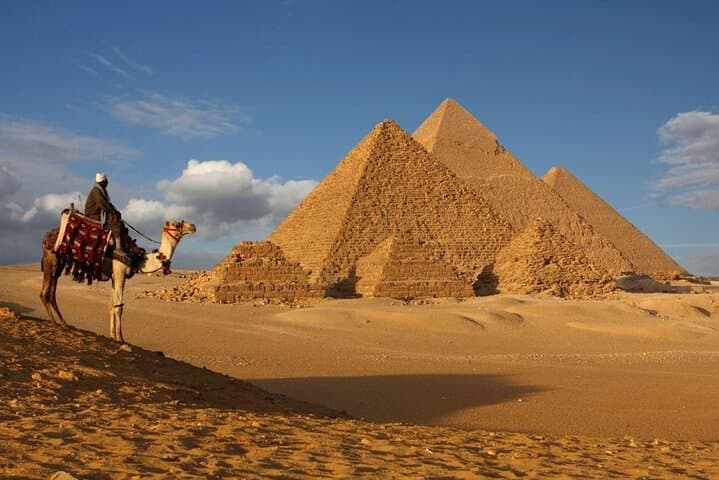
These monuments date to Egypt’s Old Kingdom (circa 2600–2500 BCE), with the Great Pyramid built for Pharaoh Khufu and the Sphinx carved from bedrock to guard the necropolis. The Giza Plateau sits on a limestone bench above the Nile floodplain; the visible blocks reveal centuries of quarrying and erosion that shape the site’s layered geology and human history. Local culture remains tightly woven with daily life: vendors, camel handlers, and conservation workers all play roles in the modern site’s rhythm.
For visitors using a skip-the-line ticket, expect immediate entry to the main plateau and access to the Sphinx enclosure as described by the ticket — interior access to specific pyramids often requires separate tickets sold on site. Practicalities: walk on uneven limestone and packed sand; wear sun protection and sturdy shoes. Bring water and allow at least two hours to move between monuments, read onsite signage, and take photos. Early morning or late afternoon light improves photography and reduces heat. Respect barriers, avoid climbing on structures (it’s prohibited and actively policed), and follow staff directions — conservation is ongoing and visitor behavior matters.
This ticket simplifies logistics: mobile tickets are accepted, the site is wheelchair accessible in parts, and cancellations are refundable with 24+ hour notice.
easy.
2 hours.
Suitable for most fitness levels; requires short walks on uneven ground and standing.
This ticket grants expedited entry to the Giza Plateau and access to the Sphinx enclosure as described by the operator; check the booking for specifics on pyramid interior access.
Interior access often requires a separate, limited-availability ticket sold at the site or through specific packages — confirm before arrival if interior entry is essential.
Parts of the plateau and visitor areas are wheelchair accessible, though some paths are uneven; accessibility services vary and staff can assist where possible.
Full refund is available if you cancel at least 24 hours before the scheduled visit; cancellations within 24 hours are not refundable.
The main pyramids were constructed during Egypt’s Fourth Dynasty (c. 2600–2500 BCE), with the Great Pyramid attributed to Khufu; the Sphinx is associated with the Pharaoh Khafre.
High visitor numbers and wind-driven sand cause wear; site managers enforce protections and ongoing restoration projects aim to stabilize masonry and prevent damage.
TourDragon - Saudi Arabia Tours operates guided outdoor trips and adventures with an emphasis on safety, stewardship, and memorable experiences.
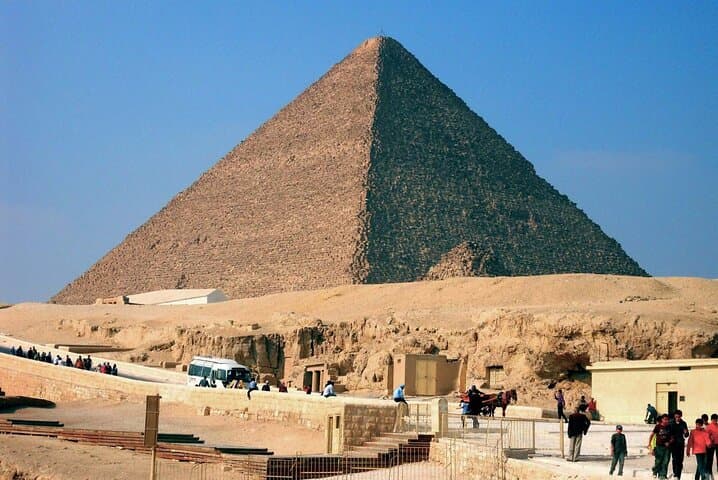
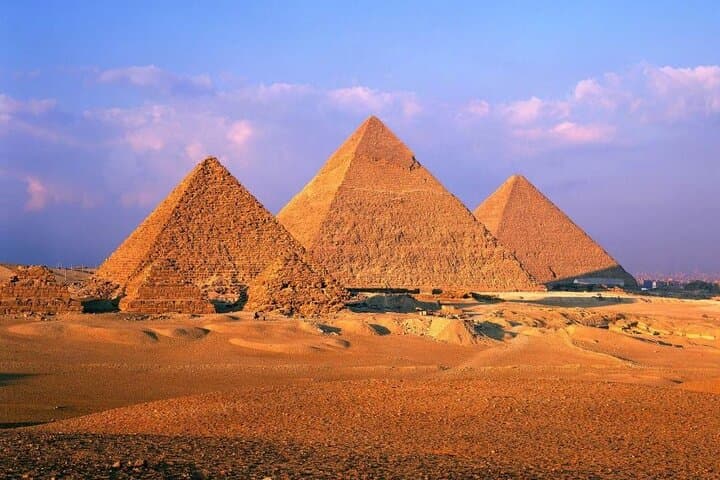
Arrive on the plateau as the sun lifts over ochre stone and the desert wind pushes a faint line of sand across the path — the Great Pyramid’s silhouette dominates the horizon and the Sphinx watches the plain like a patient guardian.
Arrive on the plateau as the sun lifts over ochre stone and the desert wind pushes a faint line of sand across the path — the Great Pyramid’s silhouette dominates the horizon and the Sphinx watches the plain like a patient guardian.
These monuments date to Egypt’s Old Kingdom (circa 2600–2500 BCE), with the Great Pyramid built for Pharaoh Khufu and the Sphinx carved from bedrock to guard the necropolis. The Giza Plateau sits on a limestone bench above the Nile floodplain; the visible blocks reveal centuries of quarrying and erosion that shape the site’s layered geology and human history. Local culture remains tightly woven with daily life: vendors, camel handlers, and conservation workers all play roles in the modern site’s rhythm.
For visitors using a skip-the-line ticket, expect immediate entry to the main plateau and access to the Sphinx enclosure as described by the ticket — interior access to specific pyramids often requires separate tickets sold on site. Practicalities: walk on uneven limestone and packed sand; wear sun protection and sturdy shoes. Bring water and allow at least two hours to move between monuments, read onsite signage, and take photos. Early morning or late afternoon light improves photography and reduces heat. Respect barriers, avoid climbing on structures (it’s prohibited and actively policed), and follow staff directions — conservation is ongoing and visitor behavior matters.
This ticket simplifies logistics: mobile tickets are accepted, the site is wheelchair accessible in parts, and cancellations are refundable with 24+ hour notice.