THE ADVENTURE COLLECTIVE® · Independent discovery and booking for outdoor travel

Travel from the Egyptian Museum to the Giza Plateau and finish in Khan el-Khalili on a full-day tour that pairs ancient monuments with lively market culture. Expect guided access, close-up pyramid views and practical tips for heat, crowds and bargaining.
Travel from the Egyptian Museum to the Giza Plateau and finish in Khan el-Khalili on a full-day tour that pairs ancient monuments with lively market culture. Expect guided access, close-up pyramid views and practical tips for heat, crowds and bargaining.
A pre-dawn Cairo hotel lobby, a guide waiting with a clipboard — the city exhales as you step into an eight-hour sweep through Egypt’s most charged places. The morning begins in Tahrir with the Egyptian Museum’s sandstone façade and a hush of glass cases; closer to midday the Giza Plateau opens wide, the desert daring you with heat and horizon as the Great Pyramid looms overhead.
Verified experiences and guided adventures in the surrounding area.
Operated by Get Your Holidays · Cairo, Cairo Governorate
A pre-dawn Cairo hotel lobby, a guide waiting with a clipboard — the city exhales as you step into an eight-hour sweep through Egypt’s most charged places. The morning begins in Tahrir with the Egyptian Museum’s sandstone façade and a hush of glass cases; closer to midday the Giza Plateau opens wide, the desert daring you with heat and horizon as the Great Pyramid looms overhead.
The route stitches modern Cairo to three millennia of history: Marcel Dourgnon’s early-20th-century museum architecture holds Tutankhamun’s funerary objects while the Giza necropolis preserves the engineering logic of Old Kingdom tombs. The pyramids rest on a limestone plateau shaped by Nile-driven sedimentation and wind-polished sand; the Sphinx keeps its silent watch beside the Valley Temple’s dressed stone.
Khan el-Khalili offers the other tempo — narrow alleys, metalworkers, coffee shops where bargaining is practice as much as commerce. Expect sensory contrast: cool museum halls, sun-baked plateau, aromatic spice stalls.
Practical guidance: start early to avoid peak heat and crowds; bring cash for small purchases and tips; wear closed-toe shoes for uneven cobbles and the plateau’s limestone rubble; carry at least 1–2 liters of water and sun protection. Photography rules vary — follow your guide and signage. The tour’s pace is largely flat with short, moderately paced walks and an optional camel encounter; useful for travelers of average fitness.
This day combines archaeology, geology and living urban culture into a single loop — efficient, sensory and grounded in local rhythms. Respect the sites, keep to marked paths on the plateau, and allow time at Khan el-Khalili to watch the city at work.
easy.
8 hours.
Suitable for general fitness; involves several short walks over uneven ground and standing in museum exhibits
Check the specific booking details — some tours include skip-the-line access while others require you to pay local entrance fees on site; bring card or cash to be safe.
A short camel encounter is commonly offered on the plateau but may be optional and can incur an additional fee paid directly at the site.
Pickup and stroller access are available, but the plateau’s terrain and steps at some sites make a stroller impractical for long walks.
Autumn to spring (October–April) offers milder temperatures; mornings are preferable year-round to avoid heat and crowds.
The pyramids at Giza date to the Fourth Dynasty (c. 2600–2500 BCE) as royal tomb complexes; the Egyptian Museum, designed by Marcel Dourgnon, opened in the early 20th century to display pharaonic collections.
High visitor numbers and urban pollution stress the monuments; stay on designated paths, avoid touching ancient stone, and support licensed local guides to ensure sustainable site use.
Get Your Holidays operates guided outdoor trips and adventures with an emphasis on safety, stewardship, and memorable experiences.
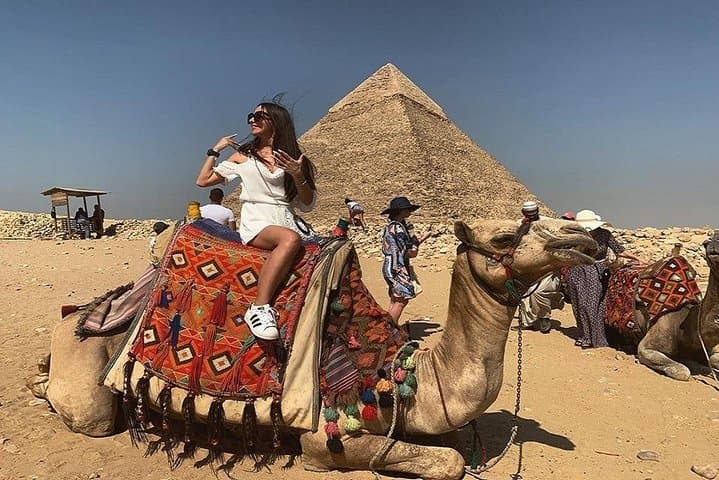
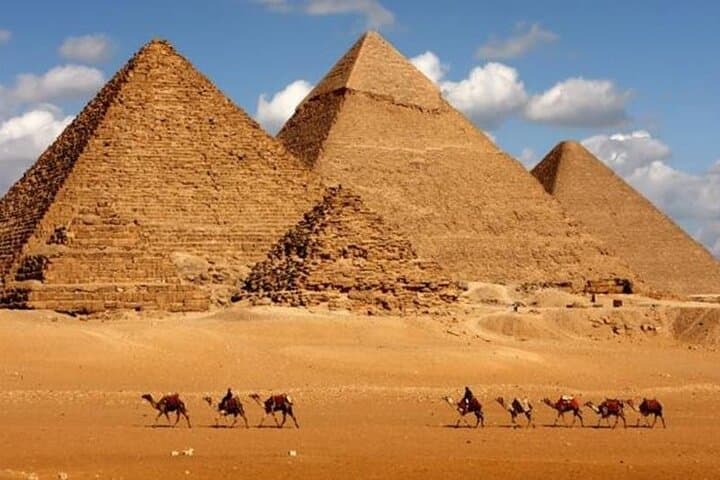
A pre-dawn Cairo hotel lobby, a guide waiting with a clipboard — the city exhales as you step into an eight-hour sweep through Egypt’s most charged places. The morning begins in Tahrir with the Egyptian Museum’s sandstone façade and a hush of glass cases; closer to midday the Giza Plateau opens wide, the desert daring you with heat and horizon as the Great Pyramid looms overhead.
A pre-dawn Cairo hotel lobby, a guide waiting with a clipboard — the city exhales as you step into an eight-hour sweep through Egypt’s most charged places. The morning begins in Tahrir with the Egyptian Museum’s sandstone façade and a hush of glass cases; closer to midday the Giza Plateau opens wide, the desert daring you with heat and horizon as the Great Pyramid looms overhead.
The route stitches modern Cairo to three millennia of history: Marcel Dourgnon’s early-20th-century museum architecture holds Tutankhamun’s funerary objects while the Giza necropolis preserves the engineering logic of Old Kingdom tombs. The pyramids rest on a limestone plateau shaped by Nile-driven sedimentation and wind-polished sand; the Sphinx keeps its silent watch beside the Valley Temple’s dressed stone.
Khan el-Khalili offers the other tempo — narrow alleys, metalworkers, coffee shops where bargaining is practice as much as commerce. Expect sensory contrast: cool museum halls, sun-baked plateau, aromatic spice stalls.
Practical guidance: start early to avoid peak heat and crowds; bring cash for small purchases and tips; wear closed-toe shoes for uneven cobbles and the plateau’s limestone rubble; carry at least 1–2 liters of water and sun protection. Photography rules vary — follow your guide and signage. The tour’s pace is largely flat with short, moderately paced walks and an optional camel encounter; useful for travelers of average fitness.
This day combines archaeology, geology and living urban culture into a single loop — efficient, sensory and grounded in local rhythms. Respect the sites, keep to marked paths on the plateau, and allow time at Khan el-Khalili to watch the city at work.