THE ADVENTURE COLLECTIVE® · Independent discovery and booking for outdoor travel

See three very different chapters of ancient Egyptian architecture in one day: the Step Pyramid at Saqqara, the iconic Pyramids of Giza, and Dahshour’s Bent and Red pyramids. This practical guide outlines what to expect, how to prepare, and how to make the most of a 7–8 hour archaeological loop.
See three very different chapters of ancient Egyptian architecture in one day: the Step Pyramid at Saqqara, the iconic Pyramids of Giza, and Dahshour’s Bent and Red pyramids. This practical guide outlines what to expect, how to prepare, and how to make the most of a 7–8 hour archaeological loop.
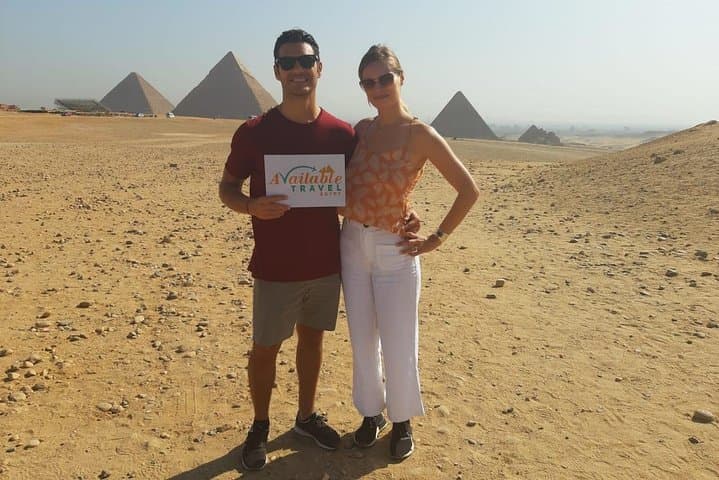
By midmorning the Giza plateau catches the sun and the stone takes on a hard, bright clarity—the Great Pyramid looming like a deliberate city of angles while the Sphinx regards the approach with centuries-old stillness.
Verified experiences and guided adventures in the surrounding area.
Operated by Available travel Egypt · Giza, Giza Governorate
By midmorning the Giza plateau catches the sun and the stone takes on a hard, bright clarity—the Great Pyramid looming like a deliberate city of angles while the Sphinx regards the approach with centuries-old stillness.
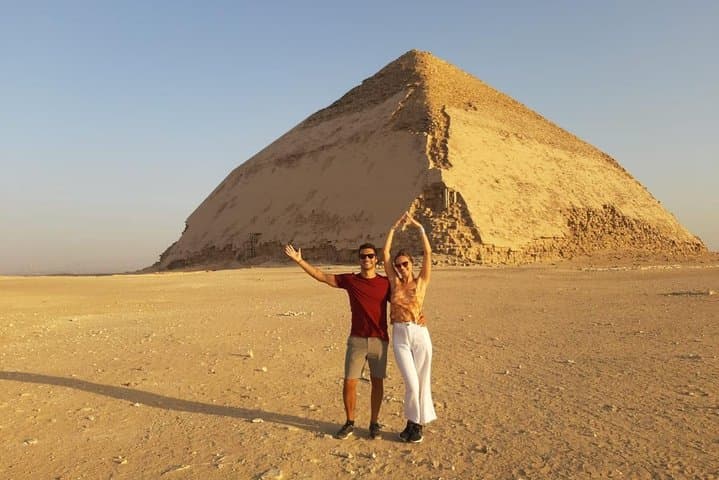
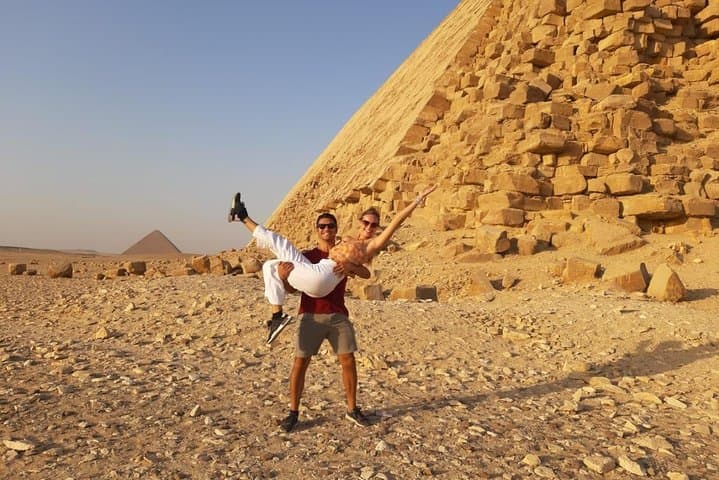
This full-day loop moves from the Step Pyramid at Saqqara—Imhotep’s 27th-century‑BCE innovation—to the classic triad at Giza (Khufu, Khafre, Menkaure) and westward to Dahshour, where Sneferu’s Bent and Red pyramids reveal the trial-and-error of Old Kingdom engineering. The landscape is geological as much as cultural: weathered limestone beds, wind-scoured sand, and the edge of the Nile floodplain where ancient builders quarried blocks that still rise in precise tiers.
Local rhythms are plain to see—small vendors, conservation staff, and guides whose knowledge ties hieroglyphs to daily life. Expect clear contrasts in crowding: Giza is busiest, Saqqara and Dahshour quieter and easier to move through.
Practical guidance: the tour runs about 7–8 hours with vehicle transfers and roughly 2 hours at each site. Terrain is mostly compacted sand and exposed rock with uneven steps inside some tombs; wheelchair-accessible options exist but interiors often require stairs. Bring a reusable water bottle, strong sun protection, sturdy walking shoes, and small local currency for entry, tips, and site vendors. Interior pyramid access is possible but limited and may require additional tickets.
Timing your visit for early morning or late afternoon light reduces heat and improves photos. Walk with intention, stay on official paths, and respect fenced-off areas—these ruins survive because visitors keep to the routes.
easy.
7–8 hours.
Suitable for most travelers who can walk on uneven surfaces and climb short flights of stairs; not strenuous but requires stamina for a full day.
This tour lists entrance fees among inclusions, so main site admissions are covered—confirm on your booking confirmation for any optional interior-access tickets that may cost extra.
Pickup information is requested at booking (PICKUP_POINT); many operators offer hotel pickup in central Cairo or Giza—confirm your pickup time and meeting point when you receive your voucher.
Interior access is sometimes available but limited by ticket quotas, safety rules, and age/health restrictions; ask the guide on the day for availability and any extra fees.
The listing notes wheelchair-accessible transportation and surfaces at some points, but interior tombs and pyramid passages usually have stairs; discuss accessibility needs with the operator before booking.
The Step Pyramid at Saqqara (Djoser) dates to the 27th century BCE and represents one of the earliest monumental stone constructions; Giza’s main pyramids were built during the Fourth Dynasty and Dahshour preserves Sneferu’s architectural experiments.
Visitor pressure and urban encroachment threaten fragile masonry and painted tomb interiors—stick to marked paths, avoid touching reliefs, and support certified guides and local conservation efforts.
Available travel Egypt operates guided outdoor trips and adventures with an emphasis on safety, stewardship, and memorable experiences.

By midmorning the Giza plateau catches the sun and the stone takes on a hard, bright clarity—the Great Pyramid looming like a deliberate city of angles while the Sphinx regards the approach with centuries-old stillness.
By midmorning the Giza plateau catches the sun and the stone takes on a hard, bright clarity—the Great Pyramid looming like a deliberate city of angles while the Sphinx regards the approach with centuries-old stillness.
This full-day loop moves from the Step Pyramid at Saqqara—Imhotep’s 27th-century‑BCE innovation—to the classic triad at Giza (Khufu, Khafre, Menkaure) and westward to Dahshour, where Sneferu’s Bent and Red pyramids reveal the trial-and-error of Old Kingdom engineering. The landscape is geological as much as cultural: weathered limestone beds, wind-scoured sand, and the edge of the Nile floodplain where ancient builders quarried blocks that still rise in precise tiers.
Local rhythms are plain to see—small vendors, conservation staff, and guides whose knowledge ties hieroglyphs to daily life. Expect clear contrasts in crowding: Giza is busiest, Saqqara and Dahshour quieter and easier to move through.
Practical guidance: the tour runs about 7–8 hours with vehicle transfers and roughly 2 hours at each site. Terrain is mostly compacted sand and exposed rock with uneven steps inside some tombs; wheelchair-accessible options exist but interiors often require stairs. Bring a reusable water bottle, strong sun protection, sturdy walking shoes, and small local currency for entry, tips, and site vendors. Interior pyramid access is possible but limited and may require additional tickets.
Timing your visit for early morning or late afternoon light reduces heat and improves photos. Walk with intention, stay on official paths, and respect fenced-off areas—these ruins survive because visitors keep to the routes.