THE ADVENTURE COLLECTIVE® · Independent discovery and booking for outdoor travel

A half-day private excursion from Cairo that pairs the monumental Pyramids of Giza with the newly opened Grand Egyptian Museum. Expect guided context, vehicle transfers, and a mix of outdoor plateau walking and climate-controlled gallery time.
A half-day private excursion from Cairo that pairs the monumental Pyramids of Giza with the newly opened Grand Egyptian Museum. Expect guided context, vehicle transfers, and a mix of outdoor plateau walking and climate-controlled gallery time.
You step out of the air-conditioned car onto a wind-polished ridge of limestone and sand. The three great pyramids—Khufu, Khafre and Menkaure—rise like deliberate architecture against the pale blue of the sky, their faces catching light and time. Camels shift in the background; dust moves like a thought across the plateau.
Verified experiences and guided adventures in the surrounding area.
Operated by NORTH AFRICAN SHIPPING AND TOURISM COMPANY (NASCO TOURS) · Giza, Giza Governorate
You step out of the air-conditioned car onto a wind-polished ridge of limestone and sand. The three great pyramids—Khufu, Khafre and Menkaure—rise like deliberate architecture against the pale blue of the sky, their faces catching light and time. Camels shift in the background; dust moves like a thought across the plateau.
The Giza Plateau is a place where geology and human ambition meet. The pyramids date to the Fourth Dynasty (about 4,500 years ago), cut from local limestone and aligned with surprising astronomical precision. A short drive away, the Grand Egyptian Museum opens a modern chapter: a climate-controlled repository for tens of thousands of artifacts, including the Tutankhamun collection, designed to protect fragile objects and tell social and ritual histories with multimedia support.
Culturally, the day threads old and new—local camel handlers and vendors, conservation teams at the museum, and crowds tracing millennia-old routes. Expect uneven, sandy terrain on the plateau, paved walkways inside the museum, and phases of walking punctuated by vehicle transfers.
Practical guidance: bring sun protection and at least 1.5 liters of water, wear sturdy closed shoes for loose sand and stone, and plan to move at a relaxed pace—the tour is about 5–6 hours. Cameras are welcome, but follow signage about flash and display cases in the museum. If you want an interior pyramid experience, ask in advance: interior access is limited and sometimes requires a separate ticket. Finish the afternoon with a slow transfer back to your Cairo hotel, the city’s hum returning as you leave the desert’s quieter geometry behind.
easy.
5–6 hours.
Suitable for travelers in regular, everyday shape; involves short walks on uneven, sandy terrain and standing in galleries.
This private tour includes Grand Egyptian Museum admission; the itinerary lists access to the Giza Plateau and its pyramid sites—confirm whether interior pyramid tickets are included at booking.
Pickup from central Cairo hotels is standard for this tour—provide your hotel and pickup point when booking to confirm timing.
Interior entry is limited, subject to daily quotas and conservation rules; ask your operator in advance since interior tickets may be separate or unavailable.
The tour is marked suitable for most fitness levels, but the plateau has uneven surfaces and sand; travelers with serious mobility constraints should consult the operator ahead of time.
The main pyramids were constructed during Egypt’s Fourth Dynasty (c. 2600–2500 BCE); the Grand Egyptian Museum was built to centralize and better preserve relics from across the Nile Valley.
The museum’s climate systems and conservation labs aim to stabilize fragile artifacts; on the plateau, visitor management and signage reduce wear—avoid touching ancient stone and follow guide instructions.
NORTH AFRICAN SHIPPING AND TOURISM COMPANY (NASCO TOURS) operates guided outdoor trips and adventures with an emphasis on safety, stewardship, and memorable experiences.
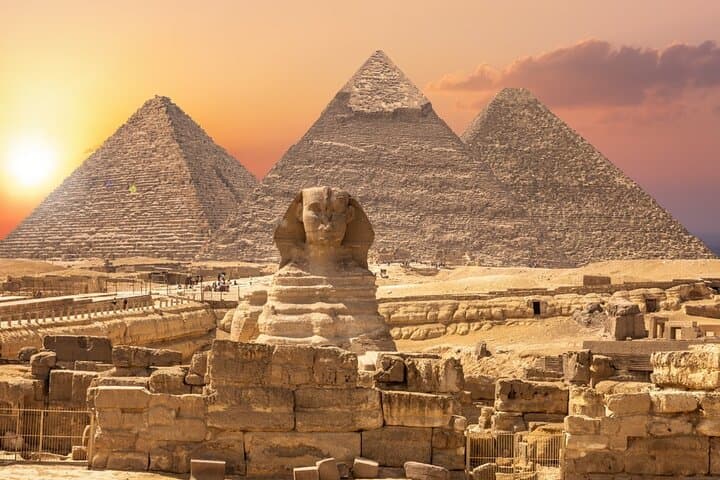
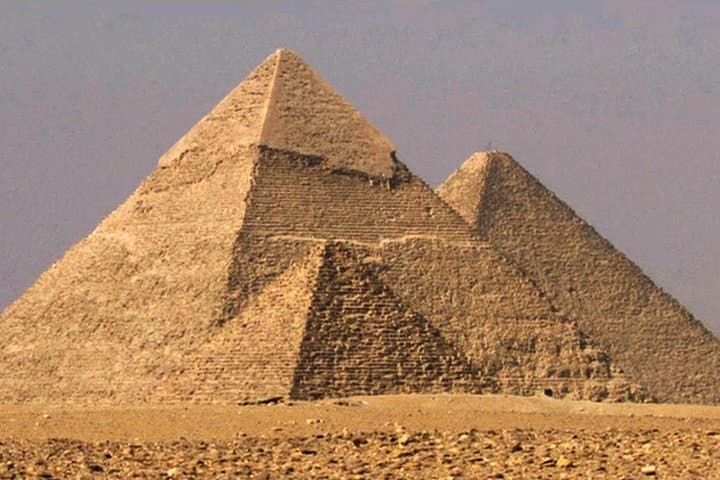
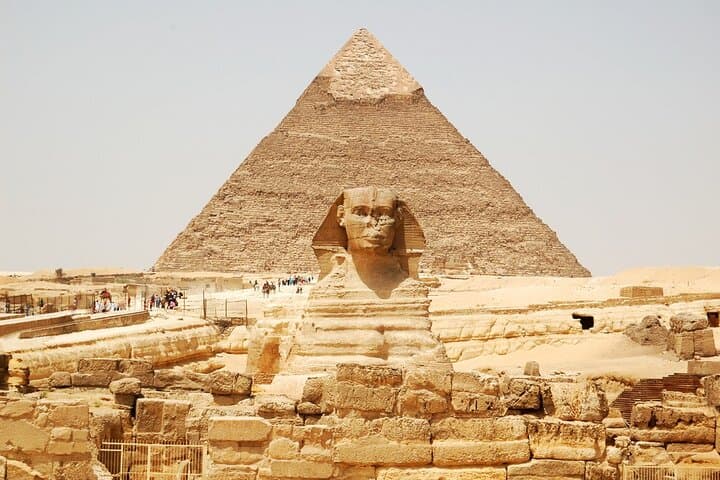
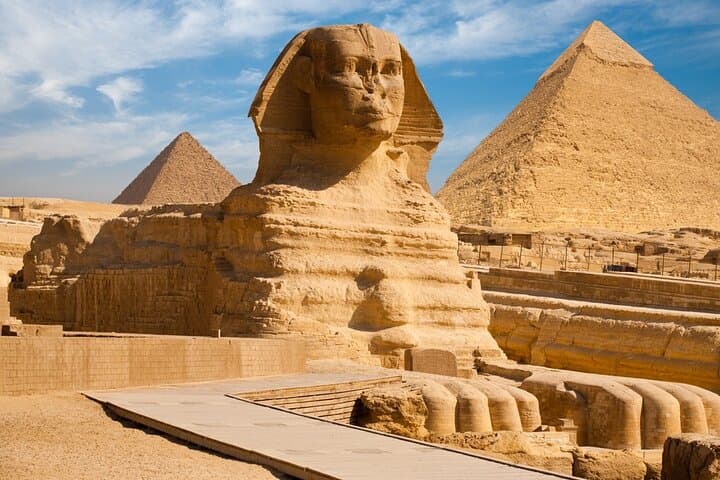
You step out of the air-conditioned car onto a wind-polished ridge of limestone and sand. The three great pyramids—Khufu, Khafre and Menkaure—rise like deliberate architecture against the pale blue of the sky, their faces catching light and time. Camels shift in the background; dust moves like a thought across the plateau.
You step out of the air-conditioned car onto a wind-polished ridge of limestone and sand. The three great pyramids—Khufu, Khafre and Menkaure—rise like deliberate architecture against the pale blue of the sky, their faces catching light and time. Camels shift in the background; dust moves like a thought across the plateau.
The Giza Plateau is a place where geology and human ambition meet. The pyramids date to the Fourth Dynasty (about 4,500 years ago), cut from local limestone and aligned with surprising astronomical precision. A short drive away, the Grand Egyptian Museum opens a modern chapter: a climate-controlled repository for tens of thousands of artifacts, including the Tutankhamun collection, designed to protect fragile objects and tell social and ritual histories with multimedia support.
Culturally, the day threads old and new—local camel handlers and vendors, conservation teams at the museum, and crowds tracing millennia-old routes. Expect uneven, sandy terrain on the plateau, paved walkways inside the museum, and phases of walking punctuated by vehicle transfers.
Practical guidance: bring sun protection and at least 1.5 liters of water, wear sturdy closed shoes for loose sand and stone, and plan to move at a relaxed pace—the tour is about 5–6 hours. Cameras are welcome, but follow signage about flash and display cases in the museum. If you want an interior pyramid experience, ask in advance: interior access is limited and sometimes requires a separate ticket. Finish the afternoon with a slow transfer back to your Cairo hotel, the city’s hum returning as you leave the desert’s quieter geometry behind.