THE ADVENTURE COLLECTIVE® · Independent discovery and booking for outdoor travel

Stand before the Great Pyramid at dawn and close the day amid Tutankhamun’s treasures at the Grand Egyptian Museum. This one-day discovery pairs outdoor scale and indoor preservation—plan for sun, walking on loose stone, and deep history.
Stand before the Great Pyramid at dawn and close the day amid Tutankhamun’s treasures at the Grand Egyptian Museum. This one-day discovery pairs outdoor scale and indoor preservation—plan for sun, walking on loose stone, and deep history.
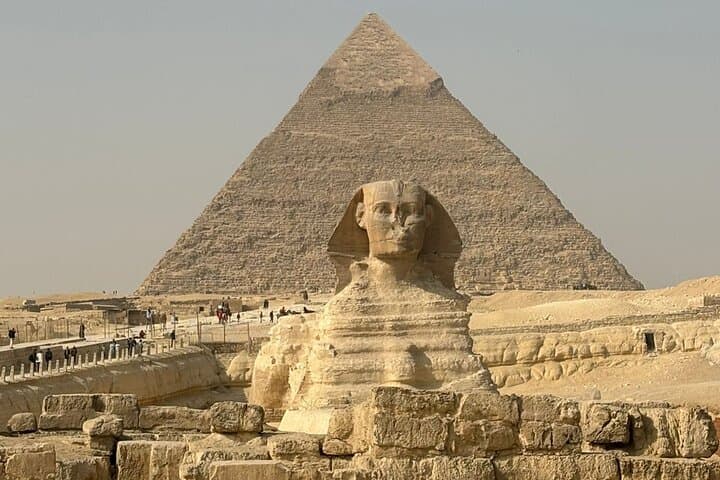
You arrive at the edge of the Giza Plateau as the wind pushes fine sand across sun-warmed rock. The Great Pyramid looms, its angle and scale cutting a clean line against the sky while camels shift and local guides orchestrate movements for the perfect photo.
Verified experiences and guided adventures in the surrounding area.
Operated by meriam travel experience · Giza, Cairo Governorate
You arrive at the edge of the Giza Plateau as the wind pushes fine sand across sun-warmed rock. The Great Pyramid looms, its angle and scale cutting a clean line against the sky while camels shift and local guides orchestrate movements for the perfect photo.
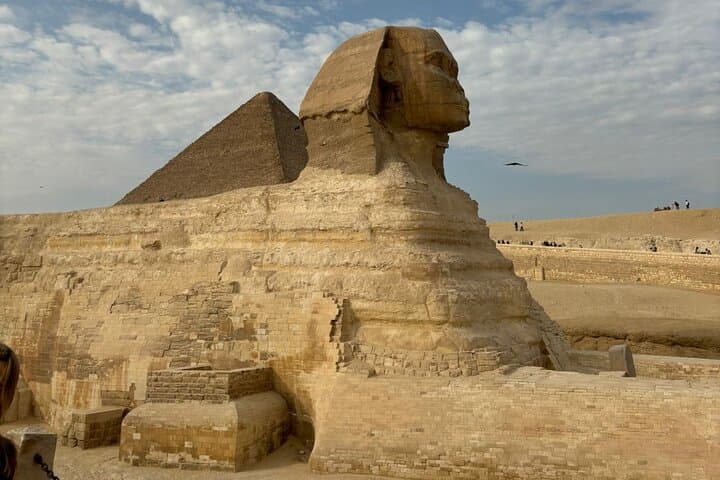
This full-day route pairs two epochs of Egyptian achievement: the Bronze Age engineering of the Giza necropolis and the modern, climate-controlled galleries of the Grand Egyptian Museum (GEM). Geologically the plateau is a raised limestone bench, quarried in antiquity to dress royal tombs; the Sphinx and valley temple attest to that same stonecraft. Culturally, you’ll hear stories that range from pharaonic mortuary rites to 20th–21st century museum politics as artifacts were moved and conserved.
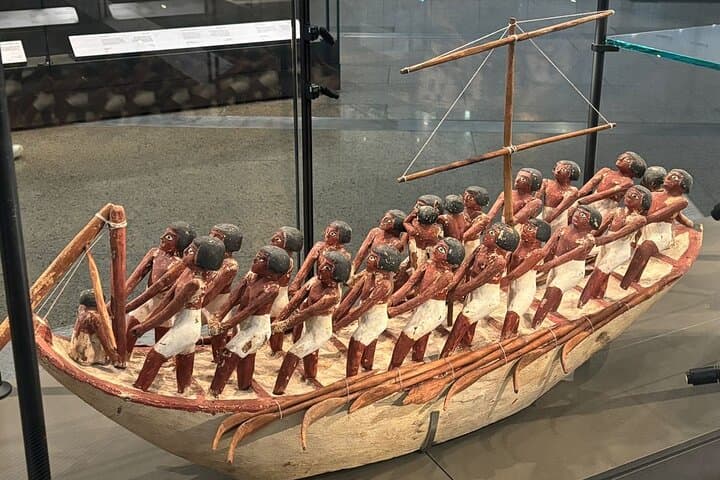
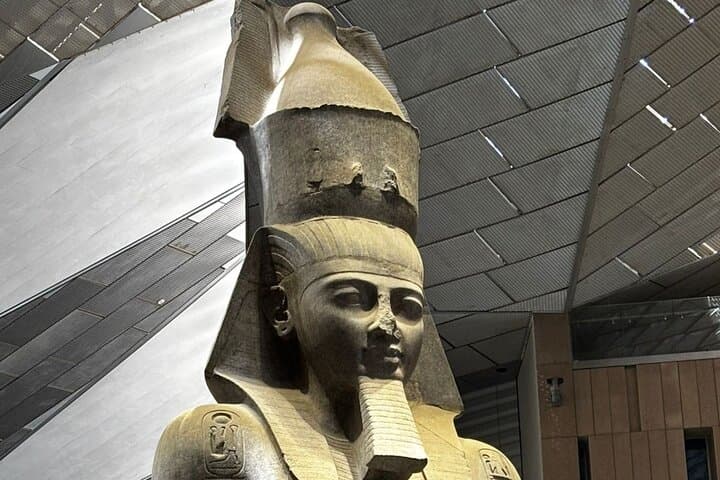
Expect open desert exposure at the pyramids—short, firm rock steps and gravel paths interspersed with flat viewing terraces—and long, indoor museum corridors with climate controls and audio-labels. The GEM concentrates Tutankhamun’s material culture and large-scale monuments (including the solar boat and colossal statues), while Giza delivers scale, perspective, and the tactile feel of antiquity.
Practical guide: start early to avoid heat and crowds, carry sun protection and 1–2 liters of water, and wear sturdy walking shoes for loose sand and stone. Photography is allowed in most outdoor areas; verify flash/use rules inside the museum. If you have limited mobility, request pickup details and ask ahead about areas with steps. Plan for an 8‑hour day with a lunch break and time to move between sites—this is a paced, interpretation-rich experience that rewards curiosity and steady legs.
moderate.
8 hours.
Moderate fitness; able to walk several kilometers on uneven surfaces and climb short flights of steps.
The tour typically includes Grand Egyptian Museum admission but not pyramid site entry; confirm with the operator when booking.
The GEM has accessible routes and elevators; the Giza Plateau has uneven terrain and steps—notify the operator in advance to arrange suitable pickup and routing.
Photography is generally allowed outdoors at Giza; inside the GEM, policies vary by gallery—follow signage and staff instructions regarding flash and restricted exhibits.
Tipping is customary in Egypt; consider modest tips for your guide and driver at the end of the day (adjust by service quality and group size).
The Giza complex was built during the Fourth Dynasty (c. 2600–2500 BCE); modern efforts to centralize artifacts moved many finds to the Grand Egyptian Museum to improve preservation and interpretation.
GEM is designed for climate-controlled conservation to protect fragile organic artifacts; visitors should follow no-touch policies at sensitive displays and avoid single-use plastics when possible.
meriam travel experience operates guided outdoor trips and adventures with an emphasis on safety, stewardship, and memorable experiences.
You arrive at the edge of the Giza Plateau as the wind pushes fine sand across sun-warmed rock. The Great Pyramid looms, its angle and scale cutting a clean line against the sky while camels shift and local guides orchestrate movements for the perfect photo.
You arrive at the edge of the Giza Plateau as the wind pushes fine sand across sun-warmed rock. The Great Pyramid looms, its angle and scale cutting a clean line against the sky while camels shift and local guides orchestrate movements for the perfect photo.
This full-day route pairs two epochs of Egyptian achievement: the Bronze Age engineering of the Giza necropolis and the modern, climate-controlled galleries of the Grand Egyptian Museum (GEM). Geologically the plateau is a raised limestone bench, quarried in antiquity to dress royal tombs; the Sphinx and valley temple attest to that same stonecraft. Culturally, you’ll hear stories that range from pharaonic mortuary rites to 20th–21st century museum politics as artifacts were moved and conserved.
Expect open desert exposure at the pyramids—short, firm rock steps and gravel paths interspersed with flat viewing terraces—and long, indoor museum corridors with climate controls and audio-labels. The GEM concentrates Tutankhamun’s material culture and large-scale monuments (including the solar boat and colossal statues), while Giza delivers scale, perspective, and the tactile feel of antiquity.
Practical guide: start early to avoid heat and crowds, carry sun protection and 1–2 liters of water, and wear sturdy walking shoes for loose sand and stone. Photography is allowed in most outdoor areas; verify flash/use rules inside the museum. If you have limited mobility, request pickup details and ask ahead about areas with steps. Plan for an 8‑hour day with a lunch break and time to move between sites—this is a paced, interpretation-rich experience that rewards curiosity and steady legs.