THE ADVENTURE COLLECTIVE® · Independent discovery and booking for outdoor travel

A full-day guided loop from Port Said to Cairo that pairs the Great Pyramids and the Sphinx with the Citadel of Saladin and the Alabaster Mosque. Expect long drives, exposed plateau walking, and clear rules for mosque entry.
A full-day guided loop from Port Said to Cairo that pairs the Great Pyramids and the Sphinx with the Citadel of Saladin and the Alabaster Mosque. Expect long drives, exposed plateau walking, and clear rules for mosque entry.
You step out of an air-conditioned van onto the wind-scoured limestone of the Giza Plateau, the sun flattening the modern city's noise behind you and the pyramids rising like deliberate challenges ahead. The Western Plateaux offer a broad vantage where tourists cluster and camels shift impatiently; Chephren’s angled silhouette reminds you the stones here predate recorded modern life.
Verified experiences and guided adventures in the surrounding area.
Operated by NORTH AFRICAN SHIPPING AND TOURISM COMPANY (NASCO TOURS) · Cairo, Cairo Governorate
You step out of an air-conditioned van onto the wind-scoured limestone of the Giza Plateau, the sun flattening the modern city's noise behind you and the pyramids rising like deliberate challenges ahead. The Western Plateaux offer a broad vantage where tourists cluster and camels shift impatiently; Chephren’s angled silhouette reminds you the stones here predate recorded modern life.
This full-day loop traces Egypt’s layered history: Old Kingdom engineering at the Great Pyramids (circa 4,500 years old), the carved mystery of the Sphinx, and later medieval and Ottoman chapters at the Citadel of Saladin and the Alabaster Mosque of Mohamed Ali. Geologically, the plateau is a compacted layer of Eocene limestone that allowed monumental building and now funnels wind and sand across exposed surfaces.
Culturally, expect a mix of guided interpretation and lively street scenes in nearby Islamic Cairo—calls to prayer from mosque domes, market stalls calling out spices and brasswork. Locals manage a tourism economy here; bargaining and respectful dress at religious sites are standard.
Practical guidance: this is a long day—about 11–12 hours including a roughly three-hour drive each way from Port Said—so bring a full water bottle and sun protection, and wear comfortable walking shoes for uneven stone surfaces. Modest attire and a scarf for women are required for mosque entry; small bags are screened. Photography is allowed broadly but follow guide directions around restricted areas. Expect flat, exposed walking, short stairs at the Citadel, and crowded viewpoints—plan restroom and cash breaks during the city segments.
easy.
11–12 hours.
Suitable for most fitness levels; involves standing, short walks on uneven stone, and a few stairs at the Citadel.
The tour itinerary includes admission to the Giza Plateau sights and the Citadel/Mohamed Ali Mosque as listed, but confirm at booking for any recent changes.
Yes—hotel pickup in Port Said is provided; expect an early departure to allow time for the drive to Cairo.
The trip is rated suitable for all fitness levels, but the long drive and day length may be tiring—plan rest and discuss mobility needs when booking.
Wear clothing that covers shoulders and knees; women should bring a scarf to cover hair when entering the Alabaster Mosque.
The pyramids date to Egypt’s Old Kingdom (~c. 2580–2560 BCE for Khufu), while the Citadel was founded by Saladin in the 12th century and later refashioned by Mohamed Ali in the 19th century.
The plateau faces erosion and visitor-impact pressures; stay on marked paths, avoid littering, and follow site rules to support preservation.
NORTH AFRICAN SHIPPING AND TOURISM COMPANY (NASCO TOURS) operates guided outdoor trips and adventures with an emphasis on safety, stewardship, and memorable experiences.
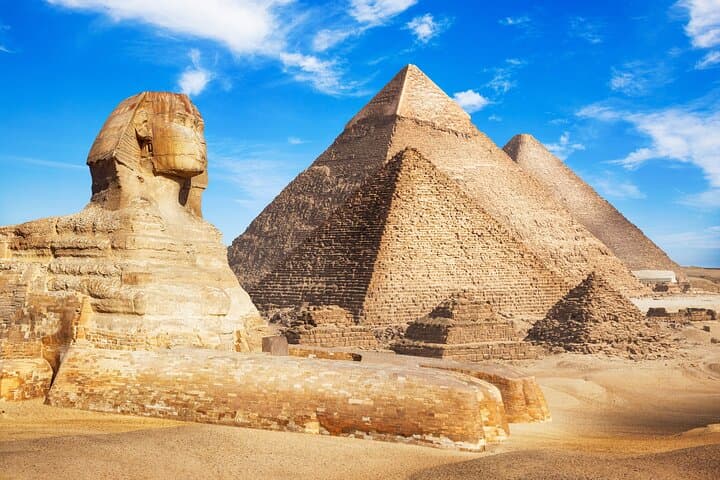
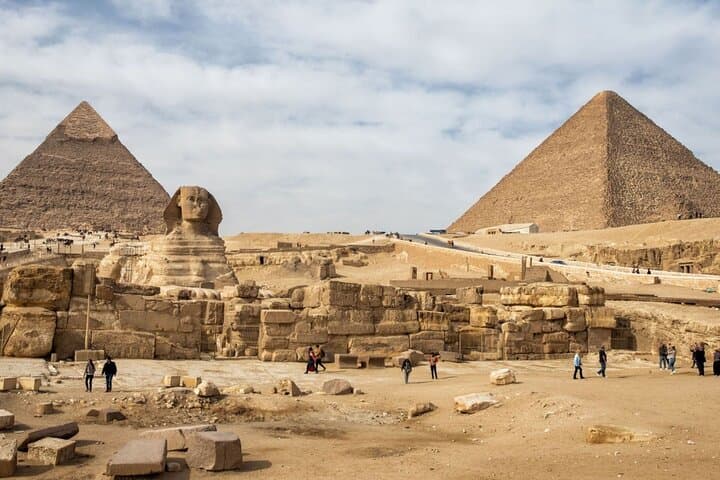
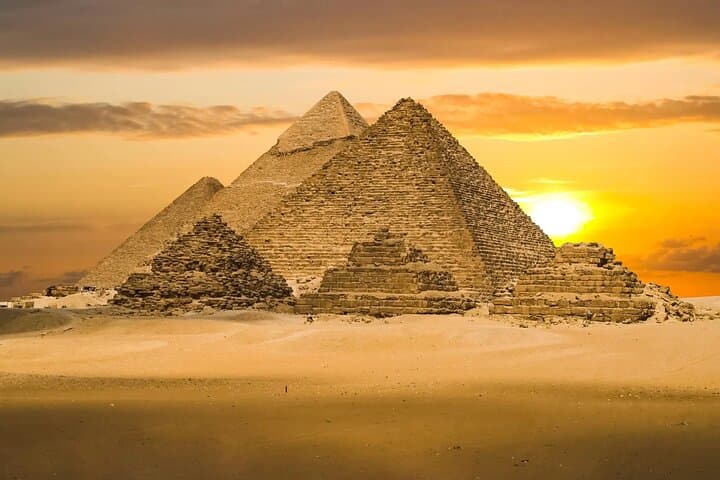
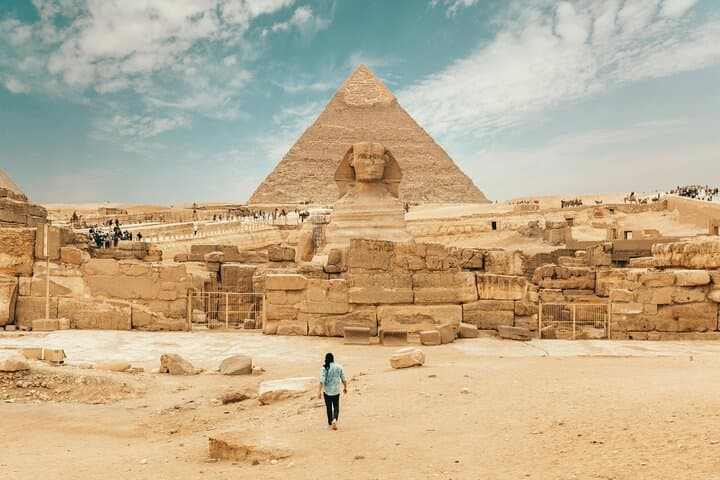
You step out of an air-conditioned van onto the wind-scoured limestone of the Giza Plateau, the sun flattening the modern city's noise behind you and the pyramids rising like deliberate challenges ahead. The Western Plateaux offer a broad vantage where tourists cluster and camels shift impatiently; Chephren’s angled silhouette reminds you the stones here predate recorded modern life.
You step out of an air-conditioned van onto the wind-scoured limestone of the Giza Plateau, the sun flattening the modern city's noise behind you and the pyramids rising like deliberate challenges ahead. The Western Plateaux offer a broad vantage where tourists cluster and camels shift impatiently; Chephren’s angled silhouette reminds you the stones here predate recorded modern life.
This full-day loop traces Egypt’s layered history: Old Kingdom engineering at the Great Pyramids (circa 4,500 years old), the carved mystery of the Sphinx, and later medieval and Ottoman chapters at the Citadel of Saladin and the Alabaster Mosque of Mohamed Ali. Geologically, the plateau is a compacted layer of Eocene limestone that allowed monumental building and now funnels wind and sand across exposed surfaces.
Culturally, expect a mix of guided interpretation and lively street scenes in nearby Islamic Cairo—calls to prayer from mosque domes, market stalls calling out spices and brasswork. Locals manage a tourism economy here; bargaining and respectful dress at religious sites are standard.
Practical guidance: this is a long day—about 11–12 hours including a roughly three-hour drive each way from Port Said—so bring a full water bottle and sun protection, and wear comfortable walking shoes for uneven stone surfaces. Modest attire and a scarf for women are required for mosque entry; small bags are screened. Photography is allowed broadly but follow guide directions around restricted areas. Expect flat, exposed walking, short stairs at the Citadel, and crowded viewpoints—plan restroom and cash breaks during the city segments.