THE ADVENTURE COLLECTIVE® · Independent discovery and booking for outdoor travel

Spend a day moving from the towering pyramids of Giza to the experimental steps at Saqqara and the Bent and Red pyramids of Dahshur. This private tour pairs expert Egyptology with practical logistics—early start, shaded breaks, and lots of up-close history.
Spend a day moving from the towering pyramids of Giza to the experimental steps at Saqqara and the Bent and Red pyramids of Dahshur. This private tour pairs expert Egyptology with practical logistics—early start, shaded breaks, and lots of up-close history.
You arrive at first light, the desert air cool and the Great Pyramid throwing a long, geometric shadow across the plateau. Guides move with practiced ease; stones older than recorded history loom above, and a caravan of tourists and camels threads the sandy apron. For a day you trade Cairo’s traffic for a walk through three chapters of ancient Egyptian engineering.
Verified experiences and guided adventures in the surrounding area.
Operated by Misk Tours · Cairo, Cairo Governorate
You arrive at first light, the desert air cool and the Great Pyramid throwing a long, geometric shadow across the plateau. Guides move with practiced ease; stones older than recorded history loom above, and a caravan of tourists and camels threads the sandy apron. For a day you trade Cairo’s traffic for a walk through three chapters of ancient Egyptian engineering.
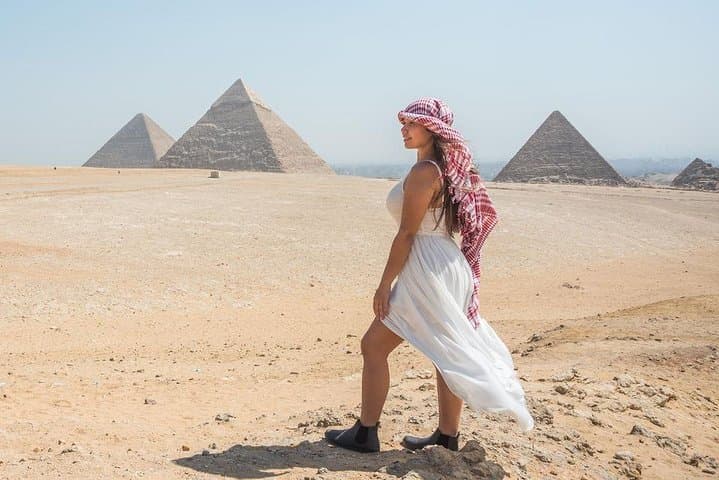
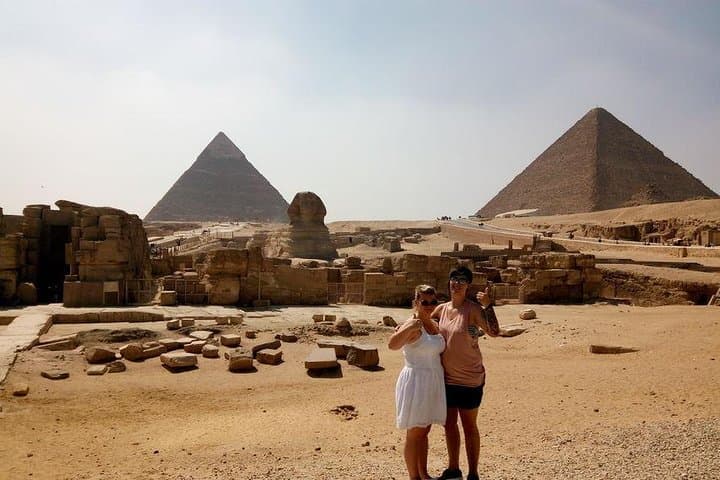
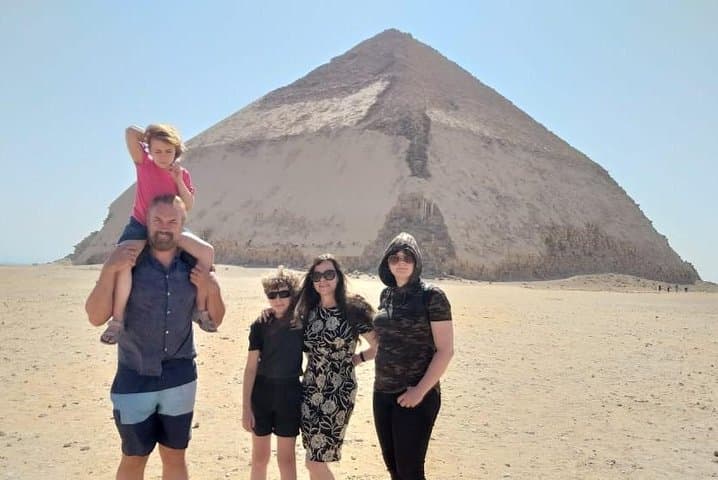
Begin at Giza, where the Khufu, Khafre and Menkaure pyramids dominate the horizon and the Sphinx stares out from limestone—its nose worn by millennia and modern wind. The itinerary then moves south to Saqqara, where Djoser’s stepped form marks a decisive turn from mastaba tombs to stacked stone experimentation. Geology here is straightforward: layered limestone and marl cut into clean lines, quarried and reassembled into monumental architecture. Finally, Dahshur presents two technological experiments—the Bent Pyramid’s change in angle and the Red Pyramid’s smoother profile—that reveal the iterative nature of royal construction.
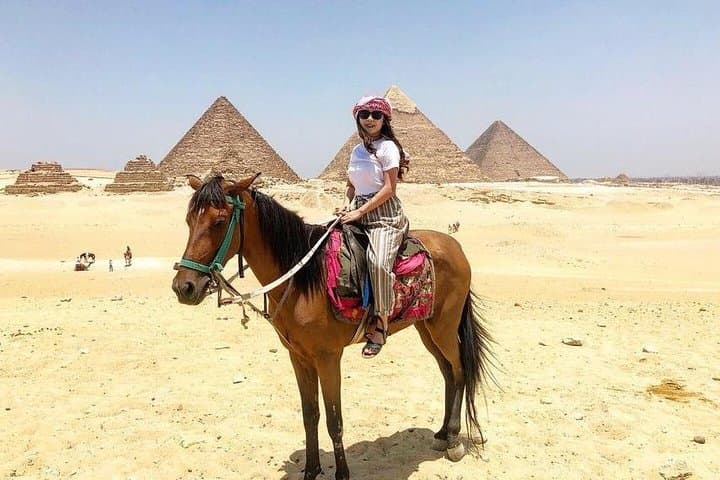
Cultural notes: an Egyptologist guide adds context about pharaonic funerary practice and the social organization that built these sites. Expect a modest Egyptian lunch and a short camel ride at Giza.
Practical guidance: start early to avoid heat, wear sun-protective clothing and sturdy shoes for uneven stone and sand, carry ample water and Egyptian pounds for small purchases and tips. Photography is allowed in most outdoor areas, but respect restricted interiors and local staff directions. The day is long but highly rewarding for history-minded travelers and outdoor walkers alike.
moderate.
7 hours.
Suitable for travellers in average physical condition who can walk on uneven ground for multiple hours and manage short climbs.
Yes—this tour includes entrance fees to Giza, Saqqara and Dahshur as noted in the inclusions.
The tour lists a 30-minute camel ride option around the pyramids—confirm timing with your guide to coordinate photos and walking segments.
The itinerary is marked suitable for all fitness levels, but expect uneven ground and short climbs; guests with limited mobility should check accessibility at specific sites before booking.
Some pyramids and tombs have restricted interior access due to preservation rules; your Egyptologist will advise which interiors are open the day of your visit.
These sites map the evolution of pharaonic funerary architecture—from mastaba tombs to the first true pyramids—showing engineering experiments across dynasties.
Visitor foot traffic is managed to protect fragile surfaces; stick to marked paths, avoid touching reliefs and support local guides who promote site preservation.
Misk Tours operates guided outdoor trips and adventures with an emphasis on safety, stewardship, and memorable experiences.
You arrive at first light, the desert air cool and the Great Pyramid throwing a long, geometric shadow across the plateau. Guides move with practiced ease; stones older than recorded history loom above, and a caravan of tourists and camels threads the sandy apron. For a day you trade Cairo’s traffic for a walk through three chapters of ancient Egyptian engineering.
You arrive at first light, the desert air cool and the Great Pyramid throwing a long, geometric shadow across the plateau. Guides move with practiced ease; stones older than recorded history loom above, and a caravan of tourists and camels threads the sandy apron. For a day you trade Cairo’s traffic for a walk through three chapters of ancient Egyptian engineering.
Begin at Giza, where the Khufu, Khafre and Menkaure pyramids dominate the horizon and the Sphinx stares out from limestone—its nose worn by millennia and modern wind. The itinerary then moves south to Saqqara, where Djoser’s stepped form marks a decisive turn from mastaba tombs to stacked stone experimentation. Geology here is straightforward: layered limestone and marl cut into clean lines, quarried and reassembled into monumental architecture. Finally, Dahshur presents two technological experiments—the Bent Pyramid’s change in angle and the Red Pyramid’s smoother profile—that reveal the iterative nature of royal construction.
Cultural notes: an Egyptologist guide adds context about pharaonic funerary practice and the social organization that built these sites. Expect a modest Egyptian lunch and a short camel ride at Giza.
Practical guidance: start early to avoid heat, wear sun-protective clothing and sturdy shoes for uneven stone and sand, carry ample water and Egyptian pounds for small purchases and tips. Photography is allowed in most outdoor areas, but respect restricted interiors and local staff directions. The day is long but highly rewarding for history-minded travelers and outdoor walkers alike.