THE ADVENTURE COLLECTIVE® · Independent discovery and booking for outdoor travel

A compact, private shore excursion that pairs the sacred limestone caverns of Batu Caves with the modern architecture of Putrajaya. Ideal for cruise passengers who want a focused day of walking, photography, and cultural sites with port transfer included.
A compact, private shore excursion that pairs the sacred limestone caverns of Batu Caves with the modern architecture of Putrajaya. Ideal for cruise passengers who want a focused day of walking, photography, and cultural sites with port transfer included.
You step off the ship into humid air that already smells of lake water and spice, the city of Putrajaya unfolding in low, modern domes and bridges while limestone pinnacles of Batu Caves rise northward like a different world. The morning is for temples and terraces — a 272-step ascent at Batu Caves that rewards with carved shrines, playful macaques and a wide view back toward the edge of the Klang Valley. The limestone itself is older than the city: karst that has hosted worship and climbing for generations.
Verified experiences and guided adventures in the surrounding area.
Operated by RIYAS ADVENTURE · Putrajaya, Putrajaya
You step off the ship into humid air that already smells of lake water and spice, the city of Putrajaya unfolding in low, modern domes and bridges while limestone pinnacles of Batu Caves rise northward like a different world. The morning is for temples and terraces — a 272-step ascent at Batu Caves that rewards with carved shrines, playful macaques and a wide view back toward the edge of the Klang Valley. The limestone itself is older than the city: karst that has hosted worship and climbing for generations.
Putrajaya is much younger: built in the late 1990s as Malaysia’s administrative heart, its rose-tinted Putra Mosque and green-domed Perdana Putra reflect a deliberate mix of Malay and international architecture. Bridges — Seri Wawasan among them — span a man-made lake designed both for cooling and recreation, while iron-and-steel mosques and diplomatic pavilions nod to the country’s regional ties.
Practically, this private shore excursion moves by air-conditioned vehicle with port pickup and dropoff; expect multiple short stops for photos, two longer visits (Batu Caves and Anjung Floria or similar park), and quick exterior views of government buildings where entry isn’t possible. Carry water, wear modest clothing for mosque visits, and bring cash for optional entrance fees and snacks. Traffic between Kuala Lumpur and Putrajaya can be heavy; build in time if you plan to extend into KL. For a single day ashore, the route balances cultural landmarks, short walks, and easy photography opportunities — a compact primer on both modern Malaysia and its enduring religious landscapes.
easy.
6 hours.
Suitable for most fitness levels; involves short walks and one steep stair climb at Batu Caves
Yes—there’s a steep stair climb to the main cave but resting points; infants can be carried and the tour notes it is suitable for all fitness levels.
Some mosques allow visitors outside prayer times with modest dress and respectful behavior; check local signage and follow staff instructions.
Yes, the excursion includes port pick-up and drop-off and operates as a private shore excursion.
Photography is allowed at most outdoor and many indoor sites, but always respect signs and worshippers; some official buildings prohibit close-up photography.
Putrajaya was developed in the late 1990s as Malaysia’s planned administrative capital; Batu Caves is an older limestone karst site that became a Hindu shrine over the past two centuries.
Putrajaya’s man-made lake and wetland areas function as a cooling system and wildlife habitat—stick to paths, avoid feeding animals, and dispose of waste responsibly.
RIYAS ADVENTURE operates guided outdoor trips and adventures with an emphasis on safety, stewardship, and memorable experiences.


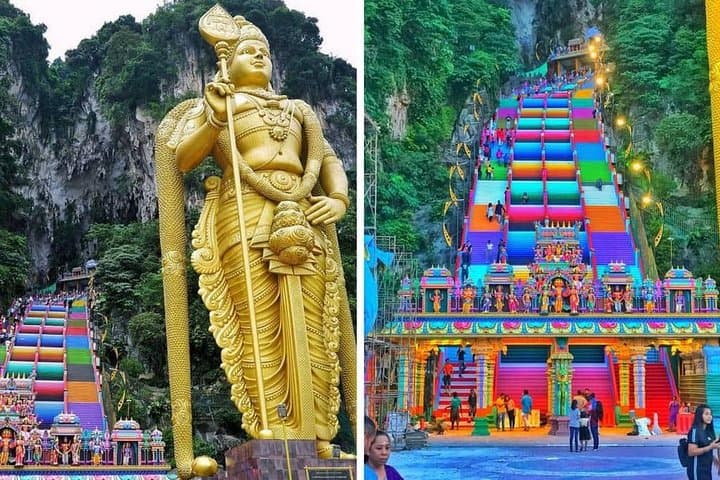
You step off the ship into humid air that already smells of lake water and spice, the city of Putrajaya unfolding in low, modern domes and bridges while limestone pinnacles of Batu Caves rise northward like a different world. The morning is for temples and terraces — a 272-step ascent at Batu Caves that rewards with carved shrines, playful macaques and a wide view back toward the edge of the Klang Valley. The limestone itself is older than the city: karst that has hosted worship and climbing for generations.
You step off the ship into humid air that already smells of lake water and spice, the city of Putrajaya unfolding in low, modern domes and bridges while limestone pinnacles of Batu Caves rise northward like a different world. The morning is for temples and terraces — a 272-step ascent at Batu Caves that rewards with carved shrines, playful macaques and a wide view back toward the edge of the Klang Valley. The limestone itself is older than the city: karst that has hosted worship and climbing for generations.
Putrajaya is much younger: built in the late 1990s as Malaysia’s administrative heart, its rose-tinted Putra Mosque and green-domed Perdana Putra reflect a deliberate mix of Malay and international architecture. Bridges — Seri Wawasan among them — span a man-made lake designed both for cooling and recreation, while iron-and-steel mosques and diplomatic pavilions nod to the country’s regional ties.
Practically, this private shore excursion moves by air-conditioned vehicle with port pickup and dropoff; expect multiple short stops for photos, two longer visits (Batu Caves and Anjung Floria or similar park), and quick exterior views of government buildings where entry isn’t possible. Carry water, wear modest clothing for mosque visits, and bring cash for optional entrance fees and snacks. Traffic between Kuala Lumpur and Putrajaya can be heavy; build in time if you plan to extend into KL. For a single day ashore, the route balances cultural landmarks, short walks, and easy photography opportunities — a compact primer on both modern Malaysia and its enduring religious landscapes.