THE ADVENTURE COLLECTIVE® · Independent discovery and booking for outdoor travel

Spend two easy hours walking with friendly llamas around Purmamarca while learning the geology and traditional plant uses of the region. This private, photo-focused trek offers flexible routes, panoramic viewpoints and a family-friendly pace.
Spend two easy hours walking with friendly llamas around Purmamarca while learning the geology and traditional plant uses of the region. This private, photo-focused trek offers flexible routes, panoramic viewpoints and a family-friendly pace.
A high plain wind moves through the salt-streaked hills as you step out of Purmamarca’s tourist office, a small caravan of llamas already waiting, patient and inquisitive. The animals reach forward as if to greet you, their soft breath fogging the morning light while the Cerro de los Siete Colores watches, layered rock faces daring you to look closer.
Verified experiences and guided adventures in the surrounding area.
Operated by Purmamarca Aniacho Turismo · Purmamarca, Jujuy
A high plain wind moves through the salt-streaked hills as you step out of Purmamarca’s tourist office, a small caravan of llamas already waiting, patient and inquisitive. The animals reach forward as if to greet you, their soft breath fogging the morning light while the Cerro de los Siete Colores watches, layered rock faces daring you to look closer.
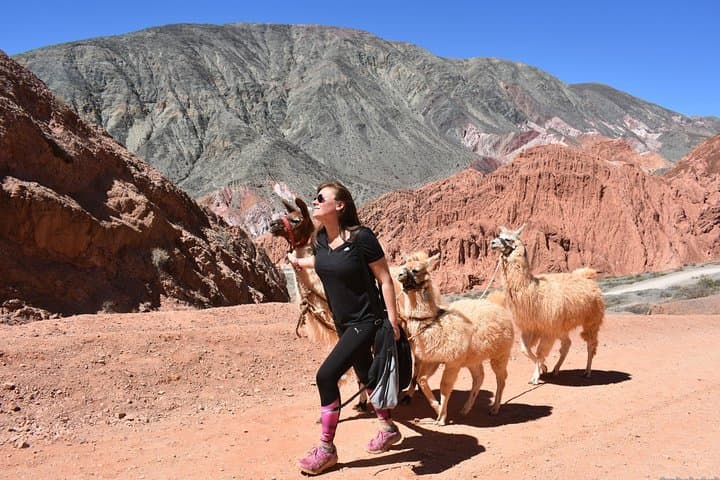
This personalized two-hour walk threads local geology, history and traditional plant uses into a gentle trek. The surrounding hills are folded sedimentary layers—red, ochre and green—left from ancient sea beds uplifted by Andean tectonics. Guides often explain how indigenous peoples of the Jujuy valleys used native shrubs medicinally and kept llamas for transport and wool; encounters on the trail are as much cultural exchange as they are a photo opportunity.
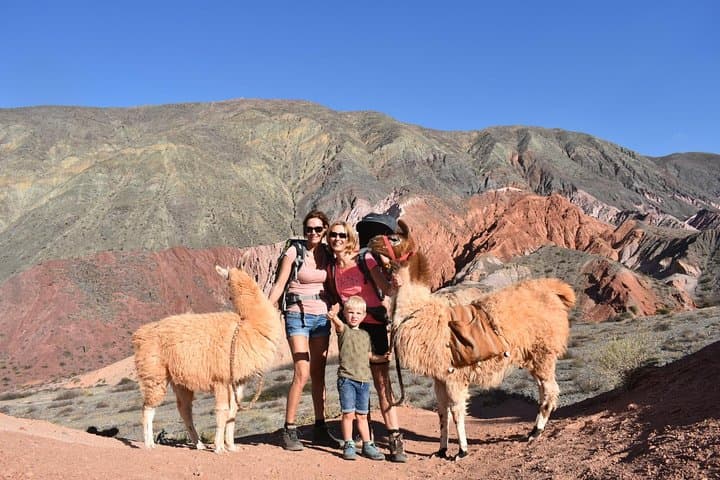
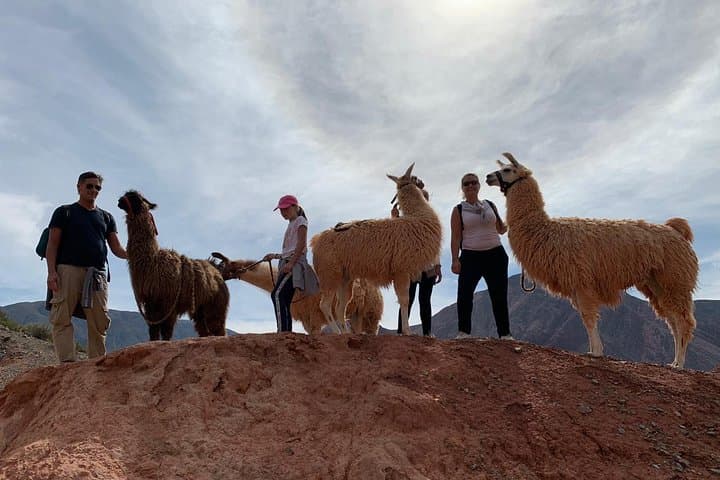
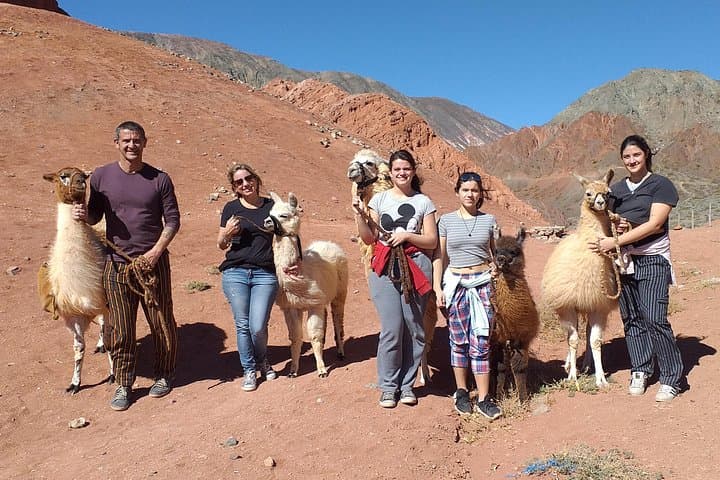
Terrain is easy: packed dirt paths, short inclines and several panoramic viewpoints suitable for close-up llama portraits. The route is flexible and set to participant pace—ideal for families and photographers. Expect sun, altitude (around 2,200–2,400 m), and dry air: hydrate before you start, bring layers for wind, and leave only footprints.
Practically, the walk departs from the town center, runs about 1.5–2 hours, and is child-friendly (children under 9 share a llama). Wear sturdy shoes, apply high-SPF sunscreen, and schedule morning light for the best color contrasts. The experience is low-impact and locally run—an accessible introduction to Puna landscapes with the quiet companionship of llamas.
easy.
1.5–2 hours.
Suitable for most fitness levels; light walking ability and stable footing recommended
The tour lasts about 105 minutes (roughly 1.5–2 hours) and the guide adjusts pace and route to participant needs.
Yes—children under 9 typically share a llama with an adult; the activity is family-friendly.
No—llamas on this tour are accustomed to people and guides provide handling direction and photo tips.
The walk departs from Purmamarca’s tourist information office in the town center.
The area has been inhabited by Quechua-speaking and pre-Incan peoples who used llamas for transport and maintained knowledge of native plant medicines.
Tours are low-impact and local operators encourage staying on paths and not feeding wildlife; support community guides to help preserve cultural and natural resources.
Purmamarca Aniacho Turismo operates guided outdoor trips and adventures with an emphasis on safety, stewardship, and memorable experiences.
A high plain wind moves through the salt-streaked hills as you step out of Purmamarca’s tourist office, a small caravan of llamas already waiting, patient and inquisitive. The animals reach forward as if to greet you, their soft breath fogging the morning light while the Cerro de los Siete Colores watches, layered rock faces daring you to look closer.
A high plain wind moves through the salt-streaked hills as you step out of Purmamarca’s tourist office, a small caravan of llamas already waiting, patient and inquisitive. The animals reach forward as if to greet you, their soft breath fogging the morning light while the Cerro de los Siete Colores watches, layered rock faces daring you to look closer.
This personalized two-hour walk threads local geology, history and traditional plant uses into a gentle trek. The surrounding hills are folded sedimentary layers—red, ochre and green—left from ancient sea beds uplifted by Andean tectonics. Guides often explain how indigenous peoples of the Jujuy valleys used native shrubs medicinally and kept llamas for transport and wool; encounters on the trail are as much cultural exchange as they are a photo opportunity.
Terrain is easy: packed dirt paths, short inclines and several panoramic viewpoints suitable for close-up llama portraits. The route is flexible and set to participant pace—ideal for families and photographers. Expect sun, altitude (around 2,200–2,400 m), and dry air: hydrate before you start, bring layers for wind, and leave only footprints.
Practically, the walk departs from the town center, runs about 1.5–2 hours, and is child-friendly (children under 9 share a llama). Wear sturdy shoes, apply high-SPF sunscreen, and schedule morning light for the best color contrasts. The experience is low-impact and locally run—an accessible introduction to Puna landscapes with the quiet companionship of llamas.