THE ADVENTURE COLLECTIVE® · Independent discovery and booking for outdoor travel

A day-trip from Puerto Madryn to Punta Tombo delivers one of South America’s largest Magellanic penguin colonies. Expect flat, wind-exposed terrain, raised boardwalk access, and close wildlife viewing within a half-day shore excursion.
A day-trip from Puerto Madryn to Punta Tombo delivers one of South America’s largest Magellanic penguin colonies. Expect flat, wind-exposed terrain, raised boardwalk access, and close wildlife viewing within a half-day shore excursion.
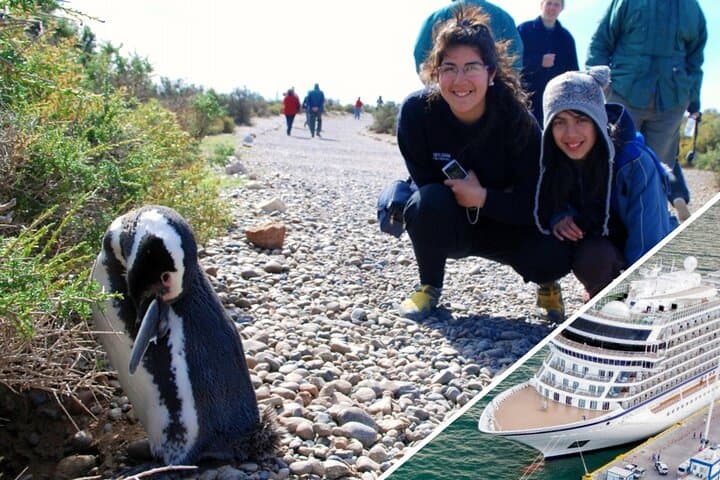
Salt wind and the steady trample of thousands of feet announce Punta Tombo long before the shore appears. On the road from Puerto Madryn the scrub opens to a low, wind-swept plain; the Atlantic glints and the colony’s black-and-white bodies pepper the grasses like living stones. Visitors arrive by air-conditioned transfer, step onto compacted dirt paths and raised wooden boardwalks, and meet a rookery where Magellanic penguins breed, nest and molt from September through April.
Verified experiences and guided adventures in the surrounding area.
Operated by Sussanich Turismo · Puerto Madryn, Chubut
Salt wind and the steady trample of thousands of feet announce Punta Tombo long before the shore appears. On the road from Puerto Madryn the scrub opens to a low, wind-swept plain; the Atlantic glints and the colony’s black-and-white bodies pepper the grasses like living stones. Visitors arrive by air-conditioned transfer, step onto compacted dirt paths and raised wooden boardwalks, and meet a rookery where Magellanic penguins breed, nest and molt from September through April.
Geologically the reserve sits on Patagonian steppe carved by strong coastal winds and occasional storm surge; there’s almost no elevation change—expect flat walking with short stretches of firm sand and gravel. The site has a conservation history: Punta Tombo was set aside to protect the largest Magellanic penguin colony in South America, and local communities in Chubut—many with Welsh roots—have long balanced tourism and fishing livelihoods.
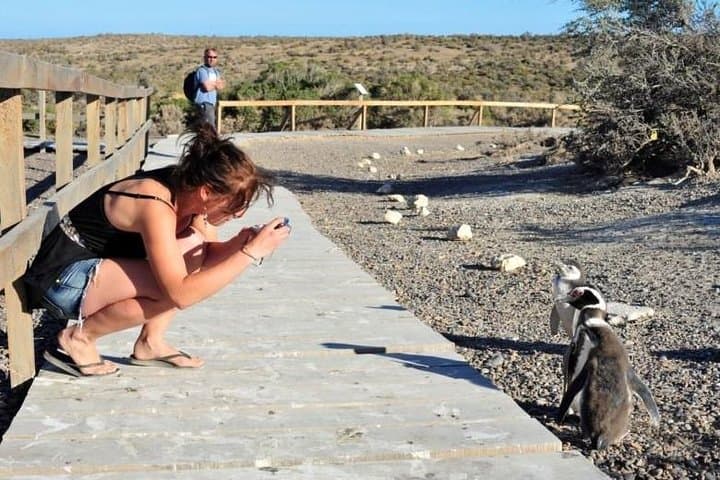
Practical guidance is simple and essential. Plan for a 1.5–2 hour drive each way (this excursion commonly runs about seven hours total), wear windproof layers and sturdy shoes for uneven, dusty surfaces, and carry binoculars and sunscreen. Stay on marked boardwalks to avoid trampling nests; follow the guide’s distance rules—penguins will approach if you remain calm, but never attempt to touch or feed them.
Expect close photographic opportunities, brief interpretive talks, and likely sightings of guanacos and Patagonian hares on the approach. Time your visit in the breeding months for chick activity, or in late summer during molting when adults loaf onshore—either way the colony’s character changes with the season and the weather pushes the story forward.
easy.
7 hours.
Suitable for most fitness levels; requires standing and walking up to 1–3 km on flat, uneven surfaces.
Typical transfer time is about 1.5–2 hours each way, so plan on a 6–7 hour round-trip shore excursion.
No—touching or feeding wildlife is prohibited; keep to boardwalks and let animals approach if they choose.
The main reserve has raised boardwalks that provide accessible viewing in several sections, but confirm transfer and onsite accommodations in advance.
Breeding season runs September–April; chicks are most visible in late spring to mid-summer (November–January).
Punta Tombo was established as a protected reserve to conserve one of the continent’s largest Magellanic penguin colonies; the surrounding region features Welsh-Patagonian cultural influences.
Visitors must remain on boardwalks and follow guides to protect nesting burrows; fisheries, climate variability and human disturbance are ongoing concerns for penguin populations.
Sussanich Turismo operates guided outdoor trips and adventures with an emphasis on safety, stewardship, and memorable experiences.


Salt wind and the steady trample of thousands of feet announce Punta Tombo long before the shore appears. On the road from Puerto Madryn the scrub opens to a low, wind-swept plain; the Atlantic glints and the colony’s black-and-white bodies pepper the grasses like living stones. Visitors arrive by air-conditioned transfer, step onto compacted dirt paths and raised wooden boardwalks, and meet a rookery where Magellanic penguins breed, nest and molt from September through April.
Salt wind and the steady trample of thousands of feet announce Punta Tombo long before the shore appears. On the road from Puerto Madryn the scrub opens to a low, wind-swept plain; the Atlantic glints and the colony’s black-and-white bodies pepper the grasses like living stones. Visitors arrive by air-conditioned transfer, step onto compacted dirt paths and raised wooden boardwalks, and meet a rookery where Magellanic penguins breed, nest and molt from September through April.
Geologically the reserve sits on Patagonian steppe carved by strong coastal winds and occasional storm surge; there’s almost no elevation change—expect flat walking with short stretches of firm sand and gravel. The site has a conservation history: Punta Tombo was set aside to protect the largest Magellanic penguin colony in South America, and local communities in Chubut—many with Welsh roots—have long balanced tourism and fishing livelihoods.
Practical guidance is simple and essential. Plan for a 1.5–2 hour drive each way (this excursion commonly runs about seven hours total), wear windproof layers and sturdy shoes for uneven, dusty surfaces, and carry binoculars and sunscreen. Stay on marked boardwalks to avoid trampling nests; follow the guide’s distance rules—penguins will approach if you remain calm, but never attempt to touch or feed them.
Expect close photographic opportunities, brief interpretive talks, and likely sightings of guanacos and Patagonian hares on the approach. Time your visit in the breeding months for chick activity, or in late summer during molting when adults loaf onshore—either way the colony’s character changes with the season and the weather pushes the story forward.