THE ADVENTURE COLLECTIVE® · Independent discovery and booking for outdoor travel

Launch from treetop platforms above the Anamuya foothills and fly over tropical canopy on a half-day zipline course a short drive from Punta Cana. This guided tour mixes adrenaline with local landscape history, suited to travelers of average fitness who want a focused nature thrill.
Launch from treetop platforms above the Anamuya foothills and fly over tropical canopy on a half-day zipline course a short drive from Punta Cana. This guided tour mixes adrenaline with local landscape history, suited to travelers of average fitness who want a focused nature thrill.
The platform creaks once, then a guide clips your harness and the jungle exhales. You push off and the wind takes you—palms whip into a green blur, the valley below opening like a map of distant farms and forest. For the next few hours the Anamuya foothills will decide your pace: quick, breathless runs across steel cables, short walks between platforms, and quiet windows of rainforest where birds call and sap drips from leaves like slow rain.
Verified experiences and guided adventures in the surrounding area.
Operated by Melinmar Tours Punta Cana · Punta Cana, La Altagracia
The platform creaks once, then a guide clips your harness and the jungle exhales. You push off and the wind takes you—palms whip into a green blur, the valley below opening like a map of distant farms and forest. For the next few hours the Anamuya foothills will decide your pace: quick, breathless runs across steel cables, short walks between platforms, and quiet windows of rainforest where birds call and sap drips from leaves like slow rain.
This is not a coastal thrill ride. The Anamuya Mountains are low, folded hills of uplifted limestone and alluvial soils that feed the rivers toward the Caribbean. The ridges were home to Taíno settlements long before Spanish colonists renamed the coast; today local communities farm coffee, plantains, and cacao on the lower slopes. Zipline tours here thread the edge between tourism and working landscape—guides often point out old stone fences and jungle patches that hint at the island’s agricultural history.
Geologically the contours are gentle but vital: short ascents to platforms sit on weathered rock and firm red earth. Vegetation is thick—palm, ceiba, and a dense understory—and wildlife is curious but cautious. Expect the hum of insects, the sudden dart of a green kingfisher over a creek, and the patient call of a fruit-eating pigeon.
The typical tour starts with a roughly 40-minute transfer from Punta Cana, followed by an orientation and harnessing. The course uses six main zip lines staged across multiple platforms, with the longest run delivering a sustained glide that gives a clear line of the valley below. Walking between platforms is brief but can be on uneven, sometimes muddy trails with cumulative elevation change of a few dozen meters—enough to raise the heart before the cable does.
Practicalities: arrive hydrated and wearing secure, closed-toe shoes; shorts or light pants and a snug shirt work best. Guides provide helmets, harnesses, and safety briefings; many systems use dual cables and backup lines for redundancy. Morning slots avoid the hottest part of the day and usually mean quieter trails.
Bring a small, secure camera or chest-mounted action cam—phones are often allowed but should be tethered. If you have a fear of heights, choose a mid-course run or speak to the guide; staff are experienced at pacing nervous first-timers. With sensible footwear, sun protection, and a readiness for quick climbs on narrow trails, this half-day canopy tour is a compact, high-energy way to feel the Dominican jungle push against you—and to return to Punta Cana with a new perspective on the island’s inland green heart.
moderate.
4 hours.
Suitable for average fitness: able to climb short stairways and walk uneven terrain for brief stretches.
Most hotels are about a 35–45 minute drive to the Anamuya foothills; operators usually include round-trip transport.
Minimum ages are commonly around 6–8 years old and weight limits typically range up to about 250 lbs (113 kg); confirm exact limits with the operator before booking.
No experience necessary—guides provide a safety briefing and operate belay systems; basic mobility to climb short ladders and steps is required.
Closed-toe shoes, comfortable activewear, and layers for sun protection; avoid loose clothing or jewelry that could snag.
Tours may operate in light rain but can be paused for heavy storms; check cancellation terms and local weather on the day of your tour.
Small backpacks are usually allowed but should be secured; many guests leave valuables at the meeting point or use lockers if provided.
The Anamuya area sits on gentle karst ridges used historically for small-scale agriculture and dotted with traces of Taíno pre-Columbian presence; modern tours pass through fields that have supplied local towns for generations.
Operators work to minimize trail widening and litter; bring out any trash and follow guide directions to protect fragile understory and bird habitat.
Melinmar Tours Punta Cana operates guided outdoor trips and adventures with an emphasis on safety, stewardship, and memorable experiences.
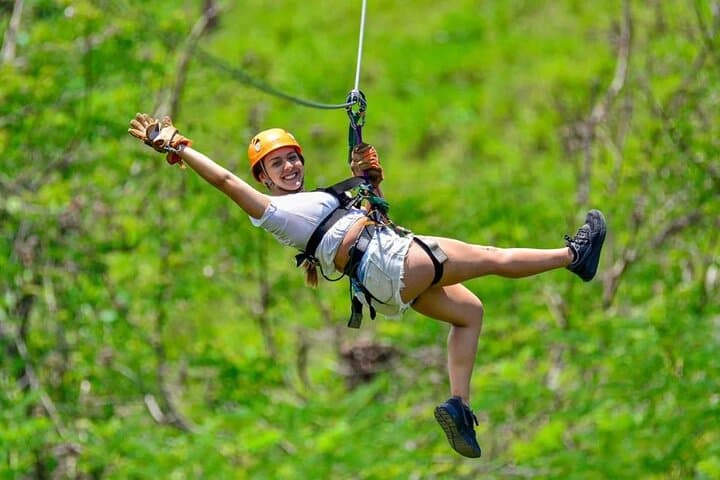
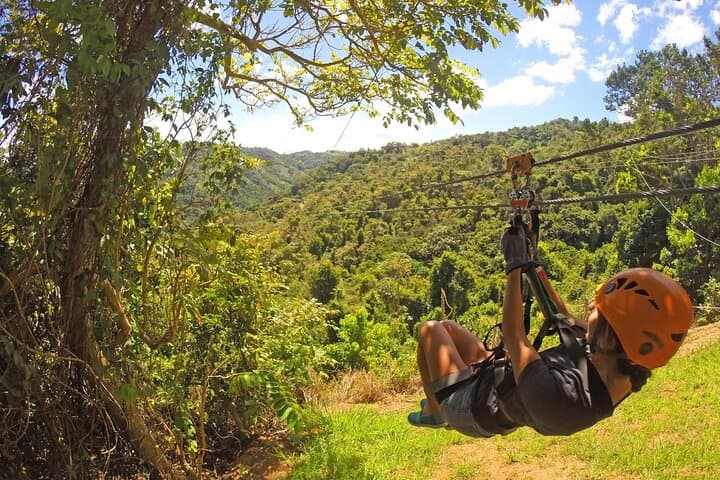
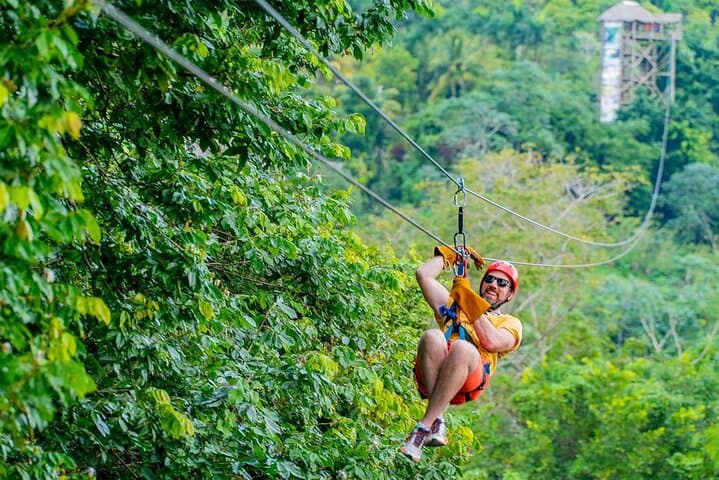
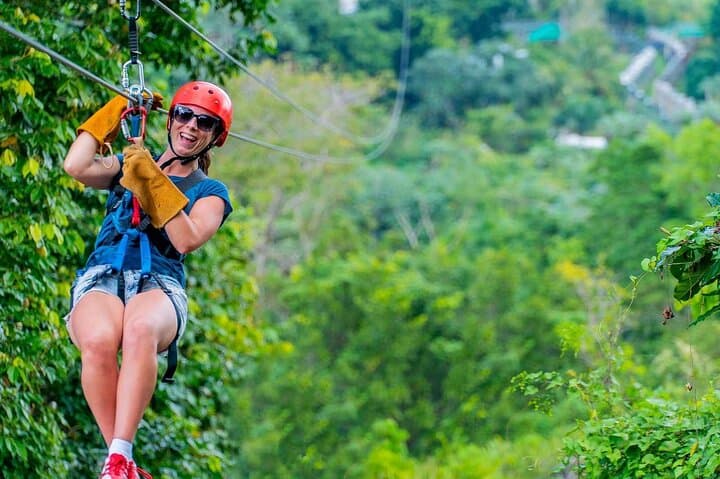
The platform creaks once, then a guide clips your harness and the jungle exhales. You push off and the wind takes you—palms whip into a green blur, the valley below opening like a map of distant farms and forest. For the next few hours the Anamuya foothills will decide your pace: quick, breathless runs across steel cables, short walks between platforms, and quiet windows of rainforest where birds call and sap drips from leaves like slow rain.
The platform creaks once, then a guide clips your harness and the jungle exhales. You push off and the wind takes you—palms whip into a green blur, the valley below opening like a map of distant farms and forest. For the next few hours the Anamuya foothills will decide your pace: quick, breathless runs across steel cables, short walks between platforms, and quiet windows of rainforest where birds call and sap drips from leaves like slow rain.
This is not a coastal thrill ride. The Anamuya Mountains are low, folded hills of uplifted limestone and alluvial soils that feed the rivers toward the Caribbean. The ridges were home to Taíno settlements long before Spanish colonists renamed the coast; today local communities farm coffee, plantains, and cacao on the lower slopes. Zipline tours here thread the edge between tourism and working landscape—guides often point out old stone fences and jungle patches that hint at the island’s agricultural history.
Geologically the contours are gentle but vital: short ascents to platforms sit on weathered rock and firm red earth. Vegetation is thick—palm, ceiba, and a dense understory—and wildlife is curious but cautious. Expect the hum of insects, the sudden dart of a green kingfisher over a creek, and the patient call of a fruit-eating pigeon.
The typical tour starts with a roughly 40-minute transfer from Punta Cana, followed by an orientation and harnessing. The course uses six main zip lines staged across multiple platforms, with the longest run delivering a sustained glide that gives a clear line of the valley below. Walking between platforms is brief but can be on uneven, sometimes muddy trails with cumulative elevation change of a few dozen meters—enough to raise the heart before the cable does.
Practicalities: arrive hydrated and wearing secure, closed-toe shoes; shorts or light pants and a snug shirt work best. Guides provide helmets, harnesses, and safety briefings; many systems use dual cables and backup lines for redundancy. Morning slots avoid the hottest part of the day and usually mean quieter trails.
Bring a small, secure camera or chest-mounted action cam—phones are often allowed but should be tethered. If you have a fear of heights, choose a mid-course run or speak to the guide; staff are experienced at pacing nervous first-timers. With sensible footwear, sun protection, and a readiness for quick climbs on narrow trails, this half-day canopy tour is a compact, high-energy way to feel the Dominican jungle push against you—and to return to Punta Cana with a new perspective on the island’s inland green heart.