THE ADVENTURE COLLECTIVE® · Independent discovery and booking for outdoor travel

Float up to 60 feet above palms and rolling hills on a half-day zip line departing from Bávaro. This guided tour pairs hotel pickup with six carbon-fiber zips, a suspension bridge and local countryside views — ideal for travelers who want an adrenaline hit without a full-day commitment.
Float up to 60 feet above palms and rolling hills on a half-day zip line departing from Bávaro. This guided tour pairs hotel pickup with six carbon-fiber zips, a suspension bridge and local countryside views — ideal for travelers who want an adrenaline hit without a full-day commitment.
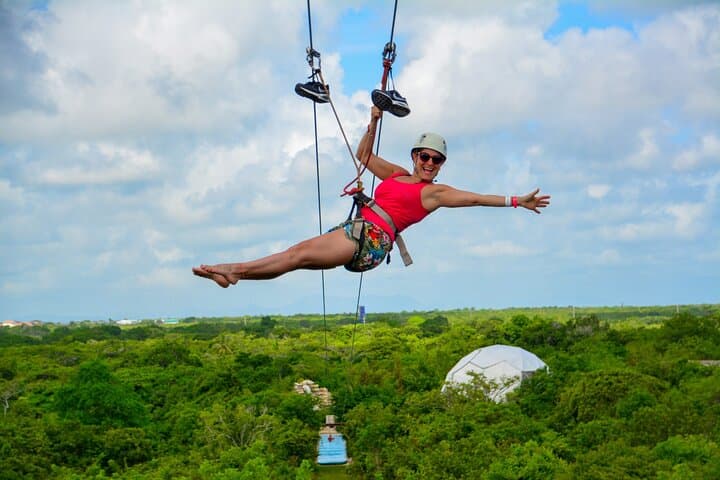
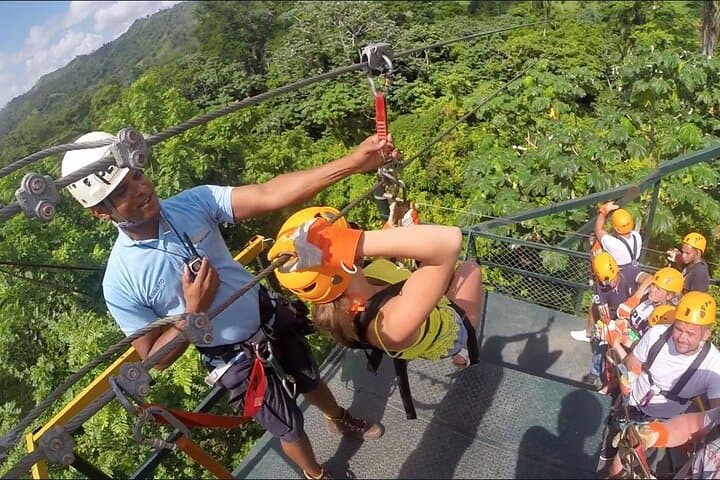
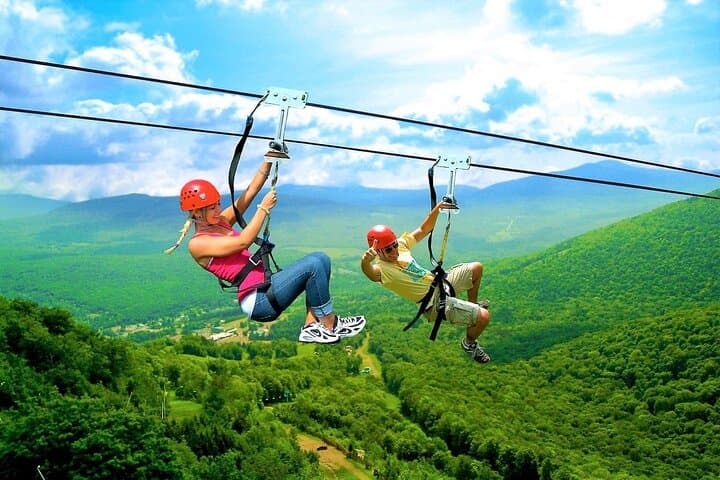
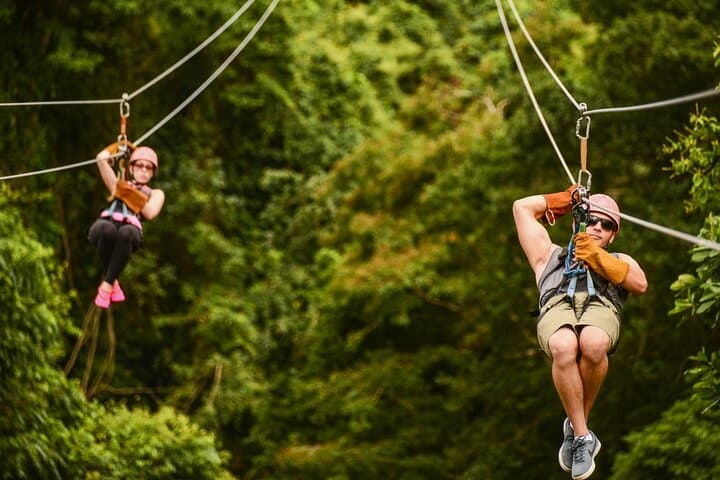
The transfer winds away from Bávaro resorts and the air tightens with humidity and expectation. Towers rise ahead like a vertical playground; palms lean in as if to watch you pass. You clip into a harness, feel the taut cable hum, and step off a platform to float sixty feet above mixed pasture and scattered forest — the countryside pushing its slow, green rhythm beneath you.
Verified experiences and guided adventures in the surrounding area.
Operated by Falolas Tours & Transfers · Punta Cana, La Altagracia
The transfer winds away from Bávaro resorts and the air tightens with humidity and expectation. Towers rise ahead like a vertical playground; palms lean in as if to watch you pass. You clip into a harness, feel the taut cable hum, and step off a platform to float sixty feet above mixed pasture and scattered forest — the countryside pushing its slow, green rhythm beneath you.
This stretch of eastern Hispaniola carries traces of Taino settlement and later Spanish colonial land uses: pasture, small-scale farms and the sugar-era roads that still shape routes inland. Geologically the area is coastal plain that gives way to low limestone ridges and alluvial pockets, producing the rolling hills and palms visible from the lines. Local culture is a practical mix of tourism services and rural life; guides often point out fruit groves and family farms as you move between towers.
Practically: the experience runs about 3–4 hours including hotel pickup by air-conditioned vehicle. The course uses carbon-fiber cables and staged platforms; staff brief and kit guests before each run. Expect short climbs, suspension-bridge crossings and open-air viewing points. Bring closed-toe shoes, sun protection and a secure camera strap; hydrate before you go and aim for a morning slot to avoid the heat and afternoon showers.
Guides handle technical safety, but your comfort with heights helps. Respect marked areas, take photos with care, and leave no trace — the low hills and palms are fragile after heavy rain. When you get back to the bus, you’ll be tired in a good way, with the country’s wind still nudging your hair.
moderate.
3–4 hours.
Suitable for most people with basic mobility—expect short climbs, platform steps, and standing during brief safety briefings.
Yes—professional guides provide safety briefings and harness fitting; the course is run for visitors with no prior zip-line experience.
Policies vary by operator; check at booking or with the local guide for specific age, weight or health restrictions before you go.
Bring ID, comfortable closed-toe shoes, sunscreen, insect repellent, and a secure camera strap; bottled water is usually available but carry some for the transfer.
This supplier allows full refunds if you cancel at least 24 hours before the scheduled departure; tours may proceed in light rain but operators assess safety on site.
The eastern Dominican Republic carries Taino roots and later Spanish agricultural development; modern tourism now threads through longstanding farming communities.
Rapid development around Punta Cana stresses local habitats; stay on marked trails, avoid feeding wildlife and choose operators that minimize vegetation clearing and support local communities.
Falolas Tours & Transfers operates guided outdoor trips and adventures with an emphasis on safety, stewardship, and memorable experiences.
The transfer winds away from Bávaro resorts and the air tightens with humidity and expectation. Towers rise ahead like a vertical playground; palms lean in as if to watch you pass. You clip into a harness, feel the taut cable hum, and step off a platform to float sixty feet above mixed pasture and scattered forest — the countryside pushing its slow, green rhythm beneath you.
The transfer winds away from Bávaro resorts and the air tightens with humidity and expectation. Towers rise ahead like a vertical playground; palms lean in as if to watch you pass. You clip into a harness, feel the taut cable hum, and step off a platform to float sixty feet above mixed pasture and scattered forest — the countryside pushing its slow, green rhythm beneath you.
This stretch of eastern Hispaniola carries traces of Taino settlement and later Spanish colonial land uses: pasture, small-scale farms and the sugar-era roads that still shape routes inland. Geologically the area is coastal plain that gives way to low limestone ridges and alluvial pockets, producing the rolling hills and palms visible from the lines. Local culture is a practical mix of tourism services and rural life; guides often point out fruit groves and family farms as you move between towers.
Practically: the experience runs about 3–4 hours including hotel pickup by air-conditioned vehicle. The course uses carbon-fiber cables and staged platforms; staff brief and kit guests before each run. Expect short climbs, suspension-bridge crossings and open-air viewing points. Bring closed-toe shoes, sun protection and a secure camera strap; hydrate before you go and aim for a morning slot to avoid the heat and afternoon showers.
Guides handle technical safety, but your comfort with heights helps. Respect marked areas, take photos with care, and leave no trace — the low hills and palms are fragile after heavy rain. When you get back to the bus, you’ll be tired in a good way, with the country’s wind still nudging your hair.