THE ADVENTURE COLLECTIVE® · Independent discovery and booking for outdoor travel

Drive an off-road buggy through La Mina quarry, descend into private cenotes for a cool swim, and sample Dominican cacao, coffee and Mamajuana with bilingual local guides. This three-hour loop mixes hands-on driving, geology, and food culture for a compact Punta Cana adventure.
Drive an off-road buggy through La Mina quarry, descend into private cenotes for a cool swim, and sample Dominican cacao, coffee and Mamajuana with bilingual local guides. This three-hour loop mixes hands-on driving, geology, and food culture for a compact Punta Cana adventure.
The engine thumps beneath you as the safari-style bus drops the group at a sun-baked trailhead; dust lifts like a curtain and the countryside opens—limestone outcrops, scrub, and the sudden green of cultivated cacao trees. Riders strap into open-top buggies and slip onto rutted tracks that thread through La Mina quarry and farming plots, wind redirecting the heat across your face as palms and low karst hills steer your view.
Verified experiences and guided adventures in the surrounding area.
The engine thumps beneath you as the safari-style bus drops the group at a sun-baked trailhead; dust lifts like a curtain and the countryside opens—limestone outcrops, scrub, and the sudden green of cultivated cacao trees. Riders strap into open-top buggies and slip onto rutted tracks that thread through La Mina quarry and farming plots, wind redirecting the heat across your face as palms and low karst hills steer your view.
Beneath the surface, the island tells a different story: Punta Cana sits on a karstic limestone base carved by freshwater over millennia, producing underground caverns and cenotes. These private cenotes—closed to the general public—offer cavern pools of cool, clear water and filtered sunlight that paints the walls. The nearby farms and workshops add cultural texture: Dominican cacao and coffee have deep roots here, and traditional Mamajuana and cigar tastings connect the ride’s adrenaline to the region’s sensory history.
Expect a blend of motion and stillness—fast dirt, sudden quiet in the cave, and the tactile ritual of tasting hand-roasted cacao. Guides are bilingual and local, and the itinerary includes a short snack and hotel transfers.
Practical notes: wear closed-toe shoes for buggy control, bring swimwear and a quick-dry towel, and use reef-safe sunscreen. If you get motion-sick, sit forward early in the buggy; water is available but carry an extra bottle. The whole loop runs about three hours and is best enjoyed in the cooler morning or late afternoon light when the cenote water feels most refreshing.
moderate.
3 hours.
Moderate: you should be comfortable operating an off-road buggy for short periods and able to swim in open freshwater pools.
No professional off-road experience is required, but basic comfort driving a manual or automatic buggy on dirt tracks is expected and guides provide instructions.
Yes—these cenotes are monitored and calm; however, non-swimmers should notify guides and wear a life vest if needed.
Yes—hotel pickup and drop-off are provided via an open-air safari-style bus for most Punta Cana hotels; confirm pickup time at booking.
Operators typically set age and weight limits for driver safety—confirm with the provider, but passengers of all ages can usually join the cenote swim.
The karst landscape of eastern Hispaniola developed over thousands of years as rainwater dissolved limestone, creating the island’s underground rivers and cenotes; cacao and coffee cultivation grew with colonial and post-colonial agriculture.
Tours emphasize low-impact access to private cenotes—use biodegradable products, avoid trashing walkways, and follow guides’ rules to protect karst water quality.
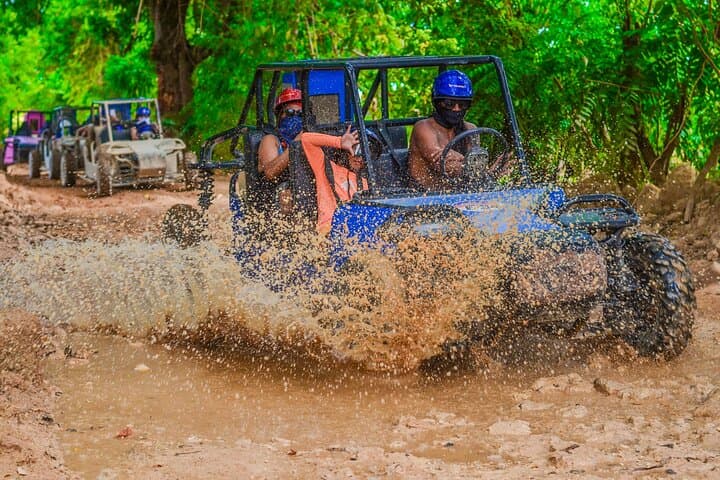
The engine thumps beneath you as the safari-style bus drops the group at a sun-baked trailhead; dust lifts like a curtain and the countryside opens—limestone outcrops, scrub, and the sudden green of cultivated cacao trees. Riders strap into open-top buggies and slip onto rutted tracks that thread through La Mina quarry and farming plots, wind redirecting the heat across your face as palms and low karst hills steer your view.
The engine thumps beneath you as the safari-style bus drops the group at a sun-baked trailhead; dust lifts like a curtain and the countryside opens—limestone outcrops, scrub, and the sudden green of cultivated cacao trees. Riders strap into open-top buggies and slip onto rutted tracks that thread through La Mina quarry and farming plots, wind redirecting the heat across your face as palms and low karst hills steer your view.
Beneath the surface, the island tells a different story: Punta Cana sits on a karstic limestone base carved by freshwater over millennia, producing underground caverns and cenotes. These private cenotes—closed to the general public—offer cavern pools of cool, clear water and filtered sunlight that paints the walls. The nearby farms and workshops add cultural texture: Dominican cacao and coffee have deep roots here, and traditional Mamajuana and cigar tastings connect the ride’s adrenaline to the region’s sensory history.
Expect a blend of motion and stillness—fast dirt, sudden quiet in the cave, and the tactile ritual of tasting hand-roasted cacao. Guides are bilingual and local, and the itinerary includes a short snack and hotel transfers.
Practical notes: wear closed-toe shoes for buggy control, bring swimwear and a quick-dry towel, and use reef-safe sunscreen. If you get motion-sick, sit forward early in the buggy; water is available but carry an extra bottle. The whole loop runs about three hours and is best enjoyed in the cooler morning or late afternoon light when the cenote water feels most refreshing.