THE ADVENTURE COLLECTIVE® · Independent discovery and booking for outdoor travel

Explore Puerto Plata’s coastal history and culture on a 4–5 hour loop from Fort San Felipe through the historic center, Macorix Rum Museum, and a final beach stop. Practical, accessible, and focused on local flavor.
Explore Puerto Plata’s coastal history and culture on a 4–5 hour loop from Fort San Felipe through the historic center, Macorix Rum Museum, and a final beach stop. Practical, accessible, and focused on local flavor.
A morning in Puerto Plata begins where the boardwalk meets the sea: salt-slick air lifts off the Atlantic and the stone bulk of Fort San Felipe watches the harbor like an old mariner. Visitors move from the fort’s cannons and breezy parapets into the sunlit streets of the historic center, where the cathedral’s bell and the burst of painted umbrellas on Umbrella Street give the city its character.
Verified experiences and guided adventures in the surrounding area.
Operated by Atlantis TSG Tours · Puerto Plata, Puerto Plata
A morning in Puerto Plata begins where the boardwalk meets the sea: salt-slick air lifts off the Atlantic and the stone bulk of Fort San Felipe watches the harbor like an old mariner. Visitors move from the fort’s cannons and breezy parapets into the sunlit streets of the historic center, where the cathedral’s bell and the burst of painted umbrellas on Umbrella Street give the city its character.
The fort was built in the 16th century to guard a strategic harbor on the north coast of Hispaniola; its walls speak to colonial clashes and trade routes that shaped the region. Geologically, this stretch of coastline is part of the Dominican Republic’s Amber Coast — low, rocky headlands alternating with sandy beaches carved by waves and wind. Culture arrives in small doses: wooden kiosks selling fried fish, the scent of sugarcane and the amber-hued rum at Macorix, where a tasting explains how local cane and oak barrels meet.
Practical guidance: the full tour runs about 4–5 hours and mixes easy walking with short transfers. Footwear should handle sun-warmed stone and soft sand; a hat and sunscreen are essential. Bring a small swim kit if you want a beach stop; bottled water is provided but carry a refillable bottle to stay hydrated. The route is wheelchair accessible with moderate paved surfaces in the historic center, but check mobility needs for sand access.
Timing tip: morning or late afternoon visits avoid the hottest midday sun and bring clearer sea views for photos. Expect polite bargaining at souvenir stalls, a relaxed pace, and enough time to sample local rum before a final stretch of shoreline and a last look back at the fort as the ocean keeps pushing forward.
easy.
4–5 hours.
Suitable for most fitness levels; involves short walks and light standing periods
Admission to Fort San Felipe is included as part of the tour itinerary; guides typically allot time for photos and short historical interpretation.
Yes — transport and main historic-center surfaces are wheelchair accessible, but beach access can be uneven; check with the operator about specific mobility needs.
Bottled water and soda are included; additional snacks or meals are not generally provided, so bring cash for local food stops.
Bring a photo ID if required and avoid driving if you plan to sample; tasting portions are small but memorable.
Fort San Felipe dates to the 1500s and served as a defensive stronghold for colonial Puerto Plata, witnessing privateer raids and shifting trade routes.
Coastal areas face erosion and reef stress; visitors can help by using marked access points for beaches, avoiding litter, and choosing locally managed tours.
Atlantis TSG Tours operates guided outdoor trips and adventures with an emphasis on safety, stewardship, and memorable experiences.
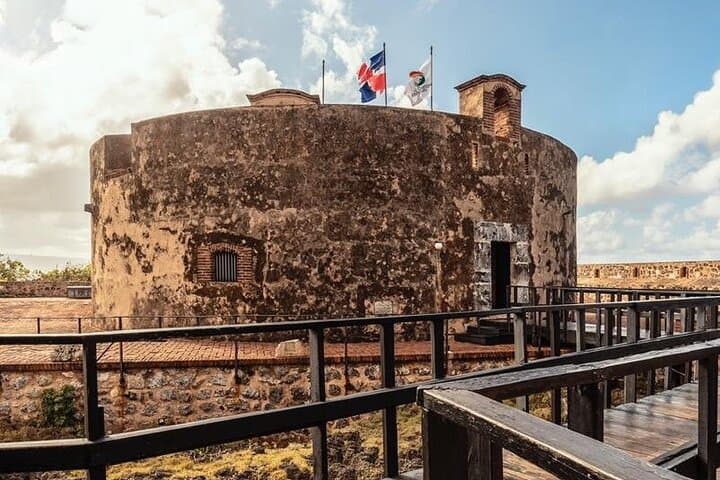


A morning in Puerto Plata begins where the boardwalk meets the sea: salt-slick air lifts off the Atlantic and the stone bulk of Fort San Felipe watches the harbor like an old mariner. Visitors move from the fort’s cannons and breezy parapets into the sunlit streets of the historic center, where the cathedral’s bell and the burst of painted umbrellas on Umbrella Street give the city its character.
A morning in Puerto Plata begins where the boardwalk meets the sea: salt-slick air lifts off the Atlantic and the stone bulk of Fort San Felipe watches the harbor like an old mariner. Visitors move from the fort’s cannons and breezy parapets into the sunlit streets of the historic center, where the cathedral’s bell and the burst of painted umbrellas on Umbrella Street give the city its character.
The fort was built in the 16th century to guard a strategic harbor on the north coast of Hispaniola; its walls speak to colonial clashes and trade routes that shaped the region. Geologically, this stretch of coastline is part of the Dominican Republic’s Amber Coast — low, rocky headlands alternating with sandy beaches carved by waves and wind. Culture arrives in small doses: wooden kiosks selling fried fish, the scent of sugarcane and the amber-hued rum at Macorix, where a tasting explains how local cane and oak barrels meet.
Practical guidance: the full tour runs about 4–5 hours and mixes easy walking with short transfers. Footwear should handle sun-warmed stone and soft sand; a hat and sunscreen are essential. Bring a small swim kit if you want a beach stop; bottled water is provided but carry a refillable bottle to stay hydrated. The route is wheelchair accessible with moderate paved surfaces in the historic center, but check mobility needs for sand access.
Timing tip: morning or late afternoon visits avoid the hottest midday sun and bring clearer sea views for photos. Expect polite bargaining at souvenir stalls, a relaxed pace, and enough time to sample local rum before a final stretch of shoreline and a last look back at the fort as the ocean keeps pushing forward.