THE ADVENTURE COLLECTIVE® · Independent discovery and booking for outdoor travel

Float above turquoise gardens of coral on a guided snorkel of the Great Maya Reef, then dry off for a stroll through Puerto Morelos and a beachside lunch. This half-day trip pairs marine viewing with local flavors and hotel transport from Cancun and the Riviera Maya.
Float above turquoise gardens of coral on a guided snorkel of the Great Maya Reef, then dry off for a stroll through Puerto Morelos and a beachside lunch. This half-day trip pairs marine viewing with local flavors and hotel transport from Cancun and the Riviera Maya.
The boat slips away from the pier and the water opens into a sheet of Caribbean blue. Guides fit life vests and hand out brand-new snorkel tubes while the engine hum becomes background to gull calls and the occasional splash of flying fish. Ahead, low coral heads rise under a clear surface — the Great Maya Reef waiting for a slow, deliberate approach.
Verified experiences and guided adventures in the surrounding area.
Operated by What To Do In Cancun · Puerto Morelos, Quintana Roo
The boat slips away from the pier and the water opens into a sheet of Caribbean blue. Guides fit life vests and hand out brand-new snorkel tubes while the engine hum becomes background to gull calls and the occasional splash of flying fish. Ahead, low coral heads rise under a clear surface — the Great Maya Reef waiting for a slow, deliberate approach.
Geology here is blunt and immediate: a living barrier reef system built on Pleistocene limestone, fringing a coastline that was once a quiet fishing village. Puerto Morelos still carries that heritage — a palm-lined main street, cooperative fishers, and a pier that doubles as both community hub and reef access point. Cultural touches are small but visible: local beach clubs, open-air cevicherías, and murals that mark the town’s maritime roots.
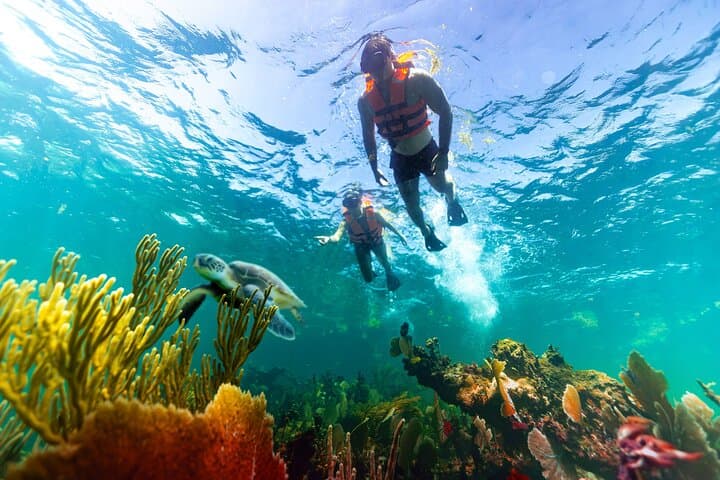
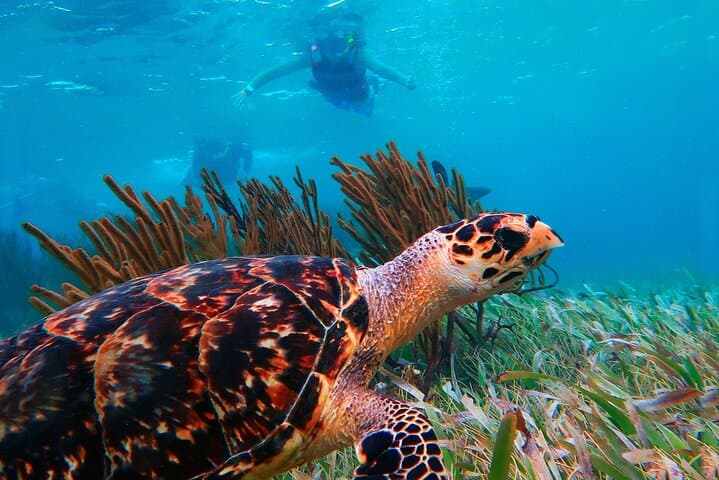
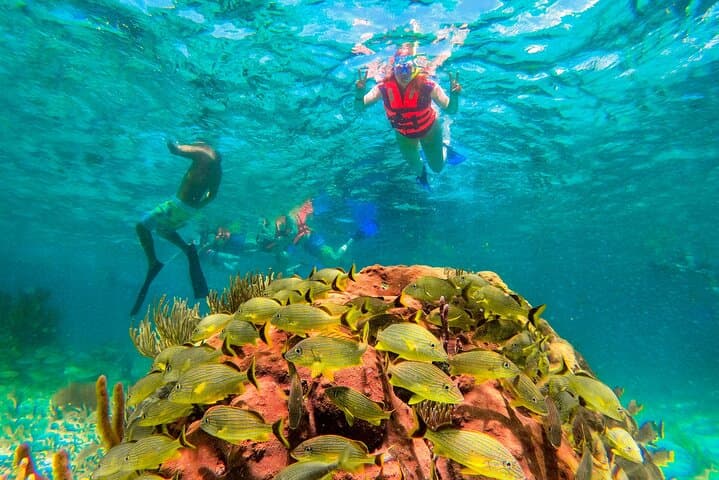
On the water you’ll see branching and boulder corals, parrotfish scraping algae, and the occasional turtle or ray patrolling sandy channels. Guides focus on low-impact viewing: life vests are mandatory, sunscreen-free swimming is enforced, and briefings cover reef-safe behavior.
Practicalities are straightforward. Plan for roughly a half-day (about 3–4 hours door-to-door with hotel transport), bring a rash guard for sun protection, and leave cameras ashore or use only guided photo stops — electronics are disallowed in the water. Seas can be calm or chop up depending on the season; if you're prone to seasickness, take meds before boarding. After snorkeling you'll have time to stroll Puerto Morelos and enjoy a beachside lunch — an easy, accessible introduction to one of the Caribbean’s most accessible reef sections.
easy.
3–4 hours.
Suitable for most people who are comfortable in open water and can swim short distances; minimal hiking or exertion required.
Yes — snorkel tubes, masks, and life vests are provided and maintained; bring your own mask if you prefer a personal fit.
No — electronic devices are not permitted in the water for safety and to protect the reef; boats may permit guided photo moments with staff supervision.
Typically participants must be between 6 and 65 years old and able to swim; consult the operator for any medical concerns or exceptions.
Tours are weather-dependent and may be canceled by the harbor master; refunds or rescheduling follow the operator’s cancellation policy (often full refund if canceled 24 hours prior).
Puerto Morelos began as a fishing village; its pier and cooperative fisheries remain cultural anchors while the town has adapted to reef-based tourism.
The Great Maya Reef is fragile — operators enforce no-sunscreen and no-touch rules, and choosing socially responsible tour companies helps fund local conservation efforts.
What To Do In Cancun operates guided outdoor trips and adventures with an emphasis on safety, stewardship, and memorable experiences.

The boat slips away from the pier and the water opens into a sheet of Caribbean blue. Guides fit life vests and hand out brand-new snorkel tubes while the engine hum becomes background to gull calls and the occasional splash of flying fish. Ahead, low coral heads rise under a clear surface — the Great Maya Reef waiting for a slow, deliberate approach.
The boat slips away from the pier and the water opens into a sheet of Caribbean blue. Guides fit life vests and hand out brand-new snorkel tubes while the engine hum becomes background to gull calls and the occasional splash of flying fish. Ahead, low coral heads rise under a clear surface — the Great Maya Reef waiting for a slow, deliberate approach.
Geology here is blunt and immediate: a living barrier reef system built on Pleistocene limestone, fringing a coastline that was once a quiet fishing village. Puerto Morelos still carries that heritage — a palm-lined main street, cooperative fishers, and a pier that doubles as both community hub and reef access point. Cultural touches are small but visible: local beach clubs, open-air cevicherías, and murals that mark the town’s maritime roots.
On the water you’ll see branching and boulder corals, parrotfish scraping algae, and the occasional turtle or ray patrolling sandy channels. Guides focus on low-impact viewing: life vests are mandatory, sunscreen-free swimming is enforced, and briefings cover reef-safe behavior.
Practicalities are straightforward. Plan for roughly a half-day (about 3–4 hours door-to-door with hotel transport), bring a rash guard for sun protection, and leave cameras ashore or use only guided photo stops — electronics are disallowed in the water. Seas can be calm or chop up depending on the season; if you're prone to seasickness, take meds before boarding. After snorkeling you'll have time to stroll Puerto Morelos and enjoy a beachside lunch — an easy, accessible introduction to one of the Caribbean’s most accessible reef sections.