THE ADVENTURE COLLECTIVE® · Independent discovery and booking for outdoor travel

A seven‑hour day cruise from Bariloche that crosses Lake Nahuel Huapi to Puerto Blest and the Cascada de los Cántaros, with an optional detour to the emerald waters of Lago Frías. Expect forested trails, glacier‑fed colors and easy walks suitable for most travelers.
A seven‑hour day cruise from Bariloche that crosses Lake Nahuel Huapi to Puerto Blest and the Cascada de los Cántaros, with an optional detour to the emerald waters of Lago Frías. Expect forested trails, glacier‑fed colors and easy walks suitable for most travelers.
You step onto the pier at Puerto Pañuelo as the boat’s engine hums and the lake opens before you—an expanse of cold blue that pushes toward the Andes. The first hour of the crossing is a slow reveal: islands slip by, winds shape the water, and the Valdivian forest that lines the shore seems to lean into the boat, as if curious. Guides point out Isla Centinela, then drop the motor into a gentler gear; the day stretches into a seven‑hour loop of waterfalls, glacier-fed lakes and shadowed trails.
Verified experiences and guided adventures in the surrounding area.
Operated by Que Hacer en Buenos Aires · San Carlos de Bariloche, Río Negro
You step onto the pier at Puerto Pañuelo as the boat’s engine hums and the lake opens before you—an expanse of cold blue that pushes toward the Andes. The first hour of the crossing is a slow reveal: islands slip by, winds shape the water, and the Valdivian forest that lines the shore seems to lean into the boat, as if curious. Guides point out Isla Centinela, then drop the motor into a gentler gear; the day stretches into a seven‑hour loop of waterfalls, glacier-fed lakes and shadowed trails.
Nahuel Huapi National Park is one of Argentina’s oldest protected areas, carved out amid volcanic cores and Pleistocene glacial valleys. Geology here reads like a field notebook—steep granite ridges, rounded moraines, and streams choked with boulders scoured by successive ice ages. Culturally the lake and its headlands have long been tied to Mapuche communities and later to Argentine expeditions that opened the region to tourism in the early 20th century.
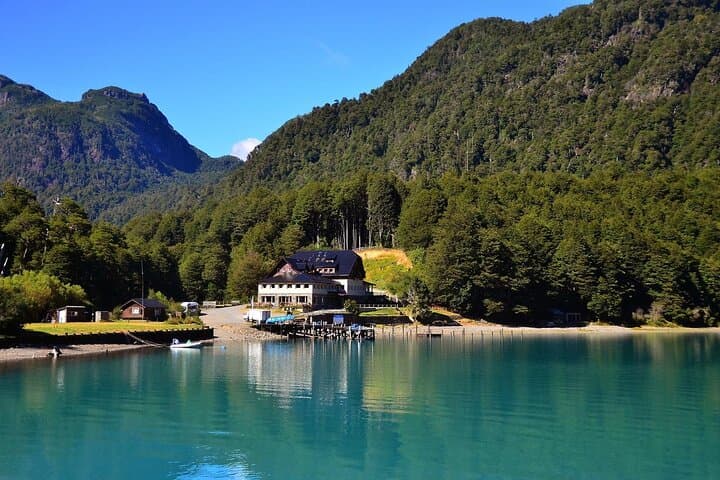
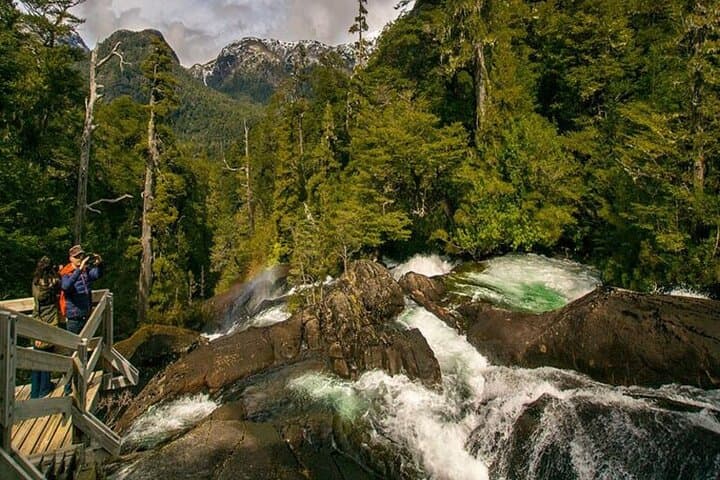
The Cascada de los Cántaros arrives without fanfare: water unspools over a vertical rock face into a narrow gorge, framed by moss and coihue trees. A short walk accesses the spring that feeds the falls and an ancient larch—locally famous and estimated at over 1,500 years—standing like a timekeeper among younger trunks. A few minutes farther along, Puerto Blest’s sheltered bay unfolds, and if you’ve added the Lago Frías option you’ll cross into a narrow inlet where glacier melt lends a striking green to the water—a color that changes with light and sediment.
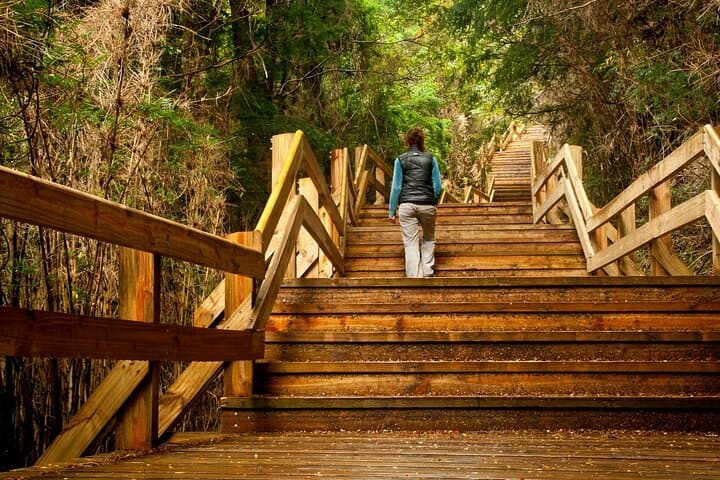
Practicalities are simple but important. The full excursion runs about seven hours; pickup in Bariloche is provided and you should be at the meeting point 30 minutes early. At Puerto Pañuelo you’ll pay the national park entrance and boarding fee (noted as AR$6,000 in local currency—carry cash or confirm card acceptance beforehand). The route includes moderate walking on uneven, often wet trails; the tour is rated easy and suitable for most fitness levels, but footwear with traction is recommended.
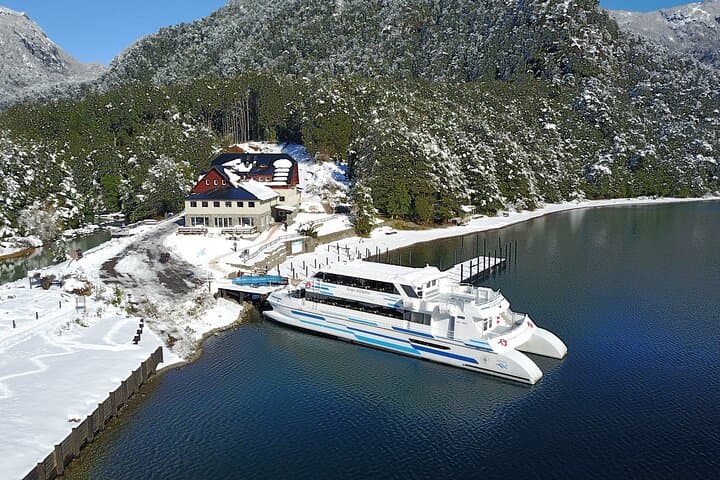
Timing matters: morning departures bring calmer water and clearer views of the Andes; late afternoon light warms the lake and softens contrasts for photos. Guides usually include a stop at Hostería Blest for refreshments; menus here lean on Patagonian staples—smoked trout, wild mushroom stews and local charcuterie. Leave no trace: the Valdivian forest is fragile and the park enforces strict rules to protect endemic species. Bring layers, waterproof footwear, a refillable water bottle and a small pack—this is a trip designed for immersion, not endurance, and it rewards observant travelers with quiet coves, glacier-fed color, and the steady flow of a landscape that keeps moving, indifferent and generous.
easy.
6–7 hours.
Suitable for most fitness levels; requires short walks on uneven, sometimes muddy terrain.
The full tour is approximately seven hours, including pickup and drop‑off in Bariloche, boat crossings and short walks at each stop.
No — the park entrance and boarding fee are collected in Puerto Pañuelo on the day of the trip (listed locally; bring cash or check card options).
Yes — Lago Frías is an optional segment; select that option when booking to include the short navigation into the green‑water inlet.
Yes — the activity is rated easy and infants can ride in strollers at some points, though parents should expect short uneven walks and be prepared to carry small children where necessary.
Dress in layers with a windproof outer layer, waterproof shoes, and a hat—conditions on the lake can be cool and windy even on sunny days.
Meals are not included, though the boat stops near Hostería Blest where you can buy food; bringing snacks is recommended.
Nahuel Huapi has long been inhabited and traversed by Mapuche communities; the park itself was established in the early 20th century as Argentina opened Patagonia to conservation and tourism.
The park enforces stay‑on‑trail rules and requires entrance fees that fund maintenance; visitors are asked to pack out waste and avoid disturbing wildlife.
Que Hacer en Buenos Aires operates guided outdoor trips and adventures with an emphasis on safety, stewardship, and memorable experiences.
You step onto the pier at Puerto Pañuelo as the boat’s engine hums and the lake opens before you—an expanse of cold blue that pushes toward the Andes. The first hour of the crossing is a slow reveal: islands slip by, winds shape the water, and the Valdivian forest that lines the shore seems to lean into the boat, as if curious. Guides point out Isla Centinela, then drop the motor into a gentler gear; the day stretches into a seven‑hour loop of waterfalls, glacier-fed lakes and shadowed trails.
You step onto the pier at Puerto Pañuelo as the boat’s engine hums and the lake opens before you—an expanse of cold blue that pushes toward the Andes. The first hour of the crossing is a slow reveal: islands slip by, winds shape the water, and the Valdivian forest that lines the shore seems to lean into the boat, as if curious. Guides point out Isla Centinela, then drop the motor into a gentler gear; the day stretches into a seven‑hour loop of waterfalls, glacier-fed lakes and shadowed trails.
Nahuel Huapi National Park is one of Argentina’s oldest protected areas, carved out amid volcanic cores and Pleistocene glacial valleys. Geology here reads like a field notebook—steep granite ridges, rounded moraines, and streams choked with boulders scoured by successive ice ages. Culturally the lake and its headlands have long been tied to Mapuche communities and later to Argentine expeditions that opened the region to tourism in the early 20th century.
The Cascada de los Cántaros arrives without fanfare: water unspools over a vertical rock face into a narrow gorge, framed by moss and coihue trees. A short walk accesses the spring that feeds the falls and an ancient larch—locally famous and estimated at over 1,500 years—standing like a timekeeper among younger trunks. A few minutes farther along, Puerto Blest’s sheltered bay unfolds, and if you’ve added the Lago Frías option you’ll cross into a narrow inlet where glacier melt lends a striking green to the water—a color that changes with light and sediment.
Practicalities are simple but important. The full excursion runs about seven hours; pickup in Bariloche is provided and you should be at the meeting point 30 minutes early. At Puerto Pañuelo you’ll pay the national park entrance and boarding fee (noted as AR$6,000 in local currency—carry cash or confirm card acceptance beforehand). The route includes moderate walking on uneven, often wet trails; the tour is rated easy and suitable for most fitness levels, but footwear with traction is recommended.
Timing matters: morning departures bring calmer water and clearer views of the Andes; late afternoon light warms the lake and softens contrasts for photos. Guides usually include a stop at Hostería Blest for refreshments; menus here lean on Patagonian staples—smoked trout, wild mushroom stews and local charcuterie. Leave no trace: the Valdivian forest is fragile and the park enforces strict rules to protect endemic species. Bring layers, waterproof footwear, a refillable water bottle and a small pack—this is a trip designed for immersion, not endurance, and it rewards observant travelers with quiet coves, glacier-fed color, and the steady flow of a landscape that keeps moving, indifferent and generous.