THE ADVENTURE COLLECTIVE® · Independent discovery and booking for outdoor travel

Explore Andalusia’s white villages and Ronda on a private day trip from Seville. Walk cobbled streets, stand on the Puente Nuevo, and discover hidden viewpoints framed by pine and limestone.
Explore Andalusia’s white villages and Ronda on a private day trip from Seville. Walk cobbled streets, stand on the Puente Nuevo, and discover hidden viewpoints framed by pine and limestone.
A low sun slides across whitewashed façades as the van eases into Zahara de la Sierra, its castle silhouette cutting a clean line against the reservoir. Cobblestones click underfoot; the town smells of baking bread and pine resin. The visit moves like a measured walk through history — tight alleys giving way to sudden viewpoints, then back into the hush of shaded patios.
Verified experiences and guided adventures in the surrounding area.
Operated by Descubre · Ronda, Andalusia
A low sun slides across whitewashed façades as the van eases into Zahara de la Sierra, its castle silhouette cutting a clean line against the reservoir. Cobblestones click underfoot; the town smells of baking bread and pine resin. The visit moves like a measured walk through history — tight alleys giving way to sudden viewpoints, then back into the hush of shaded patios.
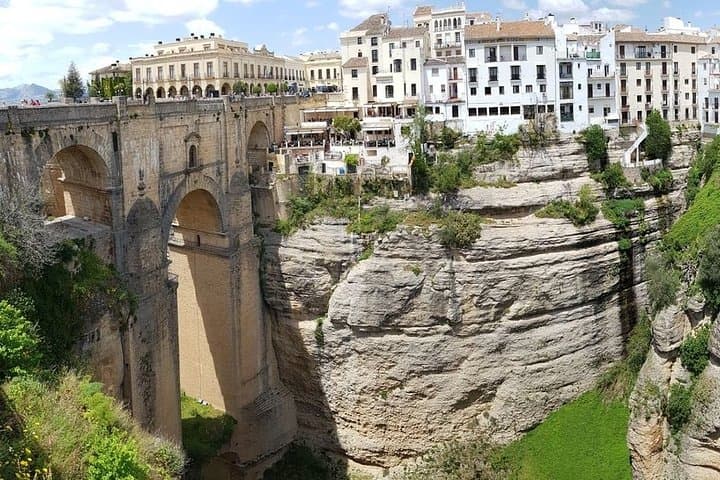
These Pueblos Blancos are products of geology and history: limestone folds and karst plateaus shaped steep ridges where Moorish builders stacked houses into defensive clusters. Grazalema sits on the edge of one of Spain’s rainiest microclimates, feeding a rich pine and fir woodland (Pinsapos) that frames the village. Ronda’s cliff-perched old town and its 18th‑century Puente Nuevo dramatize a landscape carved by the Guadalevín river — a gorge that dared architects to span it.
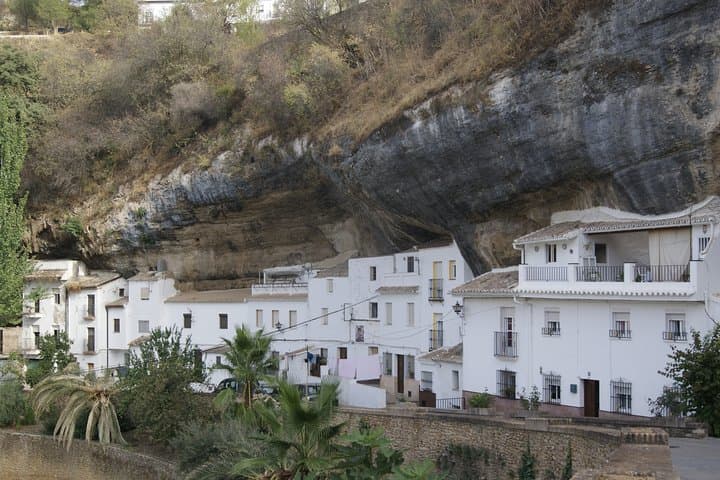
Culture here is hands-on: markets, small cafés, and plazas where daily life plays out between historic stone. Guides point out Andalusian farming traditions, bullring history, and how villages adapted roofs and whitewash to reflect sun and heat.
Practical guidance: expect moderate walking on uneven surfaces and steps; bring layered clothing for wind on the Ronda mirador; allow time for unhurried exploration during free periods. Photography rewards early light at Zahara and late afternoon at Ronda. Hydrate on warm days, and confirm any accessibility needs in advance — several viewpoints and streets are steep.
This private day trip blends village walking, natural panoramas, and urban views — a compact but varied introduction to inland Andalusia.
moderate.
6 hours.
Suitable for travelers with a moderate fitness level who can manage walking on uneven ground and short stair sections.
The itinerary allows about 2.5 hours of free time in Ronda for lunch; specific meals or restaurant bills are not included.
Expect multiple short guided walks (around 45 minutes each) and free time for independent strolling over uneven cobbles and steps.
Some streets and viewpoints are steep and not fully accessible; the tour notes stroller access but advises travelers with spinal, heart conditions, or pregnancy to avoid strenuous sections.
The itinerary includes a panoramic visit to Plaza de Toros but interior admission and tickets for the bullring are not included and must be arranged separately.
These towns grew under Moorish rule; narrow medina lanes and strategic hilltop houses reflect centuries of defensive settlement and Andalusian agrarian traditions.
The karst landscapes and Pinsapos forests are ecologically sensitive—stay on marked paths, avoid disturbing wildlife, and support local businesses to help preserve village character.
Descubre operates guided outdoor trips and adventures with an emphasis on safety, stewardship, and memorable experiences.
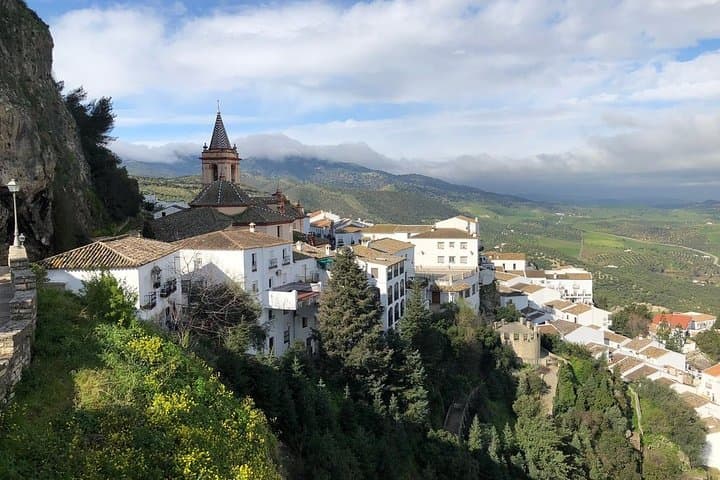
A low sun slides across whitewashed façades as the van eases into Zahara de la Sierra, its castle silhouette cutting a clean line against the reservoir. Cobblestones click underfoot; the town smells of baking bread and pine resin. The visit moves like a measured walk through history — tight alleys giving way to sudden viewpoints, then back into the hush of shaded patios.
A low sun slides across whitewashed façades as the van eases into Zahara de la Sierra, its castle silhouette cutting a clean line against the reservoir. Cobblestones click underfoot; the town smells of baking bread and pine resin. The visit moves like a measured walk through history — tight alleys giving way to sudden viewpoints, then back into the hush of shaded patios.
These Pueblos Blancos are products of geology and history: limestone folds and karst plateaus shaped steep ridges where Moorish builders stacked houses into defensive clusters. Grazalema sits on the edge of one of Spain’s rainiest microclimates, feeding a rich pine and fir woodland (Pinsapos) that frames the village. Ronda’s cliff-perched old town and its 18th‑century Puente Nuevo dramatize a landscape carved by the Guadalevín river — a gorge that dared architects to span it.
Culture here is hands-on: markets, small cafés, and plazas where daily life plays out between historic stone. Guides point out Andalusian farming traditions, bullring history, and how villages adapted roofs and whitewash to reflect sun and heat.
Practical guidance: expect moderate walking on uneven surfaces and steps; bring layered clothing for wind on the Ronda mirador; allow time for unhurried exploration during free periods. Photography rewards early light at Zahara and late afternoon at Ronda. Hydrate on warm days, and confirm any accessibility needs in advance — several viewpoints and streets are steep.
This private day trip blends village walking, natural panoramas, and urban views — a compact but varied introduction to inland Andalusia.