THE ADVENTURE COLLECTIVE® · Independent discovery and booking for outdoor travel

A compact five-day loop that combines Pu Luong’s terrace trekking, Hoa Lu and Trang An’s karst river passages, and an overnight cruise in Lan Ha/Halong Bay. Expect village trails, cycling to ancient temples, cave boat passages and calm sea kayaking.
A compact five-day loop that combines Pu Luong’s terrace trekking, Hoa Lu and Trang An’s karst river passages, and an overnight cruise in Lan Ha/Halong Bay. Expect village trails, cycling to ancient temples, cave boat passages and calm sea kayaking.
You step out of the van into a thin rain of rice stalks and limestone, the terraces sloping away like a hand-turned staircase. Pu Luong’s ridgelines sharpen the horizon while village roofs peek through morning mist; later, karst towers rise from the braided rivers of Ninh Binh and the sea opens into the scattered islands of Lan Ha Bay.
Verified experiences and guided adventures in the surrounding area.
Operated by Eco Travel Go Green VietNam · Ninh Binh, Ninh Binh
You step out of the van into a thin rain of rice stalks and limestone, the terraces sloping away like a hand-turned staircase. Pu Luong’s ridgelines sharpen the horizon while village roofs peek through morning mist; later, karst towers rise from the braided rivers of Ninh Binh and the sea opens into the scattered islands of Lan Ha Bay.
This route threads together distinct geologies and cultures: Pu Luong’s upland terraces sculpted by Thai minorities, Hoa Lu’s tenth-century citadel in the shadow of toothy karst outcrops, and Halong’s UNESCO-classic limestone islands worn by tides. Expect village trails, a short cave visit, a bike ride past temple walls, and a two-night cruise with kayaking and a bamboo-boat passage through Trang An’s cave tunnels.
Terrain alternates between well-worn village tracks and muddy rice-field paths; elevation gains are modest but repetitive, so legs feel the work by day two. Weather shifts quickly—sun can bake terraces, monsoon can slick stone. Local culture is present and practical: waterwheels and stilt houses, homestay hospitality, and boatmen who have read tide lines for generations.
Practical guidance: bring quick-dry layers, sturdy walking shoes with grip, and a dry bag for boat days. Start early to avoid midday heat and book the Halong cruise cabin if you prefer privacy. Hydrate frequently on terraces; respect planted fields and stay on designated paths. With basic fitness and a sense of rhythm, this five-day loop rewards you with a changing landscape that pushes and then releases you—an accessible, varied Vietnam trek-cruise combo.
moderate.
5 days.
Moderate fitness: able to walk 3–6 hours on uneven terrain and board small boats multiple times.
A moderate level—expect several hours of walking on uneven trails and short hikes; no technical climbing is required.
Basic kayaking around Lan Ha Bay is usually offered; guide assistance is available so no prior experience is necessary.
Bring modest clothing for temples, small cash for donations or purchases, and a respectful attitude—photography is welcome but ask before photographing people.
The itinerary uses an air-conditioned minibus for transfers, plus a private cruise vessel for the Halong/Lan Ha segment—pick-up is typically from Hanoi Old Quarter.
Hoa Lu served as Vietnam’s 10th-century capital; the region’s karst landscape has shaped human settlement and rice agriculture for centuries.
These fragile karst and terrace systems are sensitive—stick to marked paths, avoid trampling young rice shoots and minimize single‑use plastics to reduce impact.
Eco Travel Go Green VietNam operates guided outdoor trips and adventures with an emphasis on safety, stewardship, and memorable experiences.
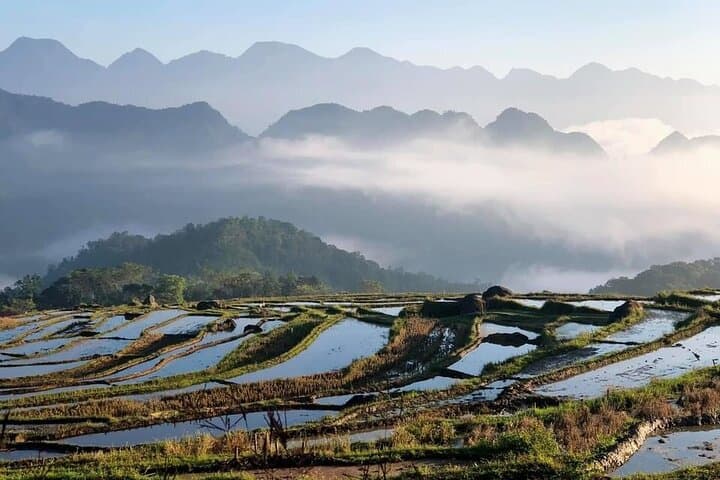
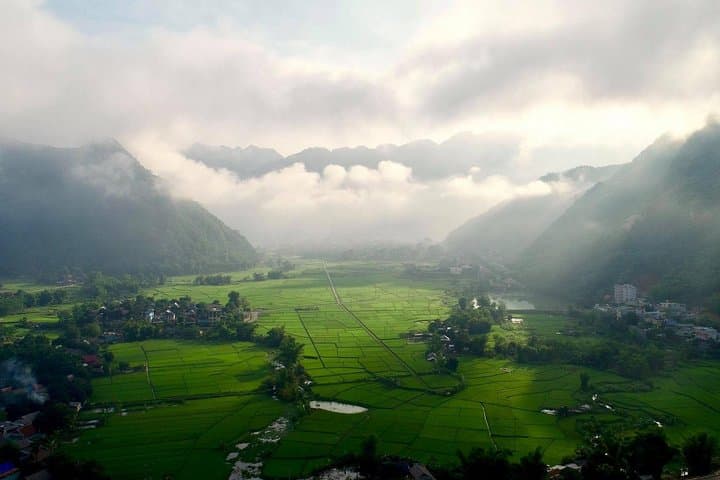
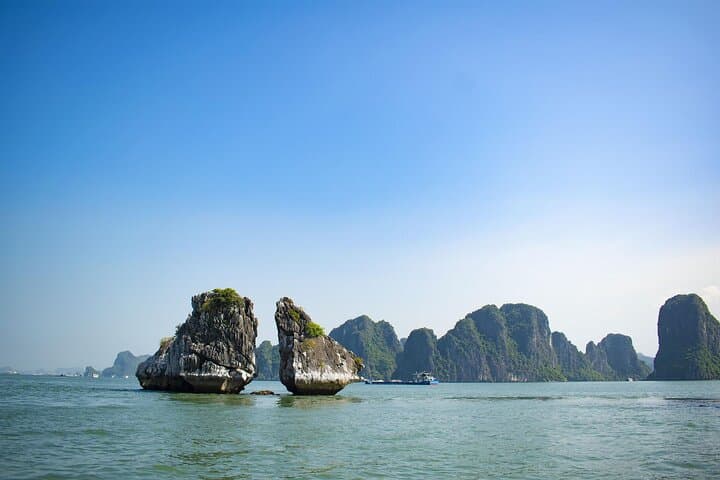
You step out of the van into a thin rain of rice stalks and limestone, the terraces sloping away like a hand-turned staircase. Pu Luong’s ridgelines sharpen the horizon while village roofs peek through morning mist; later, karst towers rise from the braided rivers of Ninh Binh and the sea opens into the scattered islands of Lan Ha Bay.
You step out of the van into a thin rain of rice stalks and limestone, the terraces sloping away like a hand-turned staircase. Pu Luong’s ridgelines sharpen the horizon while village roofs peek through morning mist; later, karst towers rise from the braided rivers of Ninh Binh and the sea opens into the scattered islands of Lan Ha Bay.
This route threads together distinct geologies and cultures: Pu Luong’s upland terraces sculpted by Thai minorities, Hoa Lu’s tenth-century citadel in the shadow of toothy karst outcrops, and Halong’s UNESCO-classic limestone islands worn by tides. Expect village trails, a short cave visit, a bike ride past temple walls, and a two-night cruise with kayaking and a bamboo-boat passage through Trang An’s cave tunnels.
Terrain alternates between well-worn village tracks and muddy rice-field paths; elevation gains are modest but repetitive, so legs feel the work by day two. Weather shifts quickly—sun can bake terraces, monsoon can slick stone. Local culture is present and practical: waterwheels and stilt houses, homestay hospitality, and boatmen who have read tide lines for generations.
Practical guidance: bring quick-dry layers, sturdy walking shoes with grip, and a dry bag for boat days. Start early to avoid midday heat and book the Halong cruise cabin if you prefer privacy. Hydrate frequently on terraces; respect planted fields and stay on designated paths. With basic fitness and a sense of rhythm, this five-day loop rewards you with a changing landscape that pushes and then releases you—an accessible, varied Vietnam trek-cruise combo.