THE ADVENTURE COLLECTIVE® · Independent discovery and booking for outdoor travel

Two days of terrace-side trekking, a homestay with local families, and bamboo rafting on Cham Stream. This short multi-day trek pairs cultural immersion with manageable walking and scenic swims.
Two days of terrace-side trekking, a homestay with local families, and bamboo rafting on Cham Stream. This short multi-day trek pairs cultural immersion with manageable walking and scenic swims.
A morning bus eases out of Hanoi and the lowland rice paddies give way to folded limestone ridges and green terraces. By late morning the air carries wood smoke and the steady drip of irrigation channels; travelers step from the minivan into a landscape shaped by water and human hands. The first day’s trail winds along narrow ridges and across terraces, past stilt houses where children wave and waterwheels spin with an old, methodical rhythm.
Verified experiences and guided adventures in the surrounding area.
Operated by Dragon Tourist - Vina Cruise · Quan Hóa, Thanh Hóa
A morning bus eases out of Hanoi and the lowland rice paddies give way to folded limestone ridges and green terraces. By late morning the air carries wood smoke and the steady drip of irrigation channels; travelers step from the minivan into a landscape shaped by water and human hands. The first day’s trail winds along narrow ridges and across terraces, past stilt houses where children wave and waterwheels spin with an old, methodical rhythm.
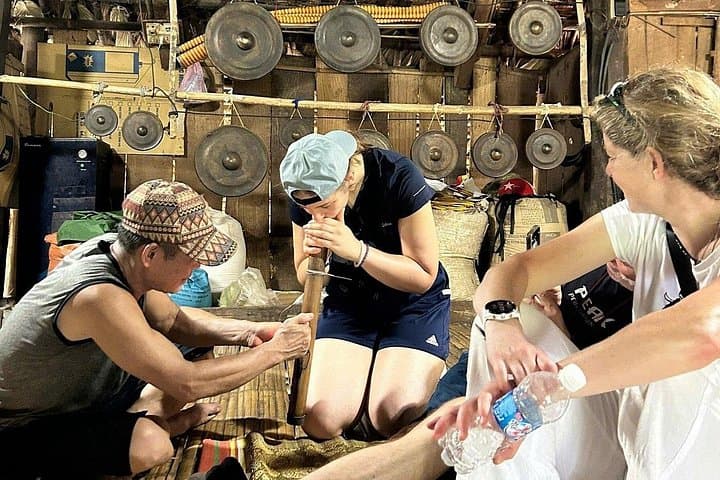
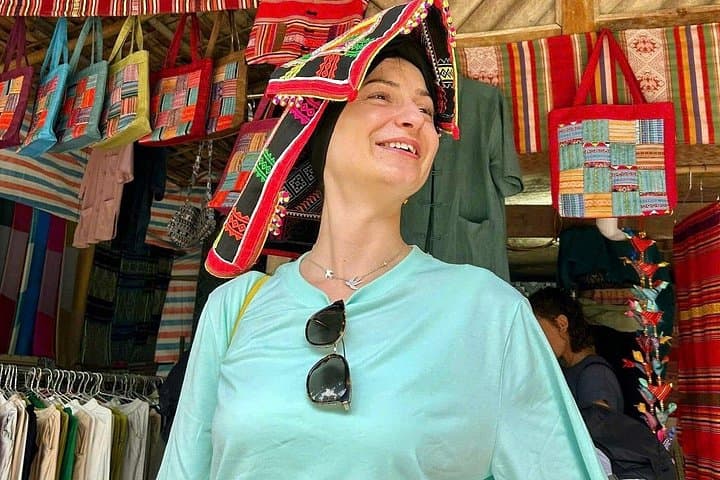
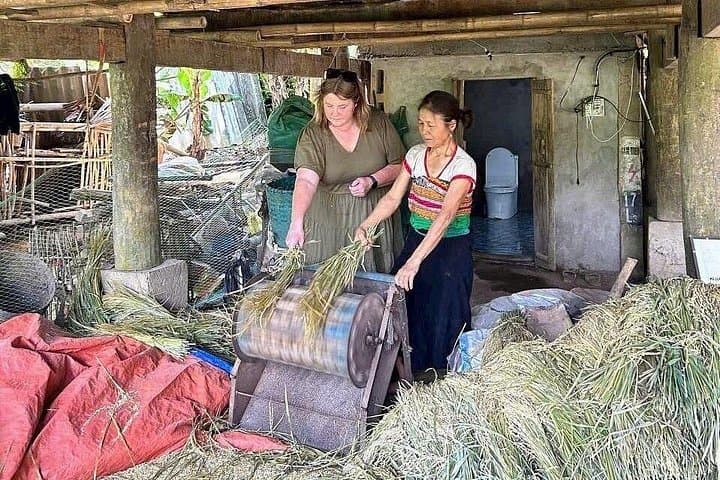
Geology here is karst-influenced: limestone outcrops and shallow soils force farmers into stepped fields that trace contours. Culturally the reserve is home to Thai and Muong communities; silk weaving, stilt-house carpentry and rice-farming techniques seen along the way are living traditions rather than staged demonstrations. Cham Stream, reached on day two after a 4 km village trek, offers a cool swim and a quiet bamboo-raft float under forested banks.
Practically: expect roughly 3–4 hours of walking the first afternoon on uneven, sometimes muddy trails and a shorter 4 km village trek on day two. The drive from Hanoi is about 4–4.5 hours (Ninh Binh ~3.5 hours). Pack a small daypack, good treaded shoes, insect repellent and a swimsuit for the stream.
Respect local homes — ask before photographing or entering. Weather shifts quickly; mornings can be cool and afternoons warm. There’s minimal technical terrain, but trails are rooted and slick after rain. The experience blends short hikes, cultural exchange, and low-impact river travel — a compact, practical introduction to rural northern Vietnam.
moderate.
2 days.
Light to moderate fitness; should be comfortable walking 3–5 hours across uneven terrain and stairs.
Hikes are moderate: short stretches of uneven trail and steps, with a 3–4 hour trek on day one and a 4 km village trek on day two.
Guides are English-speaking; local villagers may have limited English but guides facilitate translation and interaction.
Typical inclusions are transport from Hanoi/Ninh Binh, meals specified in the itinerary, entrance fees, guided treks, bottled water and the homestay lodging.
The itinerary notes it’s suitable for a range of fitness levels, but it is not recommended for pregnant travelers; children should be able to handle uneven trails.
Pu Luong sits on limestone uplands long farmed by Thai and Muong groups; traditional waterwheels and stilt architecture reflect centuries of adaptation to steep, wet terrain.
The reserve emphasizes low-impact tourism and community-based stays; visitors are encouraged to minimize waste, avoid single-use plastics, and follow designated trails to protect fragile terraces.
Dragon Tourist - Vina Cruise operates guided outdoor trips and adventures with an emphasis on safety, stewardship, and memorable experiences.
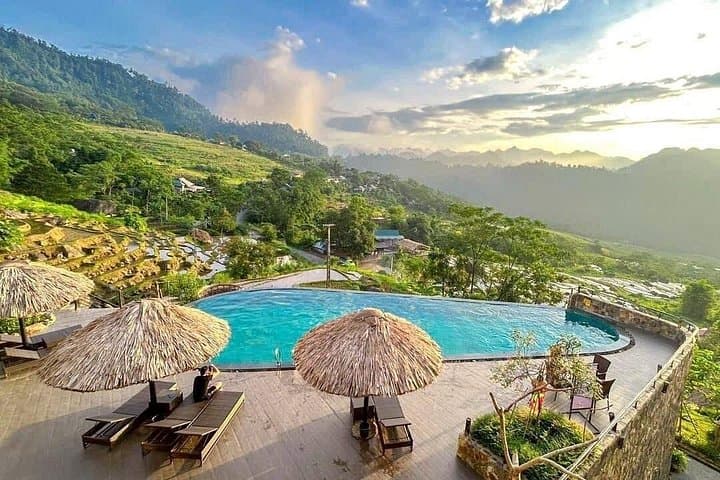
A morning bus eases out of Hanoi and the lowland rice paddies give way to folded limestone ridges and green terraces. By late morning the air carries wood smoke and the steady drip of irrigation channels; travelers step from the minivan into a landscape shaped by water and human hands. The first day’s trail winds along narrow ridges and across terraces, past stilt houses where children wave and waterwheels spin with an old, methodical rhythm.
A morning bus eases out of Hanoi and the lowland rice paddies give way to folded limestone ridges and green terraces. By late morning the air carries wood smoke and the steady drip of irrigation channels; travelers step from the minivan into a landscape shaped by water and human hands. The first day’s trail winds along narrow ridges and across terraces, past stilt houses where children wave and waterwheels spin with an old, methodical rhythm.
Geology here is karst-influenced: limestone outcrops and shallow soils force farmers into stepped fields that trace contours. Culturally the reserve is home to Thai and Muong communities; silk weaving, stilt-house carpentry and rice-farming techniques seen along the way are living traditions rather than staged demonstrations. Cham Stream, reached on day two after a 4 km village trek, offers a cool swim and a quiet bamboo-raft float under forested banks.
Practically: expect roughly 3–4 hours of walking the first afternoon on uneven, sometimes muddy trails and a shorter 4 km village trek on day two. The drive from Hanoi is about 4–4.5 hours (Ninh Binh ~3.5 hours). Pack a small daypack, good treaded shoes, insect repellent and a swimsuit for the stream.
Respect local homes — ask before photographing or entering. Weather shifts quickly; mornings can be cool and afternoons warm. There’s minimal technical terrain, but trails are rooted and slick after rain. The experience blends short hikes, cultural exchange, and low-impact river travel — a compact, practical introduction to rural northern Vietnam.