THE ADVENTURE COLLECTIVE® · Independent discovery and booking for outdoor travel

Experience Moab’s certified dark skies from a remote desert site with professional guides, high-powered telescopes, and comfortable zero-gravity loungers. Learn constellation lore, view galaxies and planets, and leave with practical skills for night-sky navigation.
Experience Moab’s certified dark skies from a remote desert site with professional guides, high-powered telescopes, and comfortable zero-gravity loungers. Learn constellation lore, view galaxies and planets, and leave with practical skills for night-sky navigation.
You arrive just after astronomical twilight, the desert cooling and the first stars daring you to look up. Guests sink into zero-gravity loungers, blankets drawn tight, while guides sweep green laser pointers across constellations and the vast Milky Way climbs overhead. Telescopes hum and pivot with a tap on a keypad; a galaxy or nebula blooms in the eyepiece like a distant campfire.
Verified experiences and guided adventures in the surrounding area.
Operated by Stargazing Moab · Moab, Utah
You arrive just after astronomical twilight, the desert cooling and the first stars daring you to look up. Guests sink into zero-gravity loungers, blankets drawn tight, while guides sweep green laser pointers across constellations and the vast Milky Way climbs overhead. Telescopes hum and pivot with a tap on a keypad; a galaxy or nebula blooms in the eyepiece like a distant campfire.
This part of the Colorado Plateau has been watched by humans for millennia — Ute and Puebloan peoples told stories of the same lights — and the high desert’s low humidity and elevation (roughly 4,000–5,000 ft) give clear nights and razor-sharp views. Geology here is on display even after dark: arches and buttes cast silhouettes against starfields, while the La Sal Mountains hold snow that often reflects moonlight.
The program mixes practical astronomy — finding north, seasonal triangles, and planets — with cultural lore and telescope viewing of galaxies, nebulae, clusters and occasionally the ISS. Guides supply binoculars, hot beverages, and a short solar-system scale walk to orient you before darkness fully settles.
Plan like a field scientist: download the hosted directions (no cell service onsite), bring warm, layered clothing, and carry a red-filter headlamp to preserve night vision. There are no restrooms at the site and no transport provided, so allow 30 minutes from Moab for the drive and arrive with patience and a full water bottle. For photographers, ask guides about long-exposure spots and be prepared to trade space for composition — the desert is generous, but dark-sky etiquette is strict.
easy.
2 hours.
Light mobility required—participants should be able to stand or move short distances and walk across uneven desert terrain.
No, transportation is not included; the site is about a 30-minute drive south of Moab and detailed directions must be downloaded beforehand.
There are no restrooms onsite; use facilities in Moab before you leave or plan accordingly.
On clear, moonless nights you can often see the Milky Way and several planets; visibility depends on lunar phase, weather, and light conditions.
Yes—infants must sit on an adult’s lap; children should be supervised and able to follow safety guidance around telescopes and equipment.
The Colorado Plateau’s skies have been key to Indigenous astronomy and oral traditions; modern stargazing continues that connection in an area of exposed ancient rock.
This is a designated dark-sky-friendly area—minimize light pollution, pack out all trash, and follow guides’ instructions to protect fragile desert soils.
Stargazing Moab operates guided outdoor trips and adventures with an emphasis on safety, stewardship, and memorable experiences.
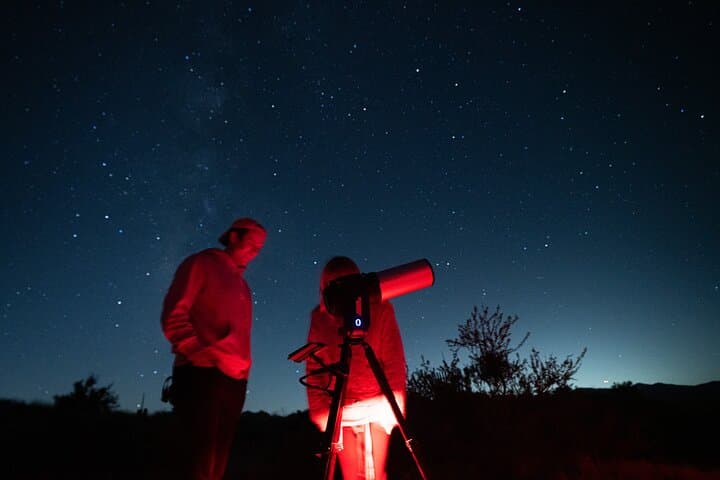
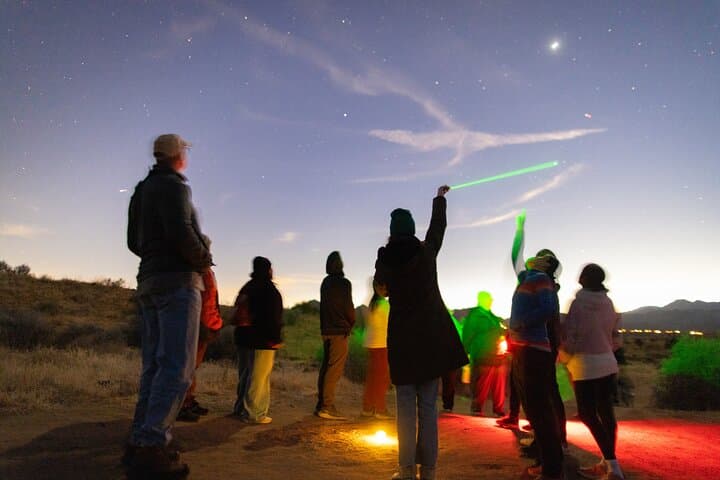
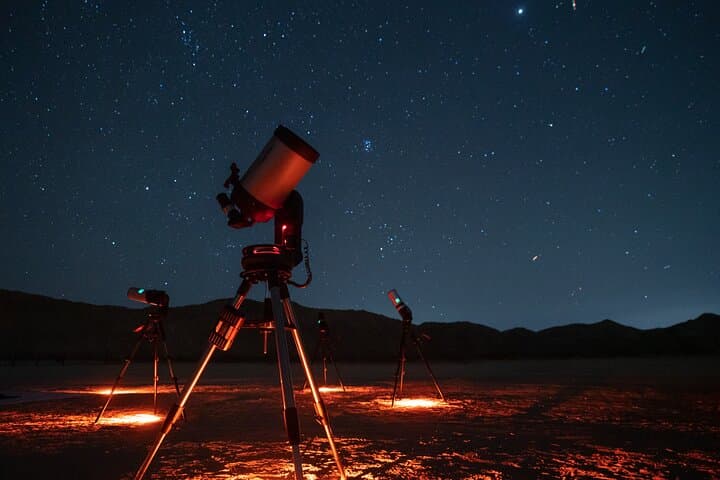
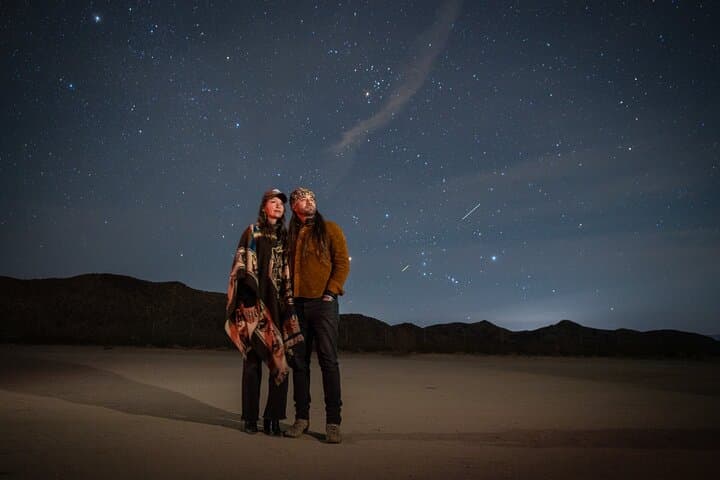
You arrive just after astronomical twilight, the desert cooling and the first stars daring you to look up. Guests sink into zero-gravity loungers, blankets drawn tight, while guides sweep green laser pointers across constellations and the vast Milky Way climbs overhead. Telescopes hum and pivot with a tap on a keypad; a galaxy or nebula blooms in the eyepiece like a distant campfire.
You arrive just after astronomical twilight, the desert cooling and the first stars daring you to look up. Guests sink into zero-gravity loungers, blankets drawn tight, while guides sweep green laser pointers across constellations and the vast Milky Way climbs overhead. Telescopes hum and pivot with a tap on a keypad; a galaxy or nebula blooms in the eyepiece like a distant campfire.
This part of the Colorado Plateau has been watched by humans for millennia — Ute and Puebloan peoples told stories of the same lights — and the high desert’s low humidity and elevation (roughly 4,000–5,000 ft) give clear nights and razor-sharp views. Geology here is on display even after dark: arches and buttes cast silhouettes against starfields, while the La Sal Mountains hold snow that often reflects moonlight.
The program mixes practical astronomy — finding north, seasonal triangles, and planets — with cultural lore and telescope viewing of galaxies, nebulae, clusters and occasionally the ISS. Guides supply binoculars, hot beverages, and a short solar-system scale walk to orient you before darkness fully settles.
Plan like a field scientist: download the hosted directions (no cell service onsite), bring warm, layered clothing, and carry a red-filter headlamp to preserve night vision. There are no restrooms at the site and no transport provided, so allow 30 minutes from Moab for the drive and arrive with patience and a full water bottle. For photographers, ask guides about long-exposure spots and be prepared to trade space for composition — the desert is generous, but dark-sky etiquette is strict.