THE ADVENTURE COLLECTIVE® · Independent discovery and booking for outdoor travel

Walk Canterbury with a Blue Badge guide on this three-hour private tour that pairs city streets with a guided visit to Canterbury Cathedral. Expect focused history, close-up stained glass, and local cafe stops.
Walk Canterbury with a Blue Badge guide on this three-hour private tour that pairs city streets with a guided visit to Canterbury Cathedral. Expect focused history, close-up stained glass, and local cafe stops.
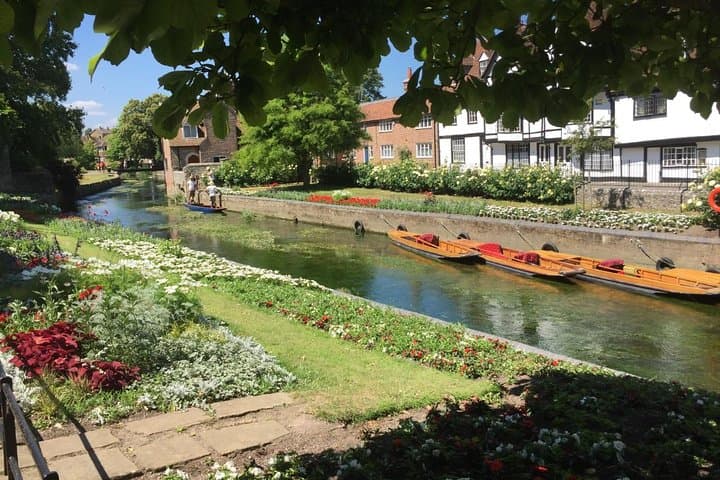
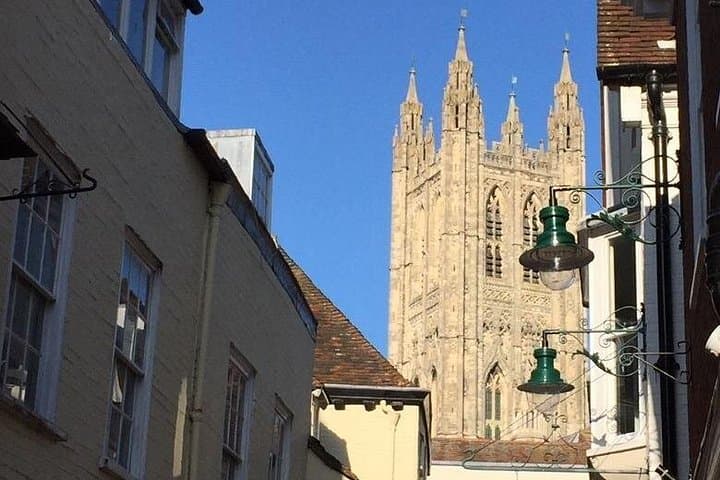
You step off the train into a compact city where the River Stour pushes through medieval bridges and the cathedral towers command the skyline. Cobblestones lead you through narrow lanes; shopfronts, cafes and the muted glow of ancient glass flank the route. A Blue Badge guide meets you and the city begins to open—stories, stones and stained glass moving in concert.
Verified experiences and guided adventures in the surrounding area.
Operated by Kent and Sussex Tours · Canterbury, Kent
You step off the train into a compact city where the River Stour pushes through medieval bridges and the cathedral towers command the skyline. Cobblestones lead you through narrow lanes; shopfronts, cafes and the muted glow of ancient glass flank the route. A Blue Badge guide meets you and the city begins to open—stories, stones and stained glass moving in concert.
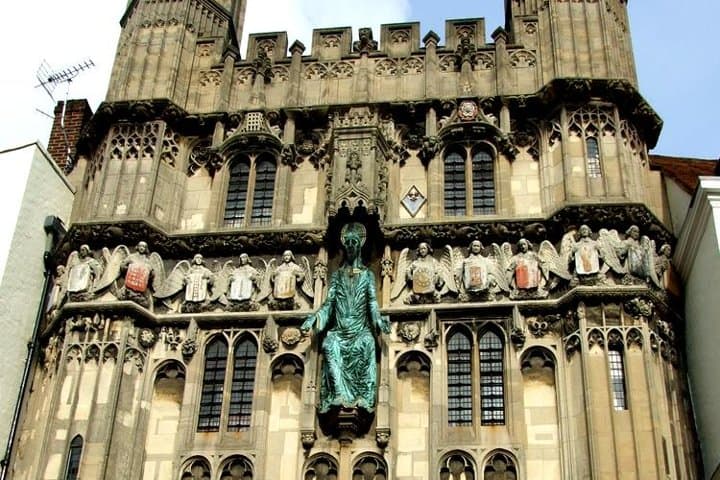
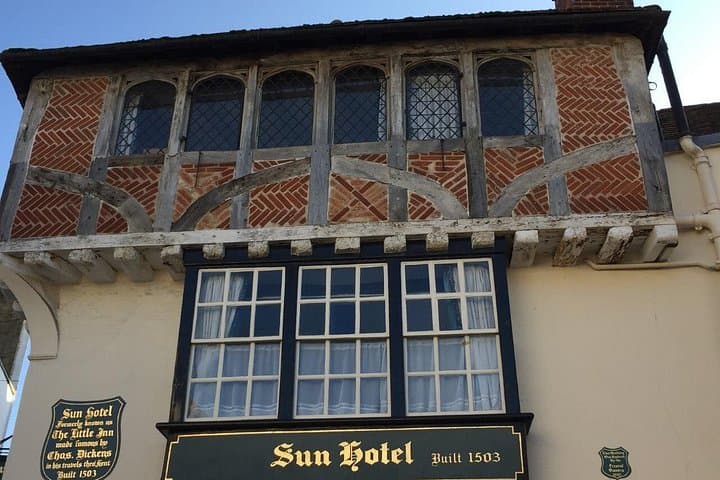
Canterbury is an urban palimpsest: Roman roads beneath Tudor facades, a Norman cathedral sitting on older Saxon and Roman layers. The cathedral itself—site of Thomas Becket’s martyrdom and a waypoint in Chaucer’s Canterbury Tales—shows architectural chapters from the 11th century onward. Geologically, the city lies in the River Stour valley, with the chalk ridges of the North Downs visible to the north; the stone and flints used in local buildings reflect that landscape.
Culturally, the walk balances ecclesiastical heritage with everyday city life—local cafes, small museums and quiet riverside gardens frequently punctuate the route. Your guide will point out details the casual visitor misses: the earliest stained-glass panels, masonry repairs, and civic stories that shaped modern Canterbury.
Practical guidance: the tour runs about three hours and includes a guided visit to the World Heritage cathedral (admission not included). Expect moderate walking on mixed paving; wear supportive shoes and a weatherproof layer. Trains from London St Pancras take under an hour; book cathedral entry ahead during peak season. Small groups (up to five) keep the pace conversational—bring water, a camera, and an appetite for history.
moderate.
3 hours.
Moderate: able to stand and walk for several hours with short stops
No—this guided tour includes a guided visit to the cathedral but admission tickets must be purchased separately.
Frequent trains run from London St Pancras to Canterbury West or East; journey time is typically under an hour to Canterbury West followed by a short walk to the city centre.
Children are allowed but must be accompanied by an adult; the route includes uneven surfaces and some steps, so check accessibility with the guide in advance.
The tour operates in all weather—dress appropriately. Much of the cathedral visit is indoors, but outdoor segments continue unless conditions are unsafe.
Canterbury Cathedral is the site of Thomas Becket’s 1170 murder and later became a major medieval pilgrimage destination popularized by Chaucer’s Canterbury Tales.
The cathedral and city core are managed to balance tourism with preservation—follow marked paths, avoid touching ancient surfaces, and support conservation through donations.
Kent and Sussex Tours operates guided outdoor trips and adventures with an emphasis on safety, stewardship, and memorable experiences.
You step off the train into a compact city where the River Stour pushes through medieval bridges and the cathedral towers command the skyline. Cobblestones lead you through narrow lanes; shopfronts, cafes and the muted glow of ancient glass flank the route. A Blue Badge guide meets you and the city begins to open—stories, stones and stained glass moving in concert.
You step off the train into a compact city where the River Stour pushes through medieval bridges and the cathedral towers command the skyline. Cobblestones lead you through narrow lanes; shopfronts, cafes and the muted glow of ancient glass flank the route. A Blue Badge guide meets you and the city begins to open—stories, stones and stained glass moving in concert.
Canterbury is an urban palimpsest: Roman roads beneath Tudor facades, a Norman cathedral sitting on older Saxon and Roman layers. The cathedral itself—site of Thomas Becket’s martyrdom and a waypoint in Chaucer’s Canterbury Tales—shows architectural chapters from the 11th century onward. Geologically, the city lies in the River Stour valley, with the chalk ridges of the North Downs visible to the north; the stone and flints used in local buildings reflect that landscape.
Culturally, the walk balances ecclesiastical heritage with everyday city life—local cafes, small museums and quiet riverside gardens frequently punctuate the route. Your guide will point out details the casual visitor misses: the earliest stained-glass panels, masonry repairs, and civic stories that shaped modern Canterbury.
Practical guidance: the tour runs about three hours and includes a guided visit to the World Heritage cathedral (admission not included). Expect moderate walking on mixed paving; wear supportive shoes and a weatherproof layer. Trains from London St Pancras take under an hour; book cathedral entry ahead during peak season. Small groups (up to five) keep the pace conversational—bring water, a camera, and an appetite for history.