THE ADVENTURE COLLECTIVE® · Independent discovery and booking for outdoor travel

See Borobudur’s terraces at sunrise, trace Buddhist and Hindu legacies at Pawon and Mendut, then stand beneath Prambanan’s spires—all in one private day from Yogyakarta. This guided tour blends archaeology, local culture and practical logistics for an efficient cultural circuit.
See Borobudur’s terraces at sunrise, trace Buddhist and Hindu legacies at Pawon and Mendut, then stand beneath Prambanan’s spires—all in one private day from Yogyakarta. This guided tour blends archaeology, local culture and practical logistics for an efficient cultural circuit.
Dawn light slides across a volcanic plain as your driver threads rice paddies toward Borobudur; the stone tiers catch the first sun and the air smells of coffee and ash from distant Merapi. This private, full-day circuit links four of Java’s most resonant temple sites—Borobudur, Pawon, Mendut and Prambanan—moving from the colossal Buddhist monument to the soaring Hindu shrines that mark a shifting religious landscape.
Verified experiences and guided adventures in the surrounding area.
Operated by Wandernesia · Yogyakarta, Special Region of Yogyakarta
Dawn light slides across a volcanic plain as your driver threads rice paddies toward Borobudur; the stone tiers catch the first sun and the air smells of coffee and ash from distant Merapi. This private, full-day circuit links four of Java’s most resonant temple sites—Borobudur, Pawon, Mendut and Prambanan—moving from the colossal Buddhist monument to the soaring Hindu shrines that mark a shifting religious landscape.
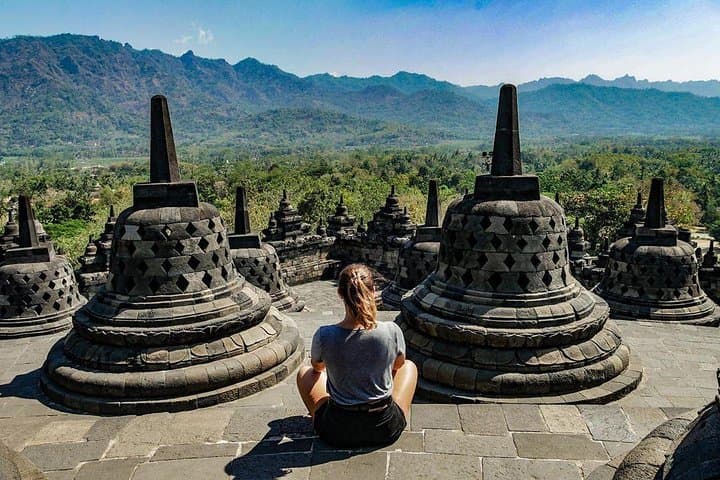
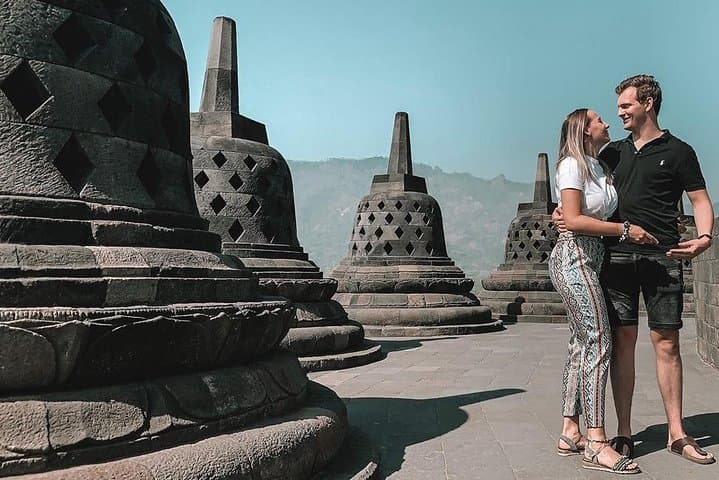
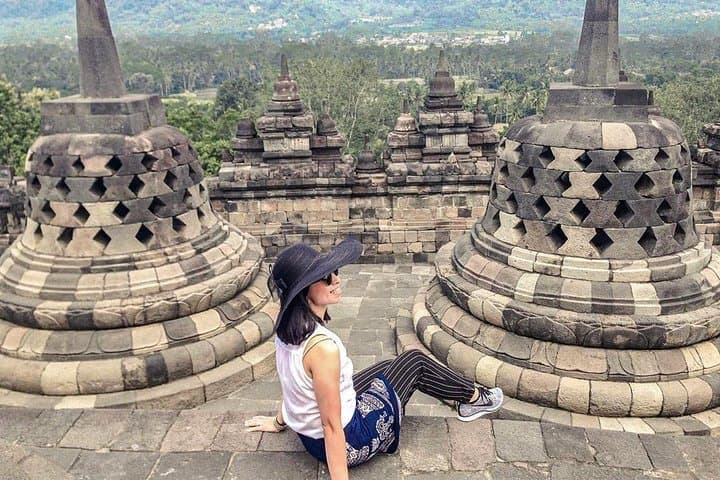
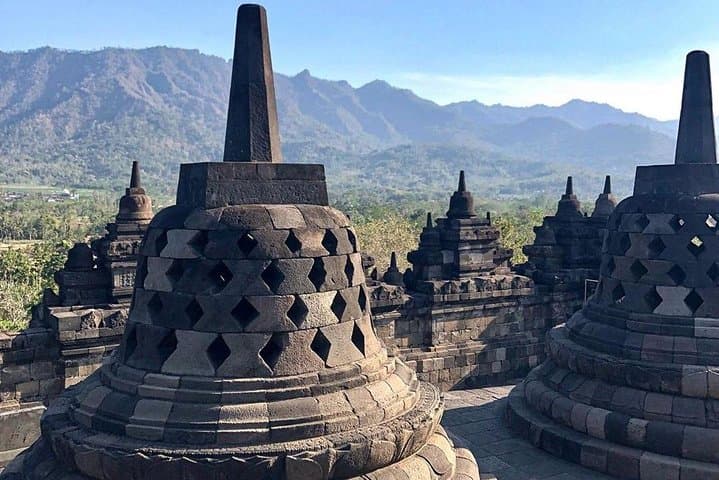
Borobudur (9th century) is a layered mandala of carved reliefs and bell-shaped stupas, set on an uplifted plain formed by youthful volcanic geology. Pawon and Mendut are compact, intimate stops—less trafficked but rich in sculpted narrative. Prambanan’s pointed towers were raised by the same medieval kingdoms that sculpted court poetry and Hindu ritual on Java’s central plateau.
Culturally, the route traces centuries of Buddhist and Hindu presence before Islam became dominant; local guides read inscriptions and iconography aloud, translating ritual into social history. The terrain is mostly flat between sites; expect stepped stone at each shrine and uneven paths where ancient blocks meet modern footfall.
Practical: the tour departs Yogyakarta early and runs about eight hours with hotel pickup and return included. Wear sturdy shoes for stair climbs, bring sun protection and water, and carry modest clothing for temple respect (shoulders and knees covered). Cameras are welcome but observe no-flash rules and restricted zones. If you have time after Prambanan, ask your guide about nearby street food—karedok and gudeg make a proper post-temple meal. This is an accessible, interpretation-rich day for travelers who want history, relief carving, and the quick drama of Java’s volcanic skyline.
easy.
8 hours.
Light walking and several flights of stone stairs; suitable for most active travelers.
The tour runs about eight hours with hotel pickup and return within Yogyakarta city, an English/Italian/French/Dutch-speaking guide, temple admission fees, parking and light refreshments included.
Yes—tickets for the listed temples are included in the tour price as noted in the itinerary.
The tour is family-friendly but temples have stairways and uneven stone; travelers with mobility limits may find some areas difficult and should consult the operator before booking.
Yes—the guide can suggest or accompany you to local eateries after the tour (meals not included unless specified).
These temples date to the 8th–10th centuries and reflect the competing Hindu and Buddhist kingdoms of classical Java before Islam became the island’s majority faith.
Visitor management focuses on protecting carved reliefs and stabilizing stonework; stick to designated paths and avoid touching bas-reliefs to limit wear.
Wandernesia operates guided outdoor trips and adventures with an emphasis on safety, stewardship, and memorable experiences.
Dawn light slides across a volcanic plain as your driver threads rice paddies toward Borobudur; the stone tiers catch the first sun and the air smells of coffee and ash from distant Merapi. This private, full-day circuit links four of Java’s most resonant temple sites—Borobudur, Pawon, Mendut and Prambanan—moving from the colossal Buddhist monument to the soaring Hindu shrines that mark a shifting religious landscape.
Dawn light slides across a volcanic plain as your driver threads rice paddies toward Borobudur; the stone tiers catch the first sun and the air smells of coffee and ash from distant Merapi. This private, full-day circuit links four of Java’s most resonant temple sites—Borobudur, Pawon, Mendut and Prambanan—moving from the colossal Buddhist monument to the soaring Hindu shrines that mark a shifting religious landscape.
Borobudur (9th century) is a layered mandala of carved reliefs and bell-shaped stupas, set on an uplifted plain formed by youthful volcanic geology. Pawon and Mendut are compact, intimate stops—less trafficked but rich in sculpted narrative. Prambanan’s pointed towers were raised by the same medieval kingdoms that sculpted court poetry and Hindu ritual on Java’s central plateau.
Culturally, the route traces centuries of Buddhist and Hindu presence before Islam became dominant; local guides read inscriptions and iconography aloud, translating ritual into social history. The terrain is mostly flat between sites; expect stepped stone at each shrine and uneven paths where ancient blocks meet modern footfall.
Practical: the tour departs Yogyakarta early and runs about eight hours with hotel pickup and return included. Wear sturdy shoes for stair climbs, bring sun protection and water, and carry modest clothing for temple respect (shoulders and knees covered). Cameras are welcome but observe no-flash rules and restricted zones. If you have time after Prambanan, ask your guide about nearby street food—karedok and gudeg make a proper post-temple meal. This is an accessible, interpretation-rich day for travelers who want history, relief carving, and the quick drama of Java’s volcanic skyline.