THE ADVENTURE COLLECTIVE® · Independent discovery and booking for outdoor travel

Cross a hand-cranked ferry, follow limestone trails and climb El Castillo at Xunantunich on a private shore excursion led by local guides. This short, history-rich visit pairs dramatic canopy views with practical, on-the-ground access to a major Classic Maya site.
Cross a hand-cranked ferry, follow limestone trails and climb El Castillo at Xunantunich on a private shore excursion led by local guides. This short, history-rich visit pairs dramatic canopy views with practical, on-the-ground access to a major Classic Maya site.
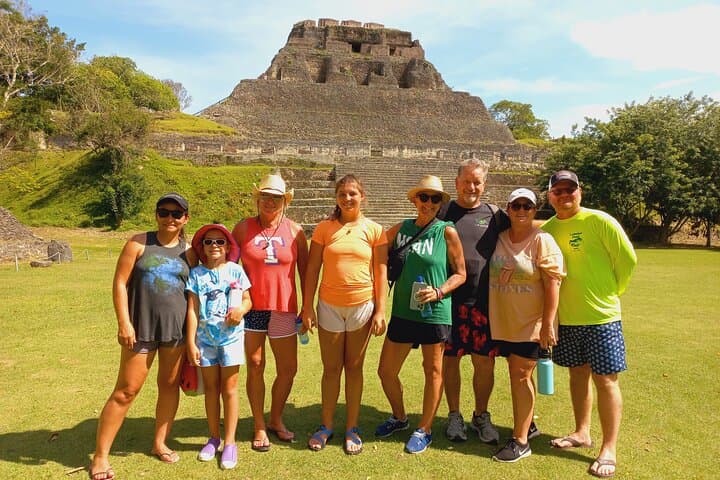
You step off the hand-cranked ferry with wet wood creaking underfoot and feel the river push a cool breath into the clearing. Jungle presses close; the trail to Xunantunich opens in a fold of limestone and sunlight. A local guide gestures toward a skyline of stepped stone—El Castillo rising roughly 40 meters—and the group begins a short, purposeful climb.
Verified experiences and guided adventures in the surrounding area.
Operated by Belize Wild Caribbean Tours · San Ignacio, Cayo District
You step off the hand-cranked ferry with wet wood creaking underfoot and feel the river push a cool breath into the clearing. Jungle presses close; the trail to Xunantunich opens in a fold of limestone and sunlight. A local guide gestures toward a skyline of stepped stone—El Castillo rising roughly 40 meters—and the group begins a short, purposeful climb.
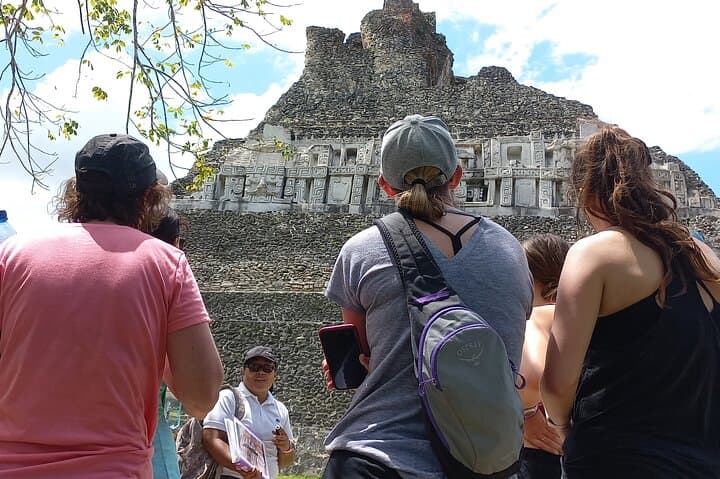
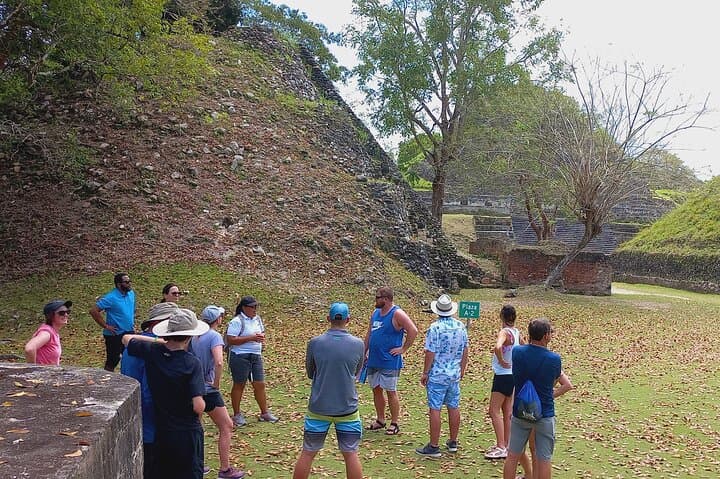
Xunantunich was a ceremonial center during the Classic Maya era; the plaza and pyramids were built in stacked limestone on a ridge above the Mopan River. The geology here is karst: hard limestone carved by water over millennia, leaving exposed stone steps and compacted earth paths. Culture and history linger in carved friezes and place names—Xunantunich means “Stone Woman” in the local Maya tongue—and guides often point out glyph fragments and clan-era stories as you move through the site.
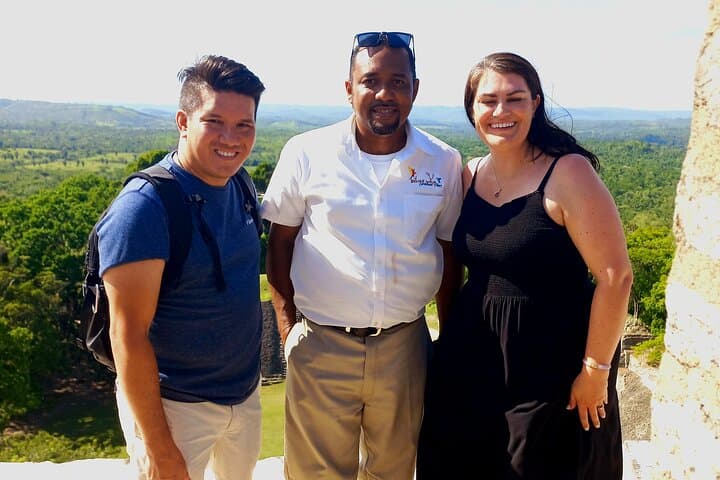
Expect uneven stone staircases, packed-earth trails totaling roughly 0.5–2 km of on-site walking, and a steep vertical gain when you climb El Castillo to the summit viewpoint. The top rewards with long views over the Belizean canopy and the distant Maya Mountains; the jungle will call and the river will dare you to look down.
Practically: bring 1–2 liters of water, closed-toe shoes with grip, sun protection and insect repellent. Morning visits avoid heat and crowds; allow at least 60 minutes at the site. Entrance fees and a licensed local guide are standard—supporting them helps preserve the ruins and local livelihoods.
moderate.
1–3 hours.
Light to moderate fitness; able to climb steep stone steps and walk on uneven ground for short distances.
Most guided visits allot about 60 minutes at the site for a focused walk and summit climb; factor additional time for transport and the ferry crossing.
Yes—El Castillo is accessible to visitors via steep stone steps; follow guide instructions and avoid climbing restricted sections to protect fragile masonry.
The site is uneven and includes steep steps; small children can visit but strollers are impractical—infants are better carried in a sling or child carrier.
Local guides commonly speak English and Spanish; licensed-guide fees and entrance are typically included in private tours but confirm with your provider before booking.
Xunantunich was an important Classic-period Maya center; its largest pyramid, El Castillo, dominates the plaza and showcases carved friezes and ceremonial architecture.
Stay on designated paths, follow guide instructions and avoid touching exposed masonry; park fees and guide services support site conservation and local community programs.
Belize Wild Caribbean Tours operates guided outdoor trips and adventures with an emphasis on safety, stewardship, and memorable experiences.
You step off the hand-cranked ferry with wet wood creaking underfoot and feel the river push a cool breath into the clearing. Jungle presses close; the trail to Xunantunich opens in a fold of limestone and sunlight. A local guide gestures toward a skyline of stepped stone—El Castillo rising roughly 40 meters—and the group begins a short, purposeful climb.
You step off the hand-cranked ferry with wet wood creaking underfoot and feel the river push a cool breath into the clearing. Jungle presses close; the trail to Xunantunich opens in a fold of limestone and sunlight. A local guide gestures toward a skyline of stepped stone—El Castillo rising roughly 40 meters—and the group begins a short, purposeful climb.
Xunantunich was a ceremonial center during the Classic Maya era; the plaza and pyramids were built in stacked limestone on a ridge above the Mopan River. The geology here is karst: hard limestone carved by water over millennia, leaving exposed stone steps and compacted earth paths. Culture and history linger in carved friezes and place names—Xunantunich means “Stone Woman” in the local Maya tongue—and guides often point out glyph fragments and clan-era stories as you move through the site.
Expect uneven stone staircases, packed-earth trails totaling roughly 0.5–2 km of on-site walking, and a steep vertical gain when you climb El Castillo to the summit viewpoint. The top rewards with long views over the Belizean canopy and the distant Maya Mountains; the jungle will call and the river will dare you to look down.
Practically: bring 1–2 liters of water, closed-toe shoes with grip, sun protection and insect repellent. Morning visits avoid heat and crowds; allow at least 60 minutes at the site. Entrance fees and a licensed local guide are standard—supporting them helps preserve the ruins and local livelihoods.