THE ADVENTURE COLLECTIVE® · Independent discovery and booking for outdoor travel

See Xi’an’s headline attractions—Terracotta Warriors, Ming City Wall, and the Muslim Quarter—in a single private day trip from Beijing by air. This full-day tour packs flights, entrance fees, a guide and lunch into an efficient cultural loop.
See Xi’an’s headline attractions—Terracotta Warriors, Ming City Wall, and the Muslim Quarter—in a single private day trip from Beijing by air. This full-day tour packs flights, entrance fees, a guide and lunch into an efficient cultural loop.
You step off a short flight into Xi’an with the city already humming—bell tower chimes in the distance, and the flat stretch of the Guanzhong Plain opens like a map. The day moves fast: an air-conditioned transfer that threads out to the Terracotta Army, a slow survey of Ming-era brick ramparts, and the narrower pulse of the Muslim Quarter where spices and frying oil push through the air.
Verified experiences and guided adventures in the surrounding area.
Operated by Urban Passer · Xi'an, Shaanxi
You step off a short flight into Xi’an with the city already humming—bell tower chimes in the distance, and the flat stretch of the Guanzhong Plain opens like a map. The day moves fast: an air-conditioned transfer that threads out to the Terracotta Army, a slow survey of Ming-era brick ramparts, and the narrower pulse of the Muslim Quarter where spices and frying oil push through the air.
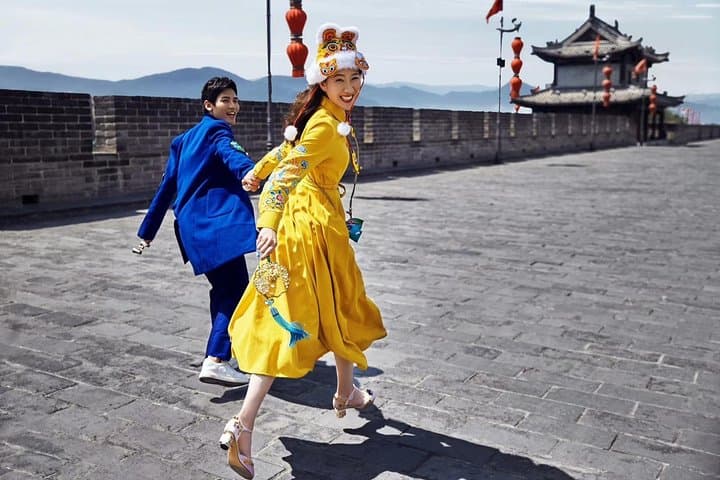
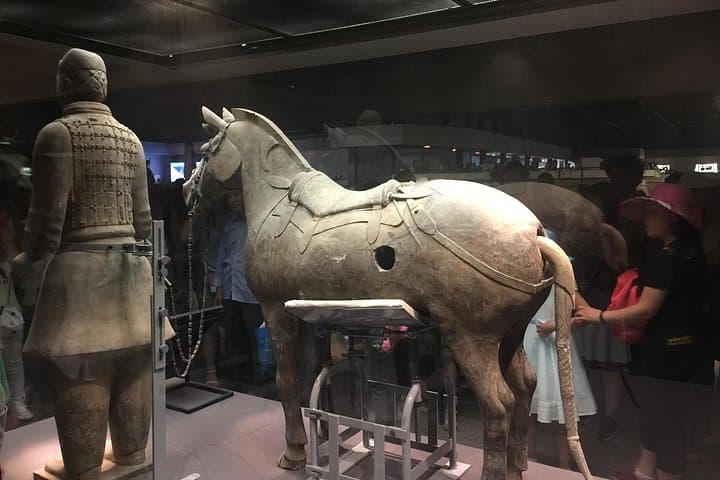
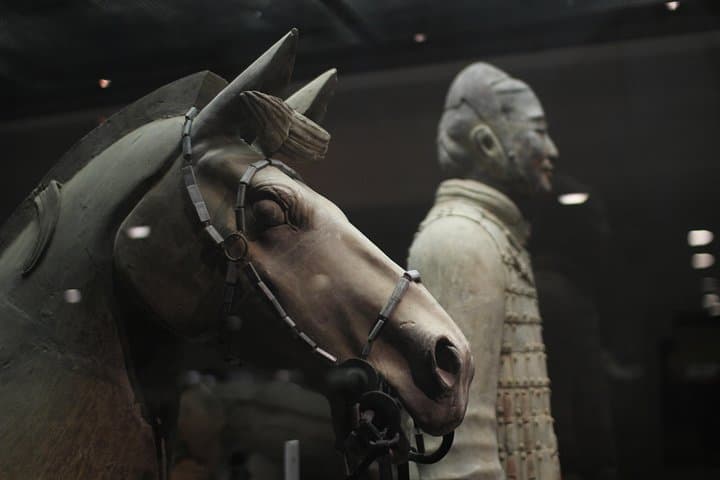
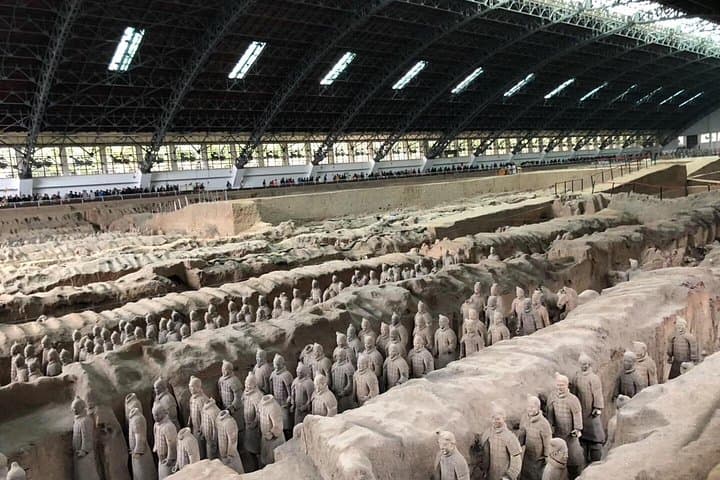
Xi’an sits at the eastern edge of the Loess Plateau and was the eastern terminus of the Silk Road. The Terracotta Warriors, buried with China’s first emperor Qin Shi Huang more than 2,200 years ago, are arranged across four main pits containing thousands of life-size figures—an archaeological spectacle as much as a cultural landmark. The Ming City Wall, roughly 14 kilometers long, dates to the 14th century and offers elevated perspective on the urban grid below. The Muslim Quarter and the Great Mosque add living culture: food stalls, call to prayer, and centuries of trade-layered architecture.
Practically, this is a full 10–11 hour day with included one-way air travel Beijing→Xi’an and a return flight to the city of your choice. Expect a mix of walking on uneven museum floors, brief paved climbs up the City Wall, and crowded market lanes. Bring comfortable walking shoes, a light daypack, travel documents (passport required), and a plan for daylight timing—mornings at the pits are less crowded. The tour includes entrance fees, a guide, lunch, and hotel pickup; plan for short transit windows and keep small local currency for market purchases. The rhythm alternates between paced history and quick-moving logistics—rewarding if you want a compact, curated introduction to Xi’an’s top sites.
easy.
10–11 hours.
Suitable for travelers in general good health who can walk for several hours and manage short stairs or ramps.
Yes — the one-way flight from Beijing to Xi’an and the return flight to your chosen city are included, as are entrances to the Terracotta Warriors and Xi’an City Wall.
Yes — return flights can be arranged to Beijing, Guangzhou, Shanghai, Chengdu, or Guilin; confirm your preferred return city at booking.
The itinerary is described as physically easy and can accommodate most ages, but infants must sit on laps during flights and participants should be able to manage several hours of walking.
Bring small notes for purchases, a light layer for building interiors, and modest dress if you plan to enter the Great Mosque; peak evening hours are busiest.
Xi’an is one of China’s oldest capitals and the eastern terminus of the Silk Road; the Terracotta Army was buried to accompany Emperor Qin Shi Huang in the afterlife over 2,200 years ago.
High visitor numbers strain fragile sites—stay on designated paths, avoid touching artifacts and support local businesses to help fund conservation.
Urban Passer operates guided outdoor trips and adventures with an emphasis on safety, stewardship, and memorable experiences.
You step off a short flight into Xi’an with the city already humming—bell tower chimes in the distance, and the flat stretch of the Guanzhong Plain opens like a map. The day moves fast: an air-conditioned transfer that threads out to the Terracotta Army, a slow survey of Ming-era brick ramparts, and the narrower pulse of the Muslim Quarter where spices and frying oil push through the air.
You step off a short flight into Xi’an with the city already humming—bell tower chimes in the distance, and the flat stretch of the Guanzhong Plain opens like a map. The day moves fast: an air-conditioned transfer that threads out to the Terracotta Army, a slow survey of Ming-era brick ramparts, and the narrower pulse of the Muslim Quarter where spices and frying oil push through the air.
Xi’an sits at the eastern edge of the Loess Plateau and was the eastern terminus of the Silk Road. The Terracotta Warriors, buried with China’s first emperor Qin Shi Huang more than 2,200 years ago, are arranged across four main pits containing thousands of life-size figures—an archaeological spectacle as much as a cultural landmark. The Ming City Wall, roughly 14 kilometers long, dates to the 14th century and offers elevated perspective on the urban grid below. The Muslim Quarter and the Great Mosque add living culture: food stalls, call to prayer, and centuries of trade-layered architecture.
Practically, this is a full 10–11 hour day with included one-way air travel Beijing→Xi’an and a return flight to the city of your choice. Expect a mix of walking on uneven museum floors, brief paved climbs up the City Wall, and crowded market lanes. Bring comfortable walking shoes, a light daypack, travel documents (passport required), and a plan for daylight timing—mornings at the pits are less crowded. The tour includes entrance fees, a guide, lunch, and hotel pickup; plan for short transit windows and keep small local currency for market purchases. The rhythm alternates between paced history and quick-moving logistics—rewarding if you want a compact, curated introduction to Xi’an’s top sites.