THE ADVENTURE COLLECTIVE® · Independent discovery and booking for outdoor travel

Snowshoe through the high Andes above San Carlos de Bariloche on a private, guided winter trek. Spend a flexible day moving through lenga forest, open ridgelines and glacier-carved viewpoints with boxed lunch, permits and gear included.
Snowshoe through the high Andes above San Carlos de Bariloche on a private, guided winter trek. Spend a flexible day moving through lenga forest, open ridgelines and glacier-carved viewpoints with boxed lunch, permits and gear included.
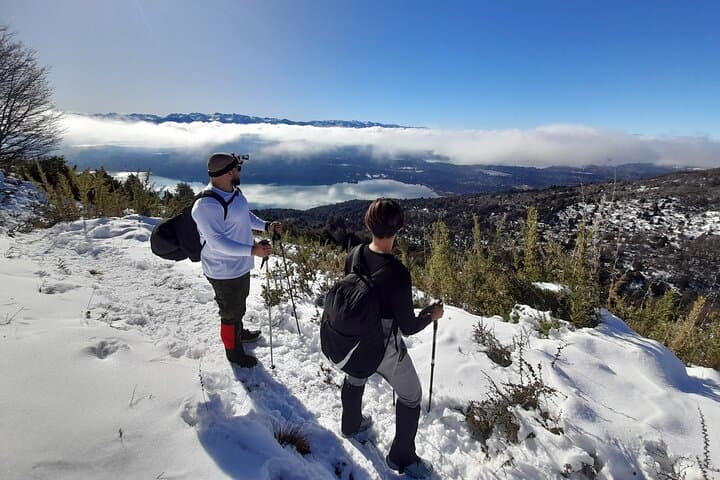
The first breath of cold air hits like a wake-up call: sharp, clean and smelling of pine and thawing snow. You step out of the transfer near a narrow trailhead and the city’s outline—church steeples and chocolate-shop awnings—shrinks behind you. Ahead, the Andes lift into a rim of serrated ridgelines and bowl-shaped valleys carved by ancient ice. The guide glances at the group, counts poles and snowshoes, and the walk begins.
Verified experiences and guided adventures in the surrounding area.
Operated by Kalnu Patagonia · San Carlos de Bariloche, Río Negro
The first breath of cold air hits like a wake-up call: sharp, clean and smelling of pine and thawing snow. You step out of the transfer near a narrow trailhead and the city’s outline—church steeples and chocolate-shop awnings—shrinks behind you. Ahead, the Andes lift into a rim of serrated ridgelines and bowl-shaped valleys carved by ancient ice. The guide glances at the group, counts poles and snowshoes, and the walk begins.
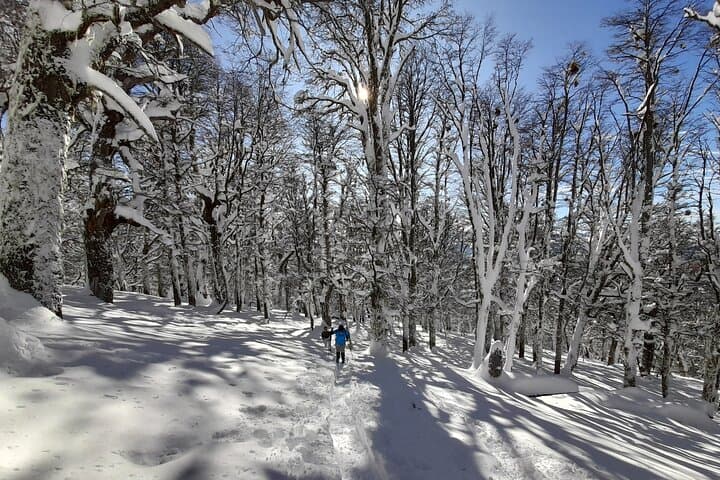
Northern Patagonia around San Carlos de Bariloche is honest in its scenery: lenga forests that filter light into green-gold, lakes that reflect sky as though held by glass, and bare granite outcrops roughed by wind. Geologically, the landscape is a memory of fire and ice—granite cores interrupted by volcanic flows and sculpted by Pleistocene glaciers that left moraines and amphitheaters where snow lingers late into spring. Cultural touches are never far: the region’s map bears Colonial and Swiss-Patagonian influences, from alpine-style cabins to Mapuche place names that recall indigenous stewardship of the high country.
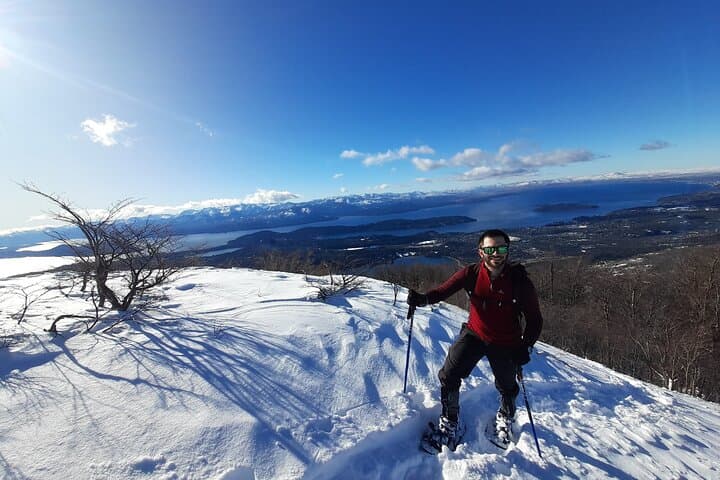
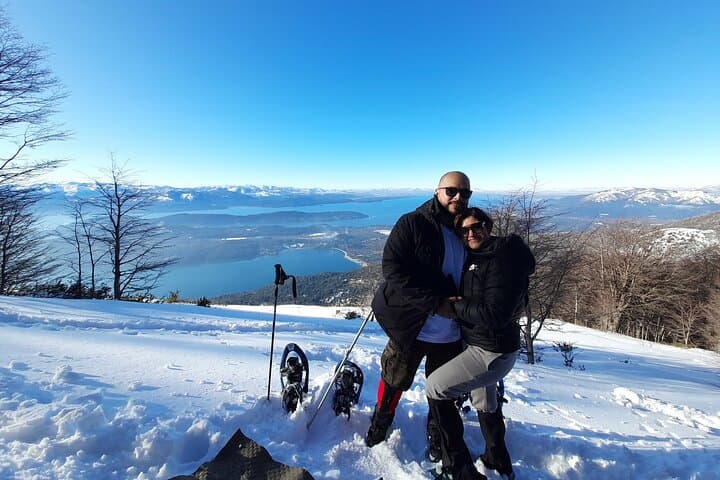
This is a private winter trek, so your itinerary is flexible. Guides tailor the route—often 8–12 km with 200–600 m of elevation gain depending on objectives and conditions—choosing sheltered forests, open ridgelines, or a lake lookout where you’ll unpack a boxed lunch. When snow is deep, snowshoes transform trudging into an efficient glide; when it’s patchy, the guide routes around wind-scoured rock. Conversation on the trail ranges from local ecology—how lenga reproduces after fire—to practical trailcraft: reading snow crusts, conserving energy, and spotting animal tracks.
Practical edge: the day runs about seven hours including transport; snowshoes, poles, permits and insurance are included. The activity fits travelers with moderate fitness; it’s unsuitable for those with serious heart, spinal, or pregnancy-related restrictions. Dress in layers, bring sunglasses and sunscreen—winter sun at altitude is strong—and keep a light waterproof shell handy.
Bariloche’s mountains are civic and fragile. The best treks leave no trace: pack out waste, avoid shortcutting switchbacks, and follow your guide’s route to minimize impacts on alpine flora and wintering wildlife.
If you want a day that balances effort with scenery—where alpine light refracts off snow and the mountains feel like an honest, talkative companion—this private winter trekking experience in Bariloche is a clear choice. It’s a guided window into Patagonia’s winter rhythms, crafted for travelers who want instruction as much as solitude.
moderate.
6–8 hours.
Participants should have a moderate level of fitness: comfortable walking 8–12 km with some sustained climbs and solid balance on snow.
Typical departures last about seven hours including transport; expect 8–12 km and 200–600 m of ascent depending on the chosen route, rated moderate.
Yes—snowshoes and poles are provided along with private transportation, lunch box, certified guide, permits and insurance.
No advanced experience required—basic balance and walking fitness are sufficient; the guide will give a short orientation.
Bring a layered system: moisture-wicking base, insulating mid-layer, waterproof breathable jacket and pants, warm hat, gloves, and sunglasses; waterproof boots are recommended.
Not recommended for travelers with serious heart conditions, spinal injuries, or pregnant travelers; participants should have moderate fitness and be able to walk for several hours.
Full refund available if you cancel at least 24 hours before departure; no refund for cancellations within 24 hours.
San Carlos de Bariloche sits within Nahuel Huapi National Park, Argentina’s oldest national park; the area reflects a mix of Mapuche heritage and European alpine settlement that shaped trails and huts.
Stick to guided routes, avoid disturbing wintering wildlife, and pack out all waste—snow compaction and off-trail travel can harm fragile alpine vegetation.
Kalnu Patagonia operates guided outdoor trips and adventures with an emphasis on safety, stewardship, and memorable experiences.
The first breath of cold air hits like a wake-up call: sharp, clean and smelling of pine and thawing snow. You step out of the transfer near a narrow trailhead and the city’s outline—church steeples and chocolate-shop awnings—shrinks behind you. Ahead, the Andes lift into a rim of serrated ridgelines and bowl-shaped valleys carved by ancient ice. The guide glances at the group, counts poles and snowshoes, and the walk begins.
The first breath of cold air hits like a wake-up call: sharp, clean and smelling of pine and thawing snow. You step out of the transfer near a narrow trailhead and the city’s outline—church steeples and chocolate-shop awnings—shrinks behind you. Ahead, the Andes lift into a rim of serrated ridgelines and bowl-shaped valleys carved by ancient ice. The guide glances at the group, counts poles and snowshoes, and the walk begins.
Northern Patagonia around San Carlos de Bariloche is honest in its scenery: lenga forests that filter light into green-gold, lakes that reflect sky as though held by glass, and bare granite outcrops roughed by wind. Geologically, the landscape is a memory of fire and ice—granite cores interrupted by volcanic flows and sculpted by Pleistocene glaciers that left moraines and amphitheaters where snow lingers late into spring. Cultural touches are never far: the region’s map bears Colonial and Swiss-Patagonian influences, from alpine-style cabins to Mapuche place names that recall indigenous stewardship of the high country.
This is a private winter trek, so your itinerary is flexible. Guides tailor the route—often 8–12 km with 200–600 m of elevation gain depending on objectives and conditions—choosing sheltered forests, open ridgelines, or a lake lookout where you’ll unpack a boxed lunch. When snow is deep, snowshoes transform trudging into an efficient glide; when it’s patchy, the guide routes around wind-scoured rock. Conversation on the trail ranges from local ecology—how lenga reproduces after fire—to practical trailcraft: reading snow crusts, conserving energy, and spotting animal tracks.
Practical edge: the day runs about seven hours including transport; snowshoes, poles, permits and insurance are included. The activity fits travelers with moderate fitness; it’s unsuitable for those with serious heart, spinal, or pregnancy-related restrictions. Dress in layers, bring sunglasses and sunscreen—winter sun at altitude is strong—and keep a light waterproof shell handy.
Bariloche’s mountains are civic and fragile. The best treks leave no trace: pack out waste, avoid shortcutting switchbacks, and follow your guide’s route to minimize impacts on alpine flora and wintering wildlife.
If you want a day that balances effort with scenery—where alpine light refracts off snow and the mountains feel like an honest, talkative companion—this private winter trekking experience in Bariloche is a clear choice. It’s a guided window into Patagonia’s winter rhythms, crafted for travelers who want instruction as much as solitude.