THE ADVENTURE COLLECTIVE® · Independent discovery and booking for outdoor travel

A private full-day boat trip from San José to Marino Ballena National Park that targets humpback whales, dolphins and sea turtles, with an optional low-tide walk on the Whale’s Tail. Expect guided interpretation, crocodile viewing at Tárcoles Bridge, and a conservation-minded approach to wildlife encounters.
A private full-day boat trip from San José to Marino Ballena National Park that targets humpback whales, dolphins and sea turtles, with an optional low-tide walk on the Whale’s Tail. Expect guided interpretation, crocodile viewing at Tárcoles Bridge, and a conservation-minded approach to wildlife encounters.
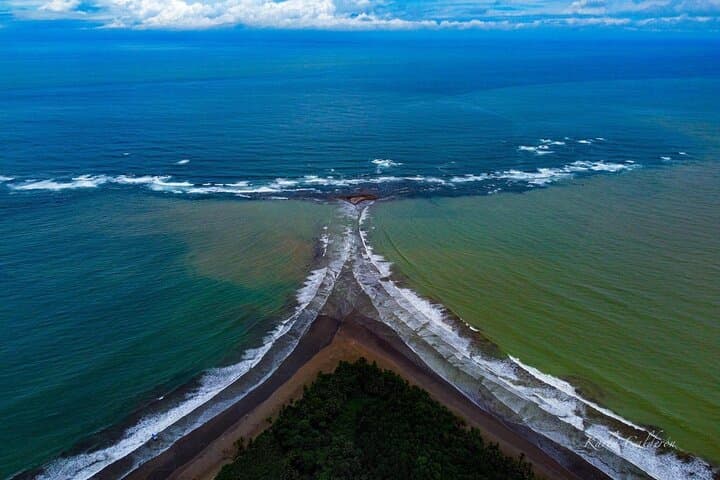
Morning light slides across the Pacific as your private skipper cuts through glassy water, and the coastline of Marino Ballena unfurls: black sand, rocky headlands, and the famous Whale’s Tail sandbar that appears only when the tide allows.
Verified experiences and guided adventures in the surrounding area.
Operated by Paticas Travel · Uvita, Puntarenas
Morning light slides across the Pacific as your private skipper cuts through glassy water, and the coastline of Marino Ballena unfurls: black sand, rocky headlands, and the famous Whale’s Tail sandbar that appears only when the tide allows.
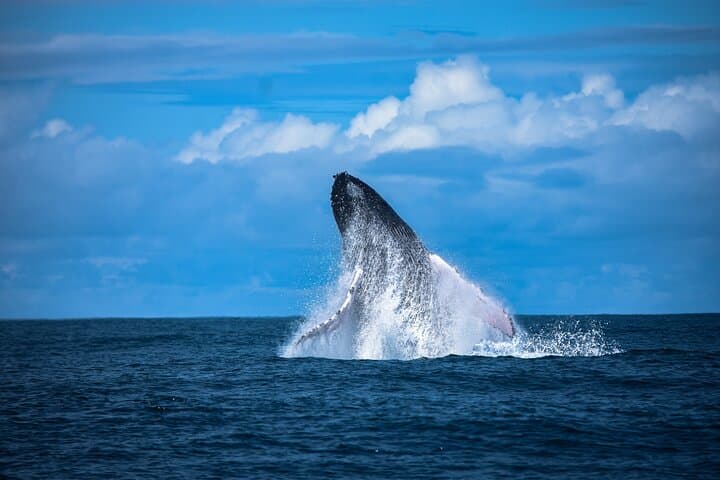
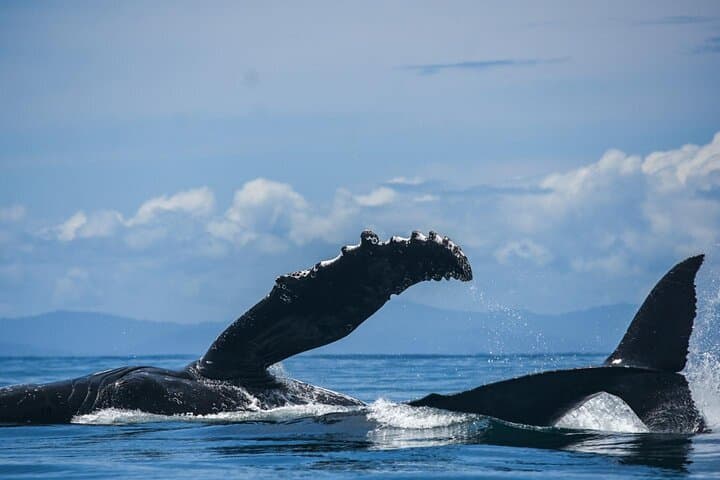
This stretch of Costa Rica’s southern Pacific is a meeting point for migrating humpbacks and resident dolphins. Marino Ballena National Park was set aside to protect the narrow shelf, reefs and sandbar where whales congregate to calve and feed. Geologically the coast is shaped by wave-sculpted headlands and sediment deposits that form the dramatic tail-shaped sandbar. Local communities from Uvita and nearby villages run small-boat operations and emphasize conservation-minded viewing.
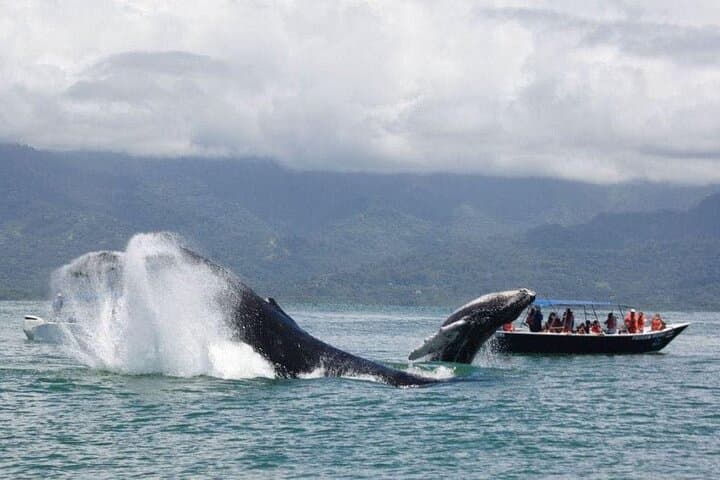
Expect guided narration about migration patterns, marine ecology and coastal fisheries as you scan for blows and breaches. The tour often includes a stop at Tárcoles Bridge for crocodile viewing and a low-tide walk on the Whale’s Tail when conditions permit. From San José this becomes a long, full day—pickup, drive, and a four-hour boat window on the water.
Practical pointers: book during whale season (best July–October, with secondary sightings in December–April), bring seasickness prevention if you’re prone, and carry reef-safe sunscreen, plenty of water and a charged camera. Operators follow park rules—keep respectful distance, avoid chasing animals and follow crew instructions. If the sandbar walk is a priority, confirm tide times before booking. This is a wildlife-first outing: patience and good optics reward the attentive observer.
moderate.
10–12 hours.
Light fitness required; able to sit and stand during a multi-hour boat ride and handle short walks on uneven sand and rocks.
Peak southern humpback season runs July–October; additional humpback sightings occur December–April when northern populations migrate.
Only at low tide—the operator will plan visits when tides and weather allow, but it can’t be guaranteed on every departure.
Tours are generally suitable for all fitness levels, but long transfer times and boarding a boat mean infants and guests with limited mobility should check with the operator first.
Operators follow park and national guidelines to maintain safe viewing distances and avoid disturbing animals; crews will maneuver for good views without approaching animals aggressively.
Marino Ballena National Park protects the Whale’s Tail sandbar and adjacent marine habitats; it was created to conserve migratory whales, coral and coastal ecosystems along Costa Rica’s southern Pacific.
Local operators follow park rules to minimize disturbance—maintain distance from wildlife, avoid feeding or chasing animals, and pack out all trash to protect sensitive marine habitats.
Paticas Travel operates guided outdoor trips and adventures with an emphasis on safety, stewardship, and memorable experiences.
Morning light slides across the Pacific as your private skipper cuts through glassy water, and the coastline of Marino Ballena unfurls: black sand, rocky headlands, and the famous Whale’s Tail sandbar that appears only when the tide allows.
Morning light slides across the Pacific as your private skipper cuts through glassy water, and the coastline of Marino Ballena unfurls: black sand, rocky headlands, and the famous Whale’s Tail sandbar that appears only when the tide allows.
This stretch of Costa Rica’s southern Pacific is a meeting point for migrating humpbacks and resident dolphins. Marino Ballena National Park was set aside to protect the narrow shelf, reefs and sandbar where whales congregate to calve and feed. Geologically the coast is shaped by wave-sculpted headlands and sediment deposits that form the dramatic tail-shaped sandbar. Local communities from Uvita and nearby villages run small-boat operations and emphasize conservation-minded viewing.
Expect guided narration about migration patterns, marine ecology and coastal fisheries as you scan for blows and breaches. The tour often includes a stop at Tárcoles Bridge for crocodile viewing and a low-tide walk on the Whale’s Tail when conditions permit. From San José this becomes a long, full day—pickup, drive, and a four-hour boat window on the water.
Practical pointers: book during whale season (best July–October, with secondary sightings in December–April), bring seasickness prevention if you’re prone, and carry reef-safe sunscreen, plenty of water and a charged camera. Operators follow park rules—keep respectful distance, avoid chasing animals and follow crew instructions. If the sandbar walk is a priority, confirm tide times before booking. This is a wildlife-first outing: patience and good optics reward the attentive observer.