THE ADVENTURE COLLECTIVE® · Independent discovery and booking for outdoor travel

Set sail from Praia do Forte on a private schooner to watch migrating humpback whales after a short, informative briefing at the Baleia Jubarte Institute. This five-hour tour blends conservation-focused learning with hands-on whale watching from a traditional sail vessel.
Set sail from Praia do Forte on a private schooner to watch migrating humpback whales after a short, informative briefing at the Baleia Jubarte Institute. This five-hour tour blends conservation-focused learning with hands-on whale watching from a traditional sail vessel.
The schooner slips away from a sand-edged beach as a salty wind pushes you out past the reef; spray cools your neck and the guide’s voice narrows into the radio of the open sea. Praia do Forte’s shoreline, a thin ribbon of palm and white sand north of Salvador, opens to a corridor where humpback whales migrate each year — calves and adults moving between feeding grounds and breeding lagoons.
Verified experiences and guided adventures in the surrounding area.
Operated by taxiGo Limo Airport Service · Praia do Forte, Bahia
The schooner slips away from a sand-edged beach as a salty wind pushes you out past the reef; spray cools your neck and the guide’s voice narrows into the radio of the open sea. Praia do Forte’s shoreline, a thin ribbon of palm and white sand north of Salvador, opens to a corridor where humpback whales migrate each year — calves and adults moving between feeding grounds and breeding lagoons.
The day begins with a short, focused lecture at the Baleia Jubarte Institute, where naturalists explain humpback behavior and the local conservation work that shaped regulations for responsible viewing. Geologically, the coast is a shallow, warmer stretch of the South Atlantic with protective reefs that attract fish and, in turn, the whales. Culturally, Praia do Forte is a fishing village turned conservation hub; nearby ruins and the Project TAMAR sea turtle station reflect a coastline used for subsistence, defense, and study.
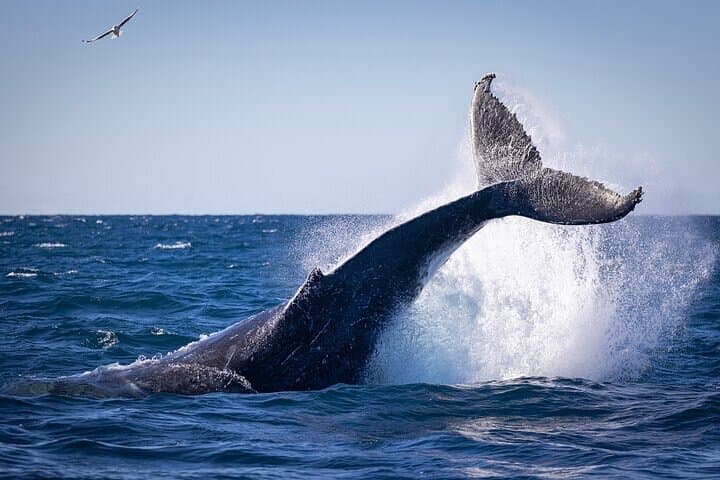
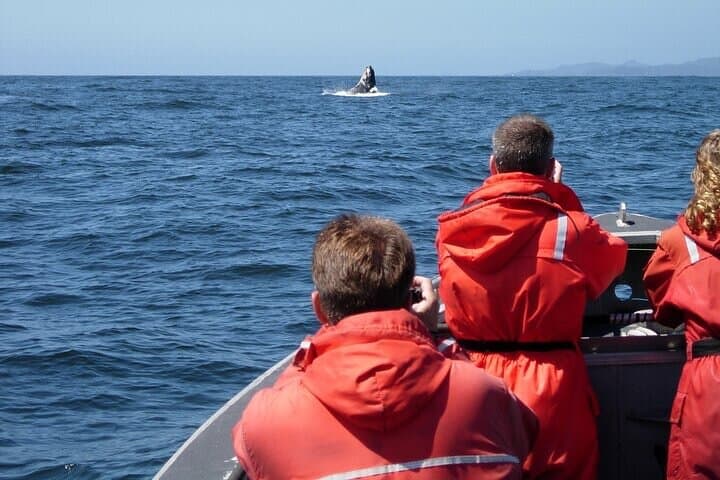
Expect long, deliberate waits punctuated by sudden movement: tails slapping the surface, blows puffing like a soft trumpet. Guides maintain distance; the schooner offers a close-but-respectful vantage with plenty of deck space and shaded seating.
Practicalities: dress for sun and wind, bring motion-sickness remedies if you’re prone, and pack binoculars and a zoom lens. Tours include hotel pickup and drop-off in private, air-conditioned transport, and are suitable for most fitness levels. Weather can change visibility; mornings are usually calmer. Leave no trace — use reef-safe sunscreen and respect wildlife guidelines to keep these encounters available for the next season’s migrants.
moderate.
5 hours.
Suitable for most fitness levels; requires ability to board a small schooner and stand on deck for periods
Humpback whales are most commonly observed between July and November, with peak sightings typically in late winter and spring (southern hemisphere).
Yes—tours accept infants but they must sit on an adult’s lap; staff recommend bringing motion-sickness prevention and supervising children on deck.
This operator’s policy indicates tours run as scheduled; consult the provider on day-of-weather plans and safety decisions before booking.
Yes—private, air-conditioned hotel pickup and drop-off plus a local environmental guide are included with the tour.
Praia do Forte grew from fishing and colonial-era coastal defenses; the nearby Garcia D’Ávila ruins are a reminder of the region’s 16th–18th century colonial history.
Local NGOs and the Baleia Jubarte Institute work closely with guides to enforce distance and speed rules during whale season; using reef-safe sunscreen and minimizing noise helps protect marine life.
taxiGo Limo Airport Service operates guided outdoor trips and adventures with an emphasis on safety, stewardship, and memorable experiences.

The schooner slips away from a sand-edged beach as a salty wind pushes you out past the reef; spray cools your neck and the guide’s voice narrows into the radio of the open sea. Praia do Forte’s shoreline, a thin ribbon of palm and white sand north of Salvador, opens to a corridor where humpback whales migrate each year — calves and adults moving between feeding grounds and breeding lagoons.
The schooner slips away from a sand-edged beach as a salty wind pushes you out past the reef; spray cools your neck and the guide’s voice narrows into the radio of the open sea. Praia do Forte’s shoreline, a thin ribbon of palm and white sand north of Salvador, opens to a corridor where humpback whales migrate each year — calves and adults moving between feeding grounds and breeding lagoons.
The day begins with a short, focused lecture at the Baleia Jubarte Institute, where naturalists explain humpback behavior and the local conservation work that shaped regulations for responsible viewing. Geologically, the coast is a shallow, warmer stretch of the South Atlantic with protective reefs that attract fish and, in turn, the whales. Culturally, Praia do Forte is a fishing village turned conservation hub; nearby ruins and the Project TAMAR sea turtle station reflect a coastline used for subsistence, defense, and study.
Expect long, deliberate waits punctuated by sudden movement: tails slapping the surface, blows puffing like a soft trumpet. Guides maintain distance; the schooner offers a close-but-respectful vantage with plenty of deck space and shaded seating.
Practicalities: dress for sun and wind, bring motion-sickness remedies if you’re prone, and pack binoculars and a zoom lens. Tours include hotel pickup and drop-off in private, air-conditioned transport, and are suitable for most fitness levels. Weather can change visibility; mornings are usually calmer. Leave no trace — use reef-safe sunscreen and respect wildlife guidelines to keep these encounters available for the next season’s migrants.