THE ADVENTURE COLLECTIVE® · Independent discovery and booking for outdoor travel

Set out from the marina into Banderas Bay on a private three-hour panga to seek humpback whales that come here to breed and calve. This focused trip combines experienced local captains, life vests and bottled water with a good chance of dramatic surface sightings during peak season.
Set out from the marina into Banderas Bay on a private three-hour panga to seek humpback whales that come here to breed and calve. This focused trip combines experienced local captains, life vests and bottled water with a good chance of dramatic surface sightings during peak season.
You step off the dock and the bay opens — a blue bowl rimmed by the Sierra Madre, boats rocking gently as gulls quarrel over scraps. The panga slips into the channel, the city shrinking behind you, and the sea takes over: salt on your lips, a cool breeze pushing the boat forward.
Verified experiences and guided adventures in the surrounding area.
Operated by Travel Vallarta · Puerto Vallarta, Jalisco
You step off the dock and the bay opens — a blue bowl rimmed by the Sierra Madre, boats rocking gently as gulls quarrel over scraps. The panga slips into the channel, the city shrinking behind you, and the sea takes over: salt on your lips, a cool breeze pushing the boat forward.
Banderas Bay is one of the Mexican Pacific’s busiest winter nurseries for humpback whales. These mammals migrate from colder north Pacific feeding grounds to breed and calve in the bay between roughly December and April. Geologically, the bay’s broad sweep owes its shape to tectonic uplift and erosion where volcanic highlands meet the ocean, creating deep water close to shore that whales favor.
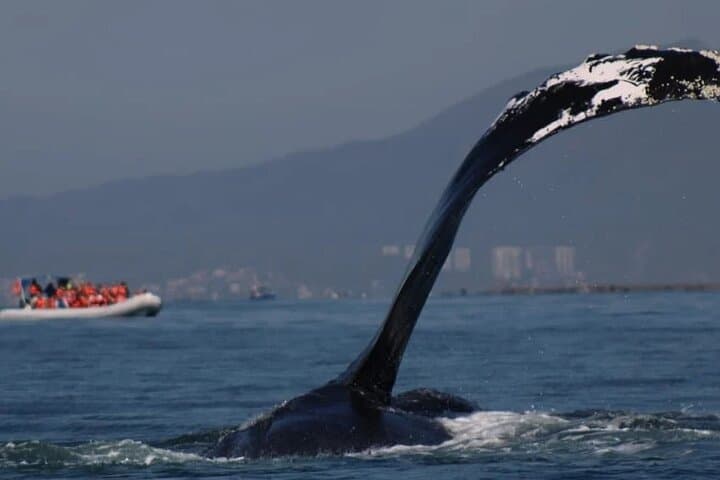
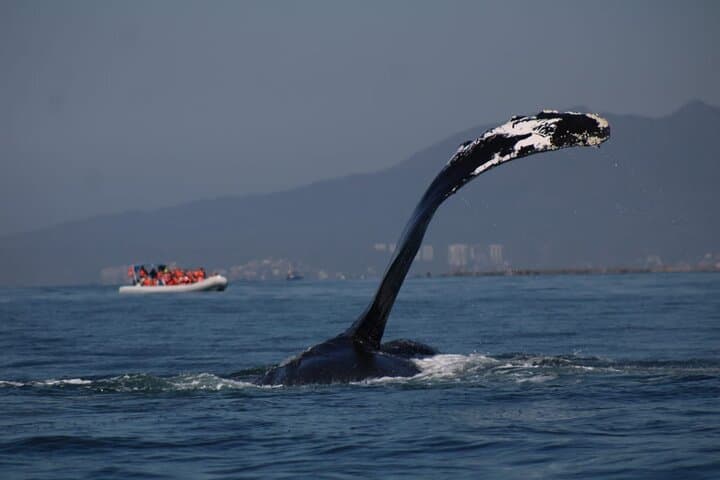
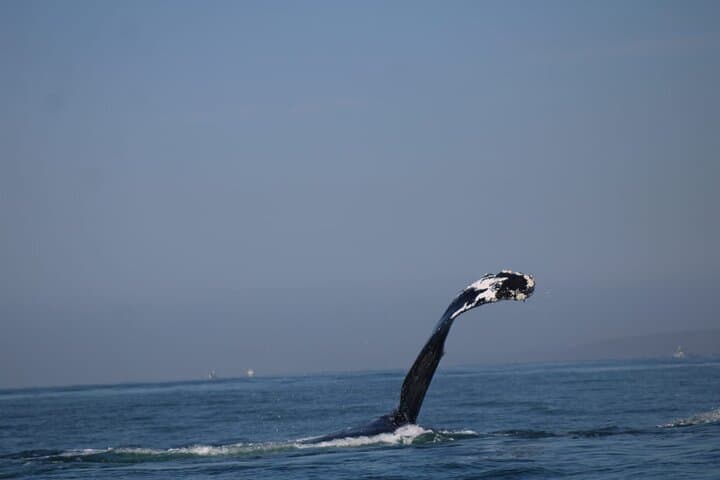
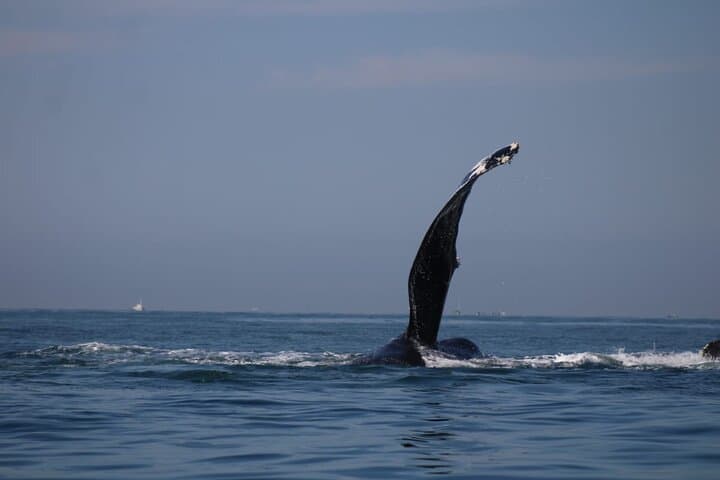
Locally, whale watching is woven into Puerto Vallarta’s coastal culture — from old fishing launches to licensed pangas offering guided sightings. Captains follow marine regulations and know how to read spouts and fluke patterns; life vests and bottled water are standard on most private trips. Expect patient searching punctuated by sudden drama: blows, breaches, tail slaps and a calf shadowing a mother.
Practical guidance: arrive at the docking area and ask for Black Wind Tours; have 39 MXN ready for the local embarkation tax. Bring a light windproof layer, sunscreen, motion-sickness remedies if you’re prone, and binoculars. Operators aim to keep respectful distance from mother-calf pairs — maintain quiet, camera-ready observation. A three-hour private outing balances time on the water with a focused chance to see humpbacks while keeping crowds to a minimum.
easy.
3 hours.
Minimal fitness required — able to board a small panga and remain seated or steady on a moving boat for a few hours
The highest chance of humpback sightings is during the season from December through April, when whales come to breed and calve in Banderas Bay.
No tour can guarantee sightings; private tours increase flexibility and local captain attention, improving odds but not guaranteeing encounters.
Yes — the listing notes stroller and wheelchair accessibility for boarding areas, though guests should check specific boarding assistance with the operator ahead of time.
Captains follow national and local guidelines to keep distance from whales, especially mothers with calves; expect brief, respectful viewing periods rather than close approaches.
Puerto Vallarta grew from a fishing village into a major coastal town in the mid-20th century, with Banderas Bay long used by local fishers before organized tourism developed.
Whale-watching in Mexico is regulated to minimize disturbance; choose licensed operators who prioritize distance rules and brief, non-intrusive viewing to protect moms and calves.
Travel Vallarta operates guided outdoor trips and adventures with an emphasis on safety, stewardship, and memorable experiences.
You step off the dock and the bay opens — a blue bowl rimmed by the Sierra Madre, boats rocking gently as gulls quarrel over scraps. The panga slips into the channel, the city shrinking behind you, and the sea takes over: salt on your lips, a cool breeze pushing the boat forward.
You step off the dock and the bay opens — a blue bowl rimmed by the Sierra Madre, boats rocking gently as gulls quarrel over scraps. The panga slips into the channel, the city shrinking behind you, and the sea takes over: salt on your lips, a cool breeze pushing the boat forward.
Banderas Bay is one of the Mexican Pacific’s busiest winter nurseries for humpback whales. These mammals migrate from colder north Pacific feeding grounds to breed and calve in the bay between roughly December and April. Geologically, the bay’s broad sweep owes its shape to tectonic uplift and erosion where volcanic highlands meet the ocean, creating deep water close to shore that whales favor.
Locally, whale watching is woven into Puerto Vallarta’s coastal culture — from old fishing launches to licensed pangas offering guided sightings. Captains follow marine regulations and know how to read spouts and fluke patterns; life vests and bottled water are standard on most private trips. Expect patient searching punctuated by sudden drama: blows, breaches, tail slaps and a calf shadowing a mother.
Practical guidance: arrive at the docking area and ask for Black Wind Tours; have 39 MXN ready for the local embarkation tax. Bring a light windproof layer, sunscreen, motion-sickness remedies if you’re prone, and binoculars. Operators aim to keep respectful distance from mother-calf pairs — maintain quiet, camera-ready observation. A three-hour private outing balances time on the water with a focused chance to see humpbacks while keeping crowds to a minimum.