THE ADVENTURE COLLECTIVE® · Independent discovery and booking for outdoor travel

Board a private inflatable and follow whale songs through Bora Bora’s lagoon. This 3–3.5 hour excursion uses a hydrophone and experienced crew to locate humpbacks and—where conditions allow—offer supervised swims alongside these giants.
Board a private inflatable and follow whale songs through Bora Bora’s lagoon. This 3–3.5 hour excursion uses a hydrophone and experienced crew to locate humpbacks and—where conditions allow—offer supervised swims alongside these giants.
Morning light slices across Bora Bora’s lagoon as a 26-foot inflatable slips from the reef and into open water. The engine’s hum falls away; the hydrophone becomes the guide, pulling visitors toward low, resonant songs that hint at a world beneath the surface. On a clear day the mountain of Otemanu watches from the island while guides triangulate calls and steer toward blows on the horizon.
Verified experiences and guided adventures in the surrounding area.
Operated by BORA OCEAN ADVENTURES · Vaitape, Leeward Islands (Society Islands)
Morning light slices across Bora Bora’s lagoon as a 26-foot inflatable slips from the reef and into open water. The engine’s hum falls away; the hydrophone becomes the guide, pulling visitors toward low, resonant songs that hint at a world beneath the surface. On a clear day the mountain of Otemanu watches from the island while guides triangulate calls and steer toward blows on the horizon.
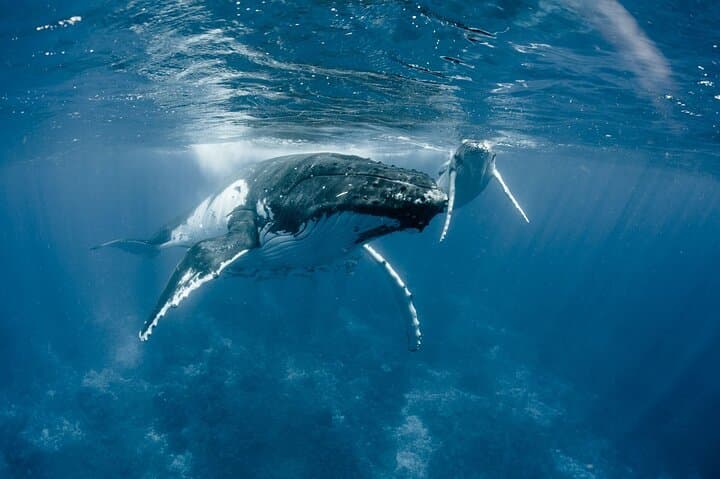
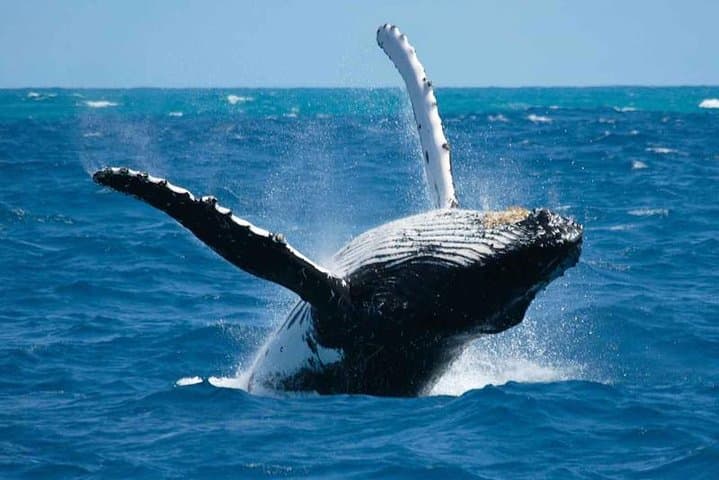
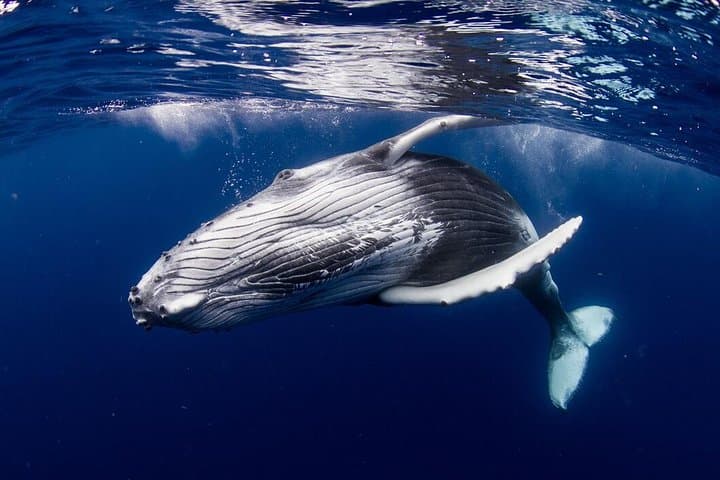
Humpback whales migrate through French Polynesia from July to November to calve and nurse, and since 2002 much of the region has been protected as a marine sanctuary. The lagoon’s volcanic rim and shallow coral reef shape warm currents where mothers and calves linger, and local operators work under environment-agency rules to minimize disturbance. Guides combine live commentary with a hydrophone to locate animals and explain behavior—what you hear on the speaker is the whale’s private language amplified into the boat.
Practically, expect a 3–3.5 hour excursion with two crew: one remains on board while the other accompanies swimmers. The operator provides snorkel gear, bottled water, snacks and light refreshments. Swimming with whales is offered under strict safety protocols—guests must be comfortable in open water and follow the guide’s signals. Bring reef-safe sunscreen, a snug mask, a waterproof jacket for spray, and seasickness medicine if you’re prone.
This trip balances spectacle and restraint: it’s less about chasing a photo and more about understanding a migrating species up close while keeping distance and safety front of mind.
moderate.
3–3.5 hours.
Able to enter and exit a small boat and swim in open water; comfortable treading water and following instructions.
The peak window is July through November during the Southern Hemisphere winter when humpbacks migrate to warmer waters to calve.
Swimming with whales is sometimes offered under strict, agency-approved protocols; the guide will only allow it when safety and animal behavior permit.
Children must be accompanied by an adult and non-swimmers should notify the operator—some elements are suitable for all fitness levels, but swimming portions require basic swimming ability.
Operators typically cancel for rough sea conditions; the booking policy allows a full refund if canceled at least 24 hours prior or by the operator for unsafe weather.
French Polynesia established broad protections for whales in the early 2000s; local operators now run tours under environmental agreements to limit disturbance.
Operators use hydrophones and regulated approach distances to minimize stress on animals; visitors are asked to use reef-safe products and follow no-touch rules.
BORA OCEAN ADVENTURES operates guided outdoor trips and adventures with an emphasis on safety, stewardship, and memorable experiences.
Morning light slices across Bora Bora’s lagoon as a 26-foot inflatable slips from the reef and into open water. The engine’s hum falls away; the hydrophone becomes the guide, pulling visitors toward low, resonant songs that hint at a world beneath the surface. On a clear day the mountain of Otemanu watches from the island while guides triangulate calls and steer toward blows on the horizon.
Morning light slices across Bora Bora’s lagoon as a 26-foot inflatable slips from the reef and into open water. The engine’s hum falls away; the hydrophone becomes the guide, pulling visitors toward low, resonant songs that hint at a world beneath the surface. On a clear day the mountain of Otemanu watches from the island while guides triangulate calls and steer toward blows on the horizon.
Humpback whales migrate through French Polynesia from July to November to calve and nurse, and since 2002 much of the region has been protected as a marine sanctuary. The lagoon’s volcanic rim and shallow coral reef shape warm currents where mothers and calves linger, and local operators work under environment-agency rules to minimize disturbance. Guides combine live commentary with a hydrophone to locate animals and explain behavior—what you hear on the speaker is the whale’s private language amplified into the boat.
Practically, expect a 3–3.5 hour excursion with two crew: one remains on board while the other accompanies swimmers. The operator provides snorkel gear, bottled water, snacks and light refreshments. Swimming with whales is offered under strict safety protocols—guests must be comfortable in open water and follow the guide’s signals. Bring reef-safe sunscreen, a snug mask, a waterproof jacket for spray, and seasickness medicine if you’re prone.
This trip balances spectacle and restraint: it’s less about chasing a photo and more about understanding a migrating species up close while keeping distance and safety front of mind.