THE ADVENTURE COLLECTIVE® · Independent discovery and booking for outdoor travel

Head north from Isla Mujeres on a private boat to swim alongside whale sharks during the peak season (May–Sept). This full-day snorkel trip includes guided rotations, equipment use, and strict no-touch rules to ensure a safe, responsible encounter with these gentle giants.
Head north from Isla Mujeres on a private boat to swim alongside whale sharks during the peak season (May–Sept). This full-day snorkel trip includes guided rotations, equipment use, and strict no-touch rules to ensure a safe, responsible encounter with these gentle giants.
The engine thumps, spray lifts, and the horizon opens to a wide Caribbean blue as the boat pushes north from Isla Mujeres toward the whale shark grounds. Seagulls wheel overhead, flying fish pepper the wake, and the sea seems to hold its breath — a living mass of movement below.
Verified experiences and guided adventures in the surrounding area.
Operated by Isla Fun Tours · Isla Mujeres, Quintana Roo
The engine thumps, spray lifts, and the horizon opens to a wide Caribbean blue as the boat pushes north from Isla Mujeres toward the whale shark grounds. Seagulls wheel overhead, flying fish pepper the wake, and the sea seems to hold its breath — a living mass of movement below.
This stretch of water has long drawn people and wildlife: Maya navigators regarded the island as sacred to the goddess Ixchel, and the shallow platforms and currents around Isla Mujeres are products of Pleistocene reef growth and modern carbonate sedimentation. From June through September, nutrient-rich upwellings attract baitfish and plankton, and with them the world’s largest known seasonal aggregation of whale sharks. Local fishers and tour operators have built a culture around respect and observation, with strict no-touch and no-feed rules enforced by guides and marine authorities.
Practically, expect a roughly 50-minute boat run each way and a full-day window on the water (about six hours). Snorkel rotations are brief — typically two guests at a time with a certified guide — and conditions determine how many swims you'll make. Bring a snug mask, a long-sleeve rash guard (sunscreen is prohibited in the whale shark zone), and seasickness remedies if you’re prone to motion sickness. Hydrate, protect from sun before and after the swim, and follow distance rules: these are wild animals, not trained performers.
This trip is as much about quiet observation as adrenaline — the slow, enormous presence of a whale shark drifting beneath you is a humbling, precise reminder of the ocean’s scale. Plan logistics around seasonality, follow your guide’s briefings, and prioritize conservative wildlife practices so these encounters last for future visitors.
moderate.
6 hours.
Moderate cardiovascular fitness and comfort swimming in open water; ability to enter and exit the water from a boat is required.
No—whale sharks are wild and sightings depend on seasonal aggregation, sea conditions, and plankton concentrations; operators have a high success rate during peak months (May–Sept).
Participants must be comfortable in open water; non-swimmers should discuss alternatives with the operator since guided floatation and close supervision may be limited.
No—sunscreen is prohibited in the whale shark area to protect animals and reefs; wear a long-sleeve rash guard and reapply reef-safe sunscreen after the swim.
Guides enforce strict no-touch, no-feed policies, limit swimmers per guide, and brief on approach distances to minimize disturbance and ensure safety.
Isla Mujeres has Maya roots connected to the goddess Ixchel; Spanish sailors later named the island for the carved female figurines they found ashore.
Mexico enforces no-touch/no-feed rules and seasonal protections for whale sharks; operators typically follow permit guidelines and promote reef-friendly practices to reduce impact.
Isla Fun Tours operates guided outdoor trips and adventures with an emphasis on safety, stewardship, and memorable experiences.


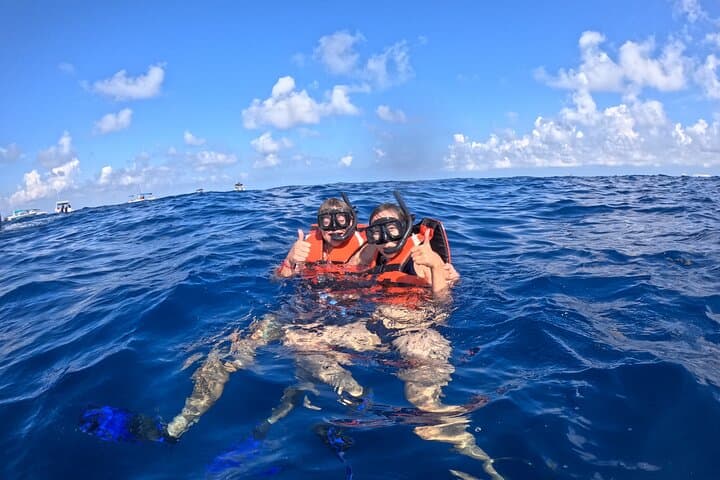

The engine thumps, spray lifts, and the horizon opens to a wide Caribbean blue as the boat pushes north from Isla Mujeres toward the whale shark grounds. Seagulls wheel overhead, flying fish pepper the wake, and the sea seems to hold its breath — a living mass of movement below.
The engine thumps, spray lifts, and the horizon opens to a wide Caribbean blue as the boat pushes north from Isla Mujeres toward the whale shark grounds. Seagulls wheel overhead, flying fish pepper the wake, and the sea seems to hold its breath — a living mass of movement below.
This stretch of water has long drawn people and wildlife: Maya navigators regarded the island as sacred to the goddess Ixchel, and the shallow platforms and currents around Isla Mujeres are products of Pleistocene reef growth and modern carbonate sedimentation. From June through September, nutrient-rich upwellings attract baitfish and plankton, and with them the world’s largest known seasonal aggregation of whale sharks. Local fishers and tour operators have built a culture around respect and observation, with strict no-touch and no-feed rules enforced by guides and marine authorities.
Practically, expect a roughly 50-minute boat run each way and a full-day window on the water (about six hours). Snorkel rotations are brief — typically two guests at a time with a certified guide — and conditions determine how many swims you'll make. Bring a snug mask, a long-sleeve rash guard (sunscreen is prohibited in the whale shark zone), and seasickness remedies if you’re prone to motion sickness. Hydrate, protect from sun before and after the swim, and follow distance rules: these are wild animals, not trained performers.
This trip is as much about quiet observation as adrenaline — the slow, enormous presence of a whale shark drifting beneath you is a humbling, precise reminder of the ocean’s scale. Plan logistics around seasonality, follow your guide’s briefings, and prioritize conservative wildlife practices so these encounters last for future visitors.