THE ADVENTURE COLLECTIVE® · Independent discovery and booking for outdoor travel

Cross the North Atlantic to Heimaey on a private full-day tour that pairs volcanic landscape with dense seabird colonies and living history. Hike Eldfell, watch puffins at Stórhöfði, and trace the island’s dramatic 1973 eruption with a local guide.
Cross the North Atlantic to Heimaey on a private full-day tour that pairs volcanic landscape with dense seabird colonies and living history. Hike Eldfell, watch puffins at Stórhöfði, and trace the island’s dramatic 1973 eruption with a local guide.
The ferry chugs out of Reykjavík harbor and the mainland recedes into a band of low cliffs and restless sea. Salt stings the air, gulls wheel like punctuation marks, and somewhere ahead the Westman Islands—Vestmannaeyjar—rise from the North Atlantic with a blunt volcanic voice. By the time the boat eases into Heimaey’s sheltered harbor, the island’s black lava scars and green knolls have a clarity that feels honest: this place was made by fire and keeps reminding you of it.
Verified experiences and guided adventures in the surrounding area.
Operated by Prime Tours · Vestmannaeyjar (Heimaey), South Iceland
The ferry chugs out of Reykjavík harbor and the mainland recedes into a band of low cliffs and restless sea. Salt stings the air, gulls wheel like punctuation marks, and somewhere ahead the Westman Islands—Vestmannaeyjar—rise from the North Atlantic with a blunt volcanic voice. By the time the boat eases into Heimaey’s sheltered harbor, the island’s black lava scars and green knolls have a clarity that feels honest: this place was made by fire and keeps reminding you of it.
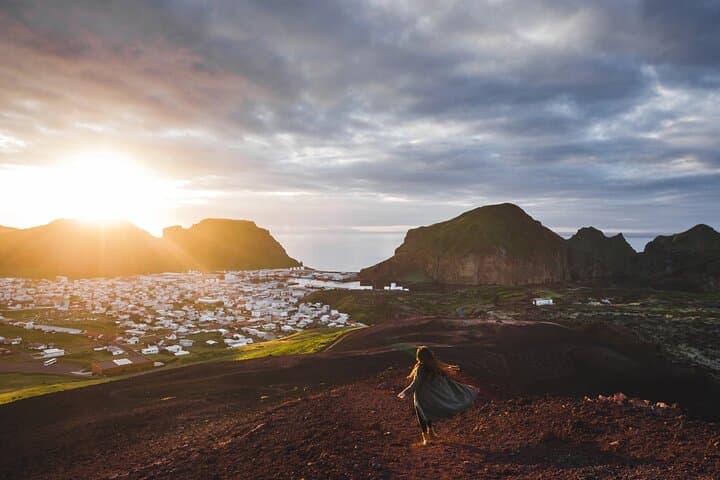
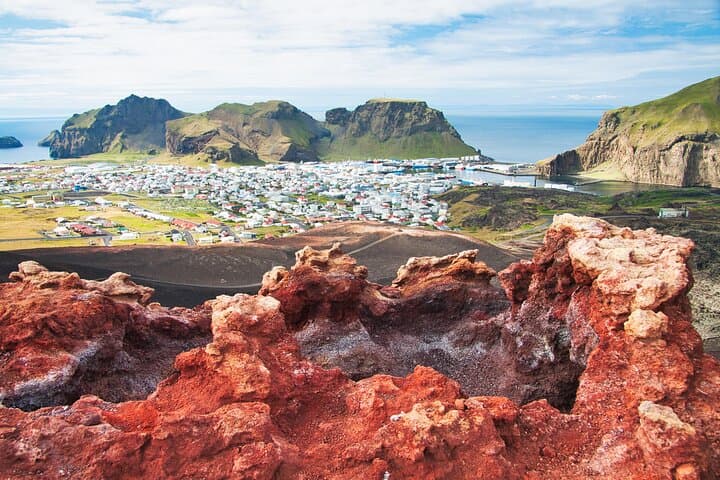
Walk the town and the history is tactile. In 1973 Eldfell erupted at the edge of Heimaey, a 1,500-meter fissure that shoved a new, 200-meter cone up through the neighborhood and buried streets under ash. Locals fought the eruption with water cannons and tenacity; parts of the town were literally dug out of drifted ash. The eruption reshaped the island and produced Surtsey, the offshore newborn isle that scientists still monitor—an open-air lab for how life colonizes dead rock.
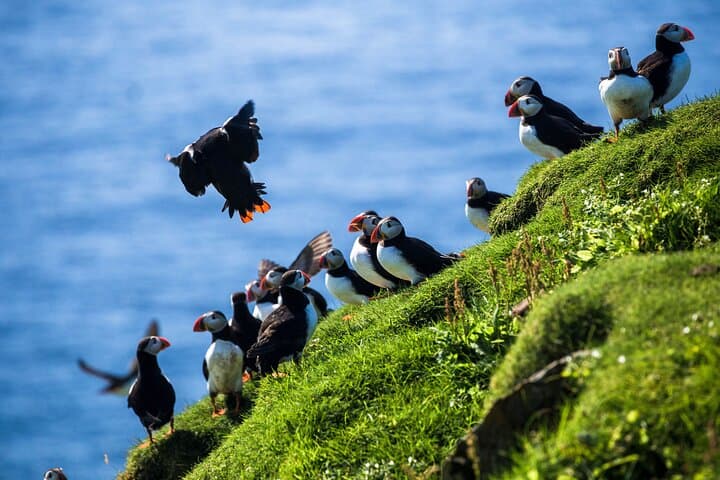
Geology here is immediate: basalt flows that cooled into jagged fingers, tuff layers where ash compacted, and cliffs that shed rock into a hungry sea. Bird cliffs, especially at Stórhöfði, host dense colonies of puffins and razorbills in summer—these birds return each year to the cracks and ledges, filling the air with sharp calls. The island’s fishing culture adds another layer: nets, drying racks, and hearty seafood restaurants that serve the day’s catch with a directness born of necessity.
Practically, the private day tour is tuned for flexibility. Expect a full-day rhythm—round-trip transport from Reykjavík, the ferry crossing, three hours of guided exploration of the village and coast, museum time to learn the eruption story, and a hike up Eldfell if you choose. The Eldfell trail is roughly 3–4 km round trip with ~200 meters of elevation gain—rocky underfoot and exposed to wind but generously rewarded with panorama across the archipelago.
Tips for planning: the Atlantic has moods—check ferry schedules and allow extra time for boarding. Layering is non-negotiable; wind and spray can cool you fast even on bright days. Binoculars and a telephoto lens pay dividends for seabirds. Respect nesting areas: puffin colonies are fragile—view from distances guided by your guide.
If you want solitude, ask to linger on the western cliffs or take a coastal walk past lava fields where the sea keeps testing its edges. The guide will shape the day to your pace—whether that’s a rigorous hike over cooled flows or a gentle cultural stroll through Heimaey’s resilient streets. Either way, the islands don’t merely sit in the Atlantic; they push, pry and remind you that nature here still has the final say.
moderate.
12 hours (full day).
Good walking fitness; able to handle 3–4 km hikes on uneven ground and short stair-like ascents.
The ferry crossing to Heimaey takes about 35–40 minutes each way; schedule and sea conditions can affect timing.
Yes—during the breeding season (late April to August) guides typically take you to Stórhöfði or nearby cliffs where puffins are abundant.
Yes; the tour is flexible and suitable for varied fitness levels, though volcano hikes may be too strenuous for some—options to stay in town are usually available.
Tours may be canceled for safety; the operator’s policy allows refunds if canceled at least 24 hours before departure and may cancel for severe weather.
Yes—Heimaey has cafes, restaurants and public restrooms in town; cash is accepted but cards are widely used throughout Iceland.
Portions of the tour and transportation are wheelchair accessible, but some trails and cliff viewpoints require mobility and uneven-terrain navigation.
Vestmannaeyjar’s 1973 Eldfell eruption reshaped the island and the community; residents famously used water to cool advancing lava to save the harbor.
The islands are ecologically sensitive—stay on marked trails, avoid disturbing nesting birds, and follow guide advice to minimize impact.
Prime Tours operates guided outdoor trips and adventures with an emphasis on safety, stewardship, and memorable experiences.
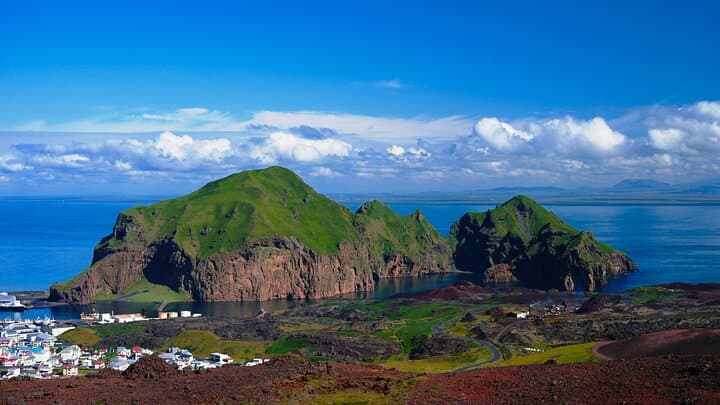
The ferry chugs out of Reykjavík harbor and the mainland recedes into a band of low cliffs and restless sea. Salt stings the air, gulls wheel like punctuation marks, and somewhere ahead the Westman Islands—Vestmannaeyjar—rise from the North Atlantic with a blunt volcanic voice. By the time the boat eases into Heimaey’s sheltered harbor, the island’s black lava scars and green knolls have a clarity that feels honest: this place was made by fire and keeps reminding you of it.
The ferry chugs out of Reykjavík harbor and the mainland recedes into a band of low cliffs and restless sea. Salt stings the air, gulls wheel like punctuation marks, and somewhere ahead the Westman Islands—Vestmannaeyjar—rise from the North Atlantic with a blunt volcanic voice. By the time the boat eases into Heimaey’s sheltered harbor, the island’s black lava scars and green knolls have a clarity that feels honest: this place was made by fire and keeps reminding you of it.
Walk the town and the history is tactile. In 1973 Eldfell erupted at the edge of Heimaey, a 1,500-meter fissure that shoved a new, 200-meter cone up through the neighborhood and buried streets under ash. Locals fought the eruption with water cannons and tenacity; parts of the town were literally dug out of drifted ash. The eruption reshaped the island and produced Surtsey, the offshore newborn isle that scientists still monitor—an open-air lab for how life colonizes dead rock.
Geology here is immediate: basalt flows that cooled into jagged fingers, tuff layers where ash compacted, and cliffs that shed rock into a hungry sea. Bird cliffs, especially at Stórhöfði, host dense colonies of puffins and razorbills in summer—these birds return each year to the cracks and ledges, filling the air with sharp calls. The island’s fishing culture adds another layer: nets, drying racks, and hearty seafood restaurants that serve the day’s catch with a directness born of necessity.
Practically, the private day tour is tuned for flexibility. Expect a full-day rhythm—round-trip transport from Reykjavík, the ferry crossing, three hours of guided exploration of the village and coast, museum time to learn the eruption story, and a hike up Eldfell if you choose. The Eldfell trail is roughly 3–4 km round trip with ~200 meters of elevation gain—rocky underfoot and exposed to wind but generously rewarded with panorama across the archipelago.
Tips for planning: the Atlantic has moods—check ferry schedules and allow extra time for boarding. Layering is non-negotiable; wind and spray can cool you fast even on bright days. Binoculars and a telephoto lens pay dividends for seabirds. Respect nesting areas: puffin colonies are fragile—view from distances guided by your guide.
If you want solitude, ask to linger on the western cliffs or take a coastal walk past lava fields where the sea keeps testing its edges. The guide will shape the day to your pace—whether that’s a rigorous hike over cooled flows or a gentle cultural stroll through Heimaey’s resilient streets. Either way, the islands don’t merely sit in the Atlantic; they push, pry and remind you that nature here still has the final say.