THE ADVENTURE COLLECTIVE® · Independent discovery and booking for outdoor travel

Spend a private day in Wazuka with a fifth-generation tea farmer: pick leaves, watch processing, and taste multiple single-origin matchas. This full-day tour blends tactile workshops, a traditional tea ceremony, and a Japanese set lunch in rural Kyoto.
Spend a private day in Wazuka with a fifth-generation tea farmer: pick leaves, watch processing, and taste multiple single-origin matchas. This full-day tour blends tactile workshops, a traditional tea ceremony, and a Japanese set lunch in rural Kyoto.
You step out of the minivan onto a narrow country lane and the air immediately changes: a green hush of tea fields stretches up the hillside, leaves leaning into the wind as if testing the sky. This is Wazuka, a small tea-producing town southeast of Kyoto where terraces of steamed green tea climb ancient slopes and sunlight slides between cedar rows.
Verified experiences and guided adventures in the surrounding area.
Operated by Matcha Tourism · Wazuka, Kyoto Prefecture
You step out of the minivan onto a narrow country lane and the air immediately changes: a green hush of tea fields stretches up the hillside, leaves leaning into the wind as if testing the sky. This is Wazuka, a small tea-producing town southeast of Kyoto where terraces of steamed green tea climb ancient slopes and sunlight slides between cedar rows.
The day moves through hands-on moments and slow rituals. A fifth-generation farmer guides you through rows of young shoots, explaining pruning, soil care, and the seasonal timing that gives matcha its brightness. Inside a low-slung farmhouse you taste three different single-origin matchas and learn how stone-grinding and steaming shape flavor. The itinerary includes visits to two farms, a traditional tea set lunch with local dishes, a demonstration of an authentic tea ceremony, and a processing walkthrough from leaf to powder.
Wazuka’s tea culture traces back centuries—this region supplied tea to Kyoto’s temples and, at times, to imperial households—and the geology here (weathered granite soils and humid summers) helps produce concentrated flavors prized in ceremonial matcha.
Practical notes: expect uneven, sometimes muddy farm access; wear grippy shoes, bring a light rain layer, and allow seven hours including travel time from central Kyoto. The tour is private and fully guided, making it a good fit for curious travelers who want tactile learning and a grounded, rural slice of Japan’s tea history.
easy.
6–7 hours.
Light walking ability; comfortable standing for demonstrations and navigating short terraces.
Most visitors travel by private transfer or guided tour from Kyoto (about 60–90 minutes depending on traffic); public transport is possible but involves transfers and longer walk segments.
Yes—infants and small children can participate, though farm terrain may be bumpy; strollers can be used in some areas but parts require walking.
Yes; participants often purchase single-origin matcha and small-batch products directly from producers—bringing cash is recommended.
Yes, the Japanese set lunch can be adapted for vegetarian or vegan diets if requested in advance at booking.
Wazuka has produced tea for centuries and supplied matcha to Kyoto’s temples and elite households; local methods combine temple-era techniques with modern processing.
Many farms practice careful land stewardship—rotational pruning and soil care—to maintain slope stability and preserve water quality; visitors are asked to stay on paths and avoid trampling rows.
Matcha Tourism operates guided outdoor trips and adventures with an emphasis on safety, stewardship, and memorable experiences.

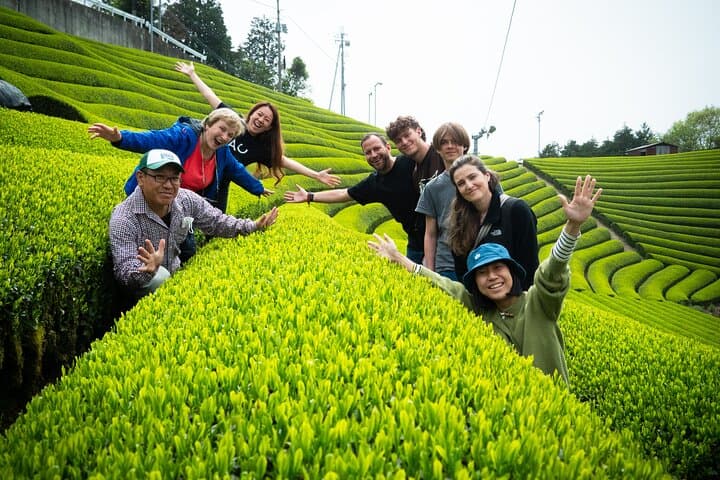


You step out of the minivan onto a narrow country lane and the air immediately changes: a green hush of tea fields stretches up the hillside, leaves leaning into the wind as if testing the sky. This is Wazuka, a small tea-producing town southeast of Kyoto where terraces of steamed green tea climb ancient slopes and sunlight slides between cedar rows.
You step out of the minivan onto a narrow country lane and the air immediately changes: a green hush of tea fields stretches up the hillside, leaves leaning into the wind as if testing the sky. This is Wazuka, a small tea-producing town southeast of Kyoto where terraces of steamed green tea climb ancient slopes and sunlight slides between cedar rows.
The day moves through hands-on moments and slow rituals. A fifth-generation farmer guides you through rows of young shoots, explaining pruning, soil care, and the seasonal timing that gives matcha its brightness. Inside a low-slung farmhouse you taste three different single-origin matchas and learn how stone-grinding and steaming shape flavor. The itinerary includes visits to two farms, a traditional tea set lunch with local dishes, a demonstration of an authentic tea ceremony, and a processing walkthrough from leaf to powder.
Wazuka’s tea culture traces back centuries—this region supplied tea to Kyoto’s temples and, at times, to imperial households—and the geology here (weathered granite soils and humid summers) helps produce concentrated flavors prized in ceremonial matcha.
Practical notes: expect uneven, sometimes muddy farm access; wear grippy shoes, bring a light rain layer, and allow seven hours including travel time from central Kyoto. The tour is private and fully guided, making it a good fit for curious travelers who want tactile learning and a grounded, rural slice of Japan’s tea history.