THE ADVENTURE COLLECTIVE® · Independent discovery and booking for outdoor travel

Explore Stockholm’s maritime past and medieval streets in a focused three‑hour route that pairs the Vasa Museum’s restored galleon with Gamla Stan’s narrow alleys. Expect cobbles, short walks, and deep history guided at your pace.
Explore Stockholm’s maritime past and medieval streets in a focused three‑hour route that pairs the Vasa Museum’s restored galleon with Gamla Stan’s narrow alleys. Expect cobbles, short walks, and deep history guided at your pace.
You meet your guide outside the Vasa Museum, the gulls skimming the quay as if eager to inspect a seventeenth‑century secret. The ship’s timbers sit in a climate‑controlled hall a short walk from the ferry slips, and from there the route threads across bridges to Gamla Stan, where narrow alleys force you to slow down and notice the city’s edges.
Verified experiences and guided adventures in the surrounding area.
Operated by FER DONOSO TOURS · Stockholm, Stockholm
You meet your guide outside the Vasa Museum, the gulls skimming the quay as if eager to inspect a seventeenth‑century secret. The ship’s timbers sit in a climate‑controlled hall a short walk from the ferry slips, and from there the route threads across bridges to Gamla Stan, where narrow alleys force you to slow down and notice the city’s edges.
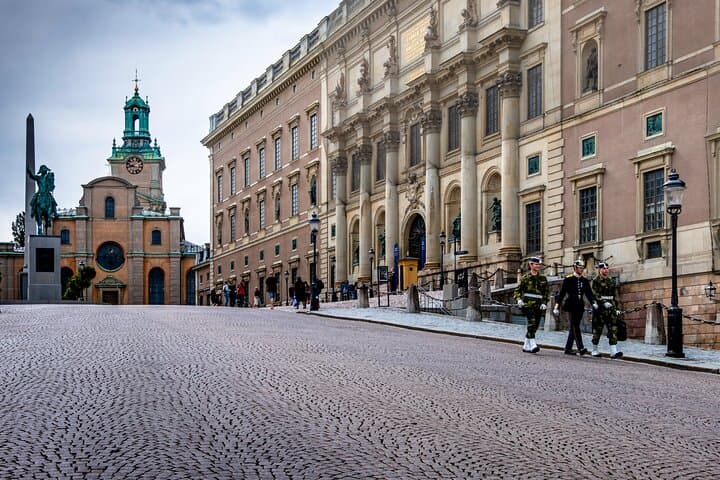
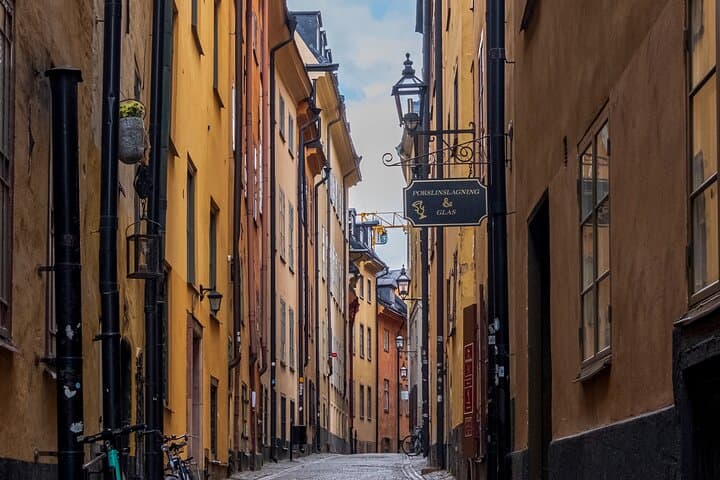
The Vasa sank in 1628 on her maiden voyage; raised in 1961, she’s now one of the world’s most intact 17th‑century warships, conserved under strict humidity and temperature control. Gamla Stan occupies Stadsholmen, part of the glacially scoured Stockholm archipelago carved from granite—street patterns that grew from medieval plots now host modern cafés and the Royal Palace. Expect brief cultural stops: the Vasa’s exhibition halls, Stortorget square, and a walk past Storkyrkan and the Nobel Museum, with local stories about merchants, monarchs and sea trade woven in.
Practically, this is a three‑hour urban walk covering roughly 2–3 km across cobbled streets and museum steps; moderate fitness and stable footwear are recommended. The tour includes a 24‑hour SL travel card and entrance fees but you must exchange your booking voucher with the guide at the museum entrance. Timing matters—mornings are quieter, summer is busiest, and winter evenings get short fast. Bring a refillable water bottle, layered clothing for variable coastal winds, and a phone or camera with charged battery. The guide will tailor pace and focus to your interests, from architecture to maritime history, while keeping the route compact and walkable for most travelers.
moderate.
3 hours.
Moderate — comfortable walking for 2–3 km on uneven cobblestones and museum stairs
Yes—entrance fees to the Vasa Museum and sites listed are included; exchange your booking voucher with the guide at the museum entrance for admission.
The guide meets outside the Vasa Museum at the group entrance; the tour finishes in Gamla Stan at Stortorget (the main square).
The tour is marketed as private but may include up to 15 people; contact the provider in advance if you require a fully exclusive guide for only your booking.
Cobblestones and museum steps create accessibility challenges; contact the operator ahead to arrange a modified route and confirm access at specific sites.
The Vasa was built for King Gustav II Adolf and sank in 1628 on her maiden voyage; Gamla Stan preserves Stockholm’s medieval street plan and many buildings from the 13th–18th centuries.
The Vasa’s preservation program is globally renowned—visitors help by following museum rules about bags and photography; stick to marked paths in Gamla Stan to protect historic surfaces.
FER DONOSO TOURS operates guided outdoor trips and adventures with an emphasis on safety, stewardship, and memorable experiences.
You meet your guide outside the Vasa Museum, the gulls skimming the quay as if eager to inspect a seventeenth‑century secret. The ship’s timbers sit in a climate‑controlled hall a short walk from the ferry slips, and from there the route threads across bridges to Gamla Stan, where narrow alleys force you to slow down and notice the city’s edges.
You meet your guide outside the Vasa Museum, the gulls skimming the quay as if eager to inspect a seventeenth‑century secret. The ship’s timbers sit in a climate‑controlled hall a short walk from the ferry slips, and from there the route threads across bridges to Gamla Stan, where narrow alleys force you to slow down and notice the city’s edges.
The Vasa sank in 1628 on her maiden voyage; raised in 1961, she’s now one of the world’s most intact 17th‑century warships, conserved under strict humidity and temperature control. Gamla Stan occupies Stadsholmen, part of the glacially scoured Stockholm archipelago carved from granite—street patterns that grew from medieval plots now host modern cafés and the Royal Palace. Expect brief cultural stops: the Vasa’s exhibition halls, Stortorget square, and a walk past Storkyrkan and the Nobel Museum, with local stories about merchants, monarchs and sea trade woven in.
Practically, this is a three‑hour urban walk covering roughly 2–3 km across cobbled streets and museum steps; moderate fitness and stable footwear are recommended. The tour includes a 24‑hour SL travel card and entrance fees but you must exchange your booking voucher with the guide at the museum entrance. Timing matters—mornings are quieter, summer is busiest, and winter evenings get short fast. Bring a refillable water bottle, layered clothing for variable coastal winds, and a phone or camera with charged battery. The guide will tailor pace and focus to your interests, from architecture to maritime history, while keeping the route compact and walkable for most travelers.