THE ADVENTURE COLLECTIVE® · Independent discovery and booking for outdoor travel

Walk Chefchaouen’s famous blue alleys with a private guide who explains the town’s Andalusian roots, blue-painted origins and best viewpoints. This 2.5-hour walking tour starts at Bab Naqba and balances cultural insight with practical stops for crafts, cafés and photos.
Walk Chefchaouen’s famous blue alleys with a private guide who explains the town’s Andalusian roots, blue-painted origins and best viewpoints. This 2.5-hour walking tour starts at Bab Naqba and balances cultural insight with practical stops for crafts, cafés and photos.
Blue walls lean close enough to touch as a private guide threads you into Chefchaouen's labyrinth, sunlight pooling on stone steps while laundry flutters like small flags. The tour meets at Bab Naqba and winds through tight alleys toward the municipal square, pausing at fountains where water murmurs through the heart of the Medina.
Verified experiences and guided adventures in the surrounding area.
Operated by We Travel · Chefchaouen, Tanger-Tetouan-Al Hoceima
Blue walls lean close enough to touch as a private guide threads you into Chefchaouen's labyrinth, sunlight pooling on stone steps while laundry flutters like small flags. The tour meets at Bab Naqba and winds through tight alleys toward the municipal square, pausing at fountains where water murmurs through the heart of the Medina.
Founded by Moorish exiles in the 15th century and shaped by Andalusian builders, Chefchaouen perches on the southern slopes of the Rif Mountains where limestone ribs fold into the town. The blue paint—rooted in old antiseptic and insect-repellent practices and later reinforced by Jewish traditions—gives the streets their cool, uniform character. The guide highlights the 15th-century Grande Mosque’s octagonal minaret (viewable only from outside), the kasbah’s clay-brown garden and the Ras El Maa spring that pushes fresh water into town.
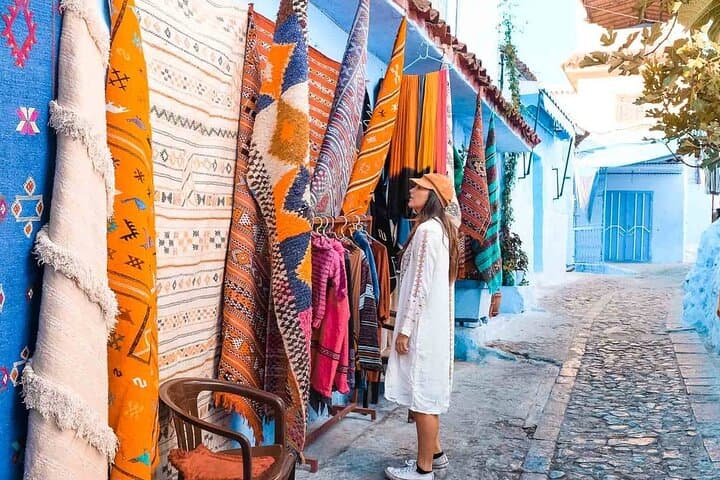
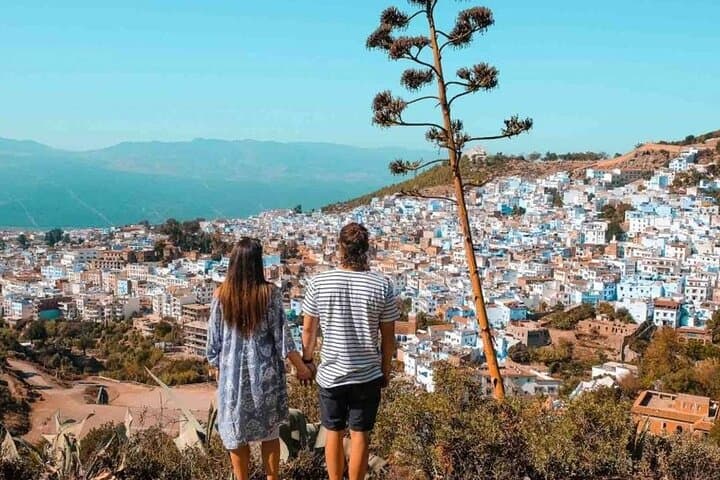
Expect about 2.5 hours of easy walking across cobbles and steps, with stops for local crafts, cafés and hilltop viewpoints that frame terracotta roofs against ridgelines. The private format allows questions about local weaving, architecture and culinary staples like msemen and preserved lemons.
Practical guidance: wear supportive, grippy shoes for uneven stone; bring water and sun protection; carry small bills for purchases and tips; dress modestly for religious sites. Aim for mid-morning to avoid peak heat and leave time for a sunset option on the nearby ridge if you want wide views and softer light.
easy.
2–3 hours.
Suitable for travelers in average fitness able to walk on uneven cobbles and climb short flights of steps.
The private walking tour lasts about 2.5 hours (150 minutes) and covers main Medina highlights with stops for photos and commentary.
No; non-Muslims may admire the Grande Mosque’s exterior, but entrance is restricted—guides will point out architectural details from outside.
Many alleys include narrow, stepped sections and uneven cobbles; the tour is generally not suitable for wheelchairs or limited mobility without prior arrangement.
Tipping is customary for private guides; a modest tip based on satisfaction and group size is appreciated and usually given in cash.
Chefchaouen was founded in 1471 by exiled Moors and developed strong Andalusian architectural influences; the town later became a refuge for Jewish communities whose dyeing traditions helped shape the blue palette.
Tourism strains water and paint resources—choose refillable bottles, support local artisans directly, and avoid feeding wildlife to minimize impact.
We Travel operates guided outdoor trips and adventures with an emphasis on safety, stewardship, and memorable experiences.
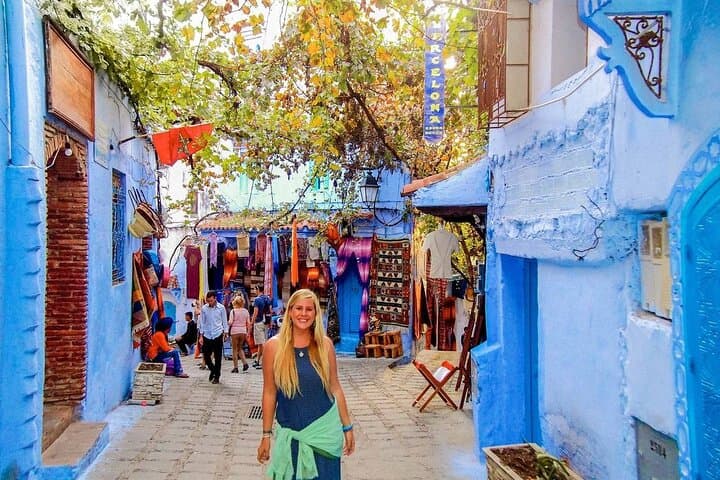
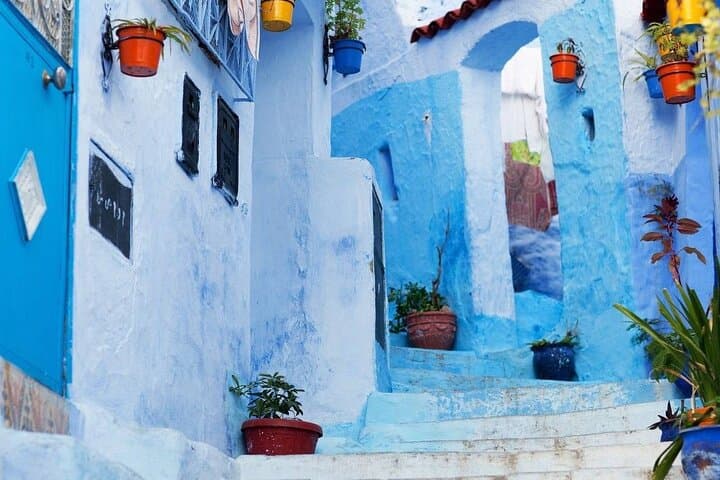
Blue walls lean close enough to touch as a private guide threads you into Chefchaouen's labyrinth, sunlight pooling on stone steps while laundry flutters like small flags. The tour meets at Bab Naqba and winds through tight alleys toward the municipal square, pausing at fountains where water murmurs through the heart of the Medina.
Blue walls lean close enough to touch as a private guide threads you into Chefchaouen's labyrinth, sunlight pooling on stone steps while laundry flutters like small flags. The tour meets at Bab Naqba and winds through tight alleys toward the municipal square, pausing at fountains where water murmurs through the heart of the Medina.
Founded by Moorish exiles in the 15th century and shaped by Andalusian builders, Chefchaouen perches on the southern slopes of the Rif Mountains where limestone ribs fold into the town. The blue paint—rooted in old antiseptic and insect-repellent practices and later reinforced by Jewish traditions—gives the streets their cool, uniform character. The guide highlights the 15th-century Grande Mosque’s octagonal minaret (viewable only from outside), the kasbah’s clay-brown garden and the Ras El Maa spring that pushes fresh water into town.
Expect about 2.5 hours of easy walking across cobbles and steps, with stops for local crafts, cafés and hilltop viewpoints that frame terracotta roofs against ridgelines. The private format allows questions about local weaving, architecture and culinary staples like msemen and preserved lemons.
Practical guidance: wear supportive, grippy shoes for uneven stone; bring water and sun protection; carry small bills for purchases and tips; dress modestly for religious sites. Aim for mid-morning to avoid peak heat and leave time for a sunset option on the nearby ridge if you want wide views and softer light.