THE ADVENTURE COLLECTIVE® · Independent discovery and booking for outdoor travel

Explore Birmingham on a private two-hour walking tour that weaves modern architecture with Industrial Revolution history. Expect canal-side stories, civic squares, and a guided route tailored to your group.
Explore Birmingham on a private two-hour walking tour that weaves modern architecture with Industrial Revolution history. Expect canal-side stories, civic squares, and a guided route tailored to your group.
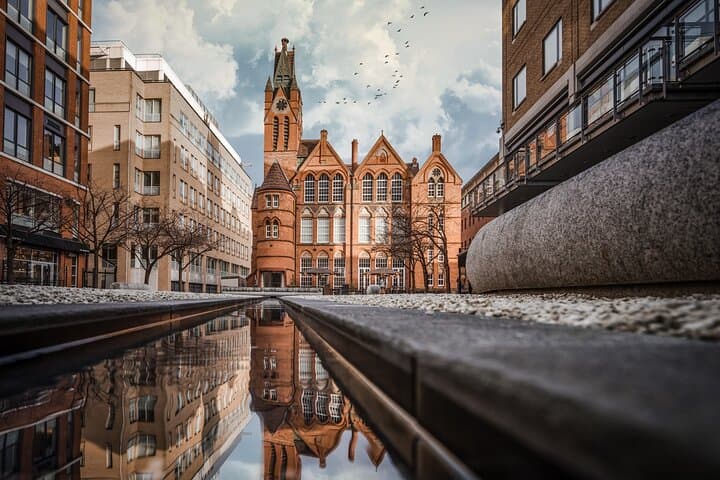
A sharp breeze moves along the canal as the guide leads your private group beneath a lattice of iron bridges and modern glass facades. You step off a busy pavement into a quieter ribbon of water where barges once carried coal; the city exhales history here and your feet set the pace.
Verified experiences and guided adventures in the surrounding area.
Operated by Opatrip England · Birmingham, West Midlands
A sharp breeze moves along the canal as the guide leads your private group beneath a lattice of iron bridges and modern glass facades. You step off a busy pavement into a quieter ribbon of water where barges once carried coal; the city exhales history here and your feet set the pace.
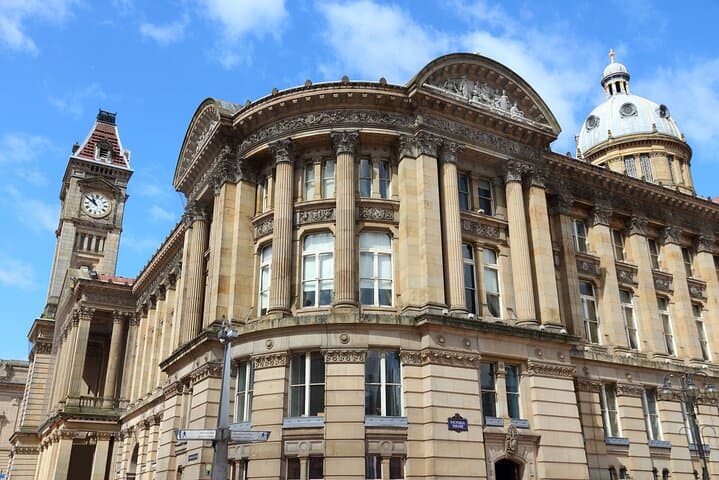
Birmingham grew fast on coal and iron—its canals and Victorian warehouses are living records of the Industrial Revolution. The walk traces architectural turns from the futuristic Library of Birmingham and the Cube to the Roman‑inspired symmetry of the city’s museums and stately squares. Geologically, the city sits on the Midlands plateau underlain by Carboniferous coal measures, material that powered the mills and shaped the street plan you follow.
Culturally the route threads the Jewellery Quarter, civic hubs, and canal-side meeting points that now host cafés, galleries and public art. Local stories—labor movements, wartime memorials, and post‑industrial reinvention—are folded into the stone and steel you pass.
Practical guidance: this private two-hour walk is mostly flat pavement and canal towpaths; wear supportive shoes and a light waterproof if rain is forecast. Bring an Oyster/contactless card or local travel pass for arriving by train or tram; public transport hubs are nearby. Aim for morning or late afternoon to avoid commuter crowds and catch softer light for photos. Keep a reusable water bottle, charge your phone for on-the-move maps, and plan at least one side stop in the Jewellery Quarter if you want a deeper historical detour.
easy.
2 hours.
Suitable for casual walkers and those comfortable with 1–2 hours of standing and light walking.
The guide meets at a central, agreed location near a major transport hub—your booking confirmation will list the exact meeting point and nearby stations.
The route is mostly flat with short distances between stops, but notify the operator of mobility needs so they can adapt pacing and points of interest.
Yes—this is a private tour designed to tailor highlights to your interests, such as architecture, canals, or the Jewellery Quarter.
You can cancel for a full refund if you cancel at least 24 hours before the scheduled departure time.
Birmingham’s canal network and factories were central to the Industrial Revolution, turning the city into a manufacturing and transport hub in the 18th–19th centuries.
Walking tours help reduce traffic impact in the city center; respect canal-side habitats, avoid littering, and support local heritage projects that fund restoration.
Opatrip England operates guided outdoor trips and adventures with an emphasis on safety, stewardship, and memorable experiences.


A sharp breeze moves along the canal as the guide leads your private group beneath a lattice of iron bridges and modern glass facades. You step off a busy pavement into a quieter ribbon of water where barges once carried coal; the city exhales history here and your feet set the pace.
A sharp breeze moves along the canal as the guide leads your private group beneath a lattice of iron bridges and modern glass facades. You step off a busy pavement into a quieter ribbon of water where barges once carried coal; the city exhales history here and your feet set the pace.
Birmingham grew fast on coal and iron—its canals and Victorian warehouses are living records of the Industrial Revolution. The walk traces architectural turns from the futuristic Library of Birmingham and the Cube to the Roman‑inspired symmetry of the city’s museums and stately squares. Geologically, the city sits on the Midlands plateau underlain by Carboniferous coal measures, material that powered the mills and shaped the street plan you follow.
Culturally the route threads the Jewellery Quarter, civic hubs, and canal-side meeting points that now host cafés, galleries and public art. Local stories—labor movements, wartime memorials, and post‑industrial reinvention—are folded into the stone and steel you pass.
Practical guidance: this private two-hour walk is mostly flat pavement and canal towpaths; wear supportive shoes and a light waterproof if rain is forecast. Bring an Oyster/contactless card or local travel pass for arriving by train or tram; public transport hubs are nearby. Aim for morning or late afternoon to avoid commuter crowds and catch softer light for photos. Keep a reusable water bottle, charge your phone for on-the-move maps, and plan at least one side stop in the Jewellery Quarter if you want a deeper historical detour.