THE ADVENTURE COLLECTIVE® · Independent discovery and booking for outdoor travel

Explore a private, small-group tour through Waitomo's limestone caves to see mesmerising glowworm displays in near-darkness. This three-hour eco-tour runs on family farmland off the beaten track and includes gear, a guide, and post-tour tea.
Explore a private, small-group tour through Waitomo's limestone caves to see mesmerising glowworm displays in near-darkness. This three-hour eco-tour runs on family farmland off the beaten track and includes gear, a guide, and post-tour tea.
You step from a cool farm lane into a dark throat of limestone; the air tightens with damp and the tour guide's headlamp sketches karst walls that shine like wet slate. The cave narrows, then opens: a roofful of tiny, bioluminescent dots hangs above the black water, a quiet galaxy of glowworms that draws the eye and slows the breath.
Verified experiences and guided adventures in the surrounding area.
Operated by Down to Earth - Waitomo Eco Cave Tours · Waitomo Caves Village, Waikato
You step from a cool farm lane into a dark throat of limestone; the air tightens with damp and the tour guide's headlamp sketches karst walls that shine like wet slate. The cave narrows, then opens: a roofful of tiny, bioluminescent dots hangs above the black water, a quiet galaxy of glowworms that draws the eye and slows the breath.
Waitomo sits on ancient marine limestone laid down millions of years ago, later dissolved by rivers that dared to carve passages underground. Māori named the area Waitomo — "water passing through a hole" — and European explorers mapped formal routes in the late 19th century. The surrounding farmland still holds traces of that layered history: sinkholes, collapsed caverns and pasture that lead straight to the cave mouth.
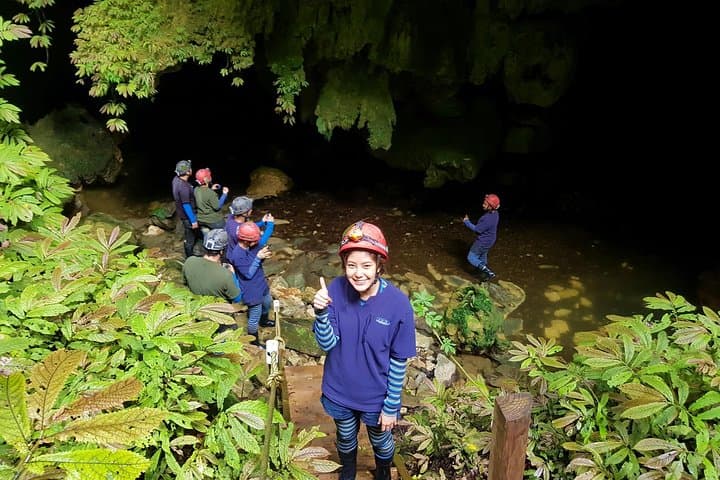
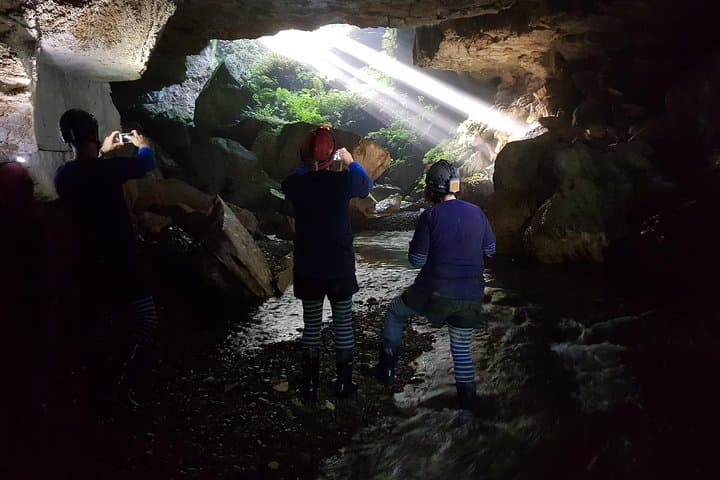
On a private tour you'll move at your party's pace, with a local guide explaining glowworm ecology, cave formation, and the cultural significance of subterranean waterways. Photography is allowed but flashless — the glowworms react to bright light. Groups are small and the operator outfits you with thermal layers, gumboots, helmet and headlamp so you can focus on the experience, not the kit.
Plan for uneven, wet surfaces and low ceilings in places; allow three hours for the visit including changing time and a post-tour cuppa. Bring a small, dry daypack for essentials, switch your phone to airplane mode, and listen to the guide: the cave's fragile life responds to sound and light. This is an intimate, low-impact adventure best appreciated slowly and respectfully.
moderate.
3 hours.
Participants should have moderate fitness — able to walk uneven, slippery surfaces and stand quietly for stretches
The experience lasts about three hours total, including gearing up and post-tour refreshments.
Yes—minimum age is 12 and children under 16 must be accompanied by an adult; check fitness and comfort with confined spaces.
Yes, small pocket cameras and phones are allowed but flash is prohibited to protect glowworms; use low-light settings.
No — the operator supplies thermal layers, gumboots, a helmet and headlamp; bring a change of clothes for afterwards.
The Waitomo region has long-standing Māori significance; European exploration in the late 1800s opened these caves to guided visits and scientific study.
Cave ecosystems are fragile—minimise noise and light, follow guide instructions, and the operator limits group sizes and provides gear to reduce impact.
Down to Earth - Waitomo Eco Cave Tours operates guided outdoor trips and adventures with an emphasis on safety, stewardship, and memorable experiences.
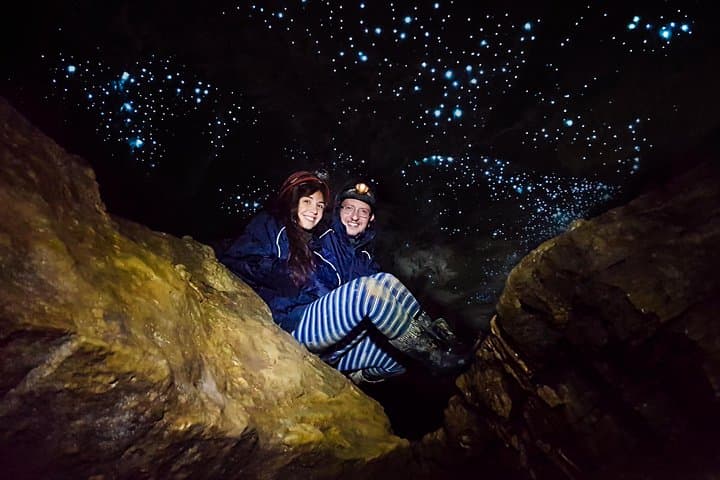
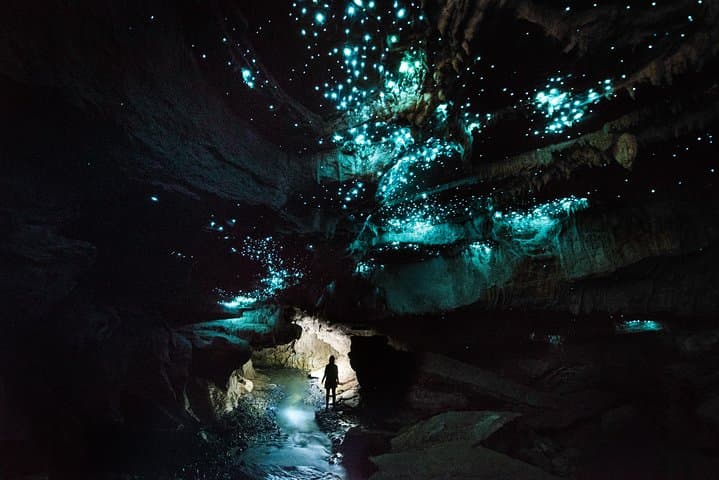
You step from a cool farm lane into a dark throat of limestone; the air tightens with damp and the tour guide's headlamp sketches karst walls that shine like wet slate. The cave narrows, then opens: a roofful of tiny, bioluminescent dots hangs above the black water, a quiet galaxy of glowworms that draws the eye and slows the breath.
You step from a cool farm lane into a dark throat of limestone; the air tightens with damp and the tour guide's headlamp sketches karst walls that shine like wet slate. The cave narrows, then opens: a roofful of tiny, bioluminescent dots hangs above the black water, a quiet galaxy of glowworms that draws the eye and slows the breath.
Waitomo sits on ancient marine limestone laid down millions of years ago, later dissolved by rivers that dared to carve passages underground. Māori named the area Waitomo — "water passing through a hole" — and European explorers mapped formal routes in the late 19th century. The surrounding farmland still holds traces of that layered history: sinkholes, collapsed caverns and pasture that lead straight to the cave mouth.
On a private tour you'll move at your party's pace, with a local guide explaining glowworm ecology, cave formation, and the cultural significance of subterranean waterways. Photography is allowed but flashless — the glowworms react to bright light. Groups are small and the operator outfits you with thermal layers, gumboots, helmet and headlamp so you can focus on the experience, not the kit.
Plan for uneven, wet surfaces and low ceilings in places; allow three hours for the visit including changing time and a post-tour cuppa. Bring a small, dry daypack for essentials, switch your phone to airplane mode, and listen to the guide: the cave's fragile life responds to sound and light. This is an intimate, low-impact adventure best appreciated slowly and respectfully.