THE ADVENTURE COLLECTIVE® · Independent discovery and booking for outdoor travel

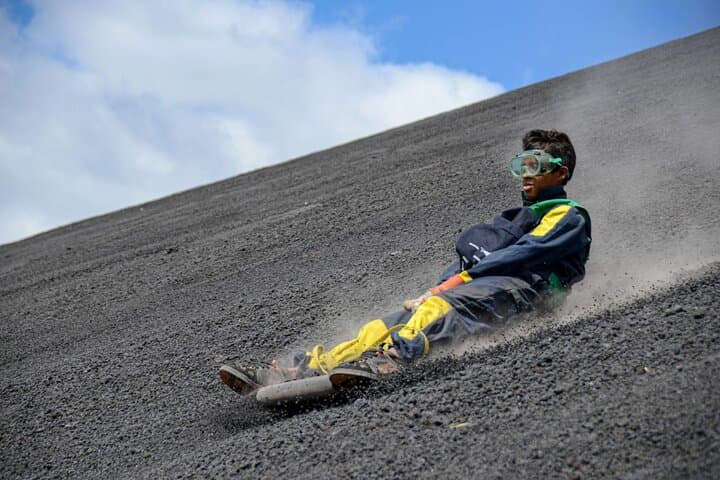
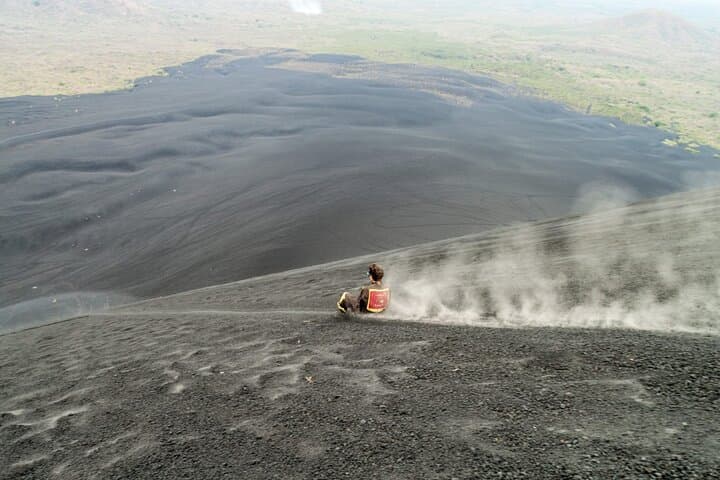
Hike a stark black cone outside León, don protective gear and launch yourself down loose volcanic sand on a specially designed board. This private Cerro Negro tour pairs a short, dusty ascent with fast, unforgettable downhill runs.
Hike a stark black cone outside León, don protective gear and launch yourself down loose volcanic sand on a specially designed board. This private Cerro Negro tour pairs a short, dusty ascent with fast, unforgettable downhill runs.
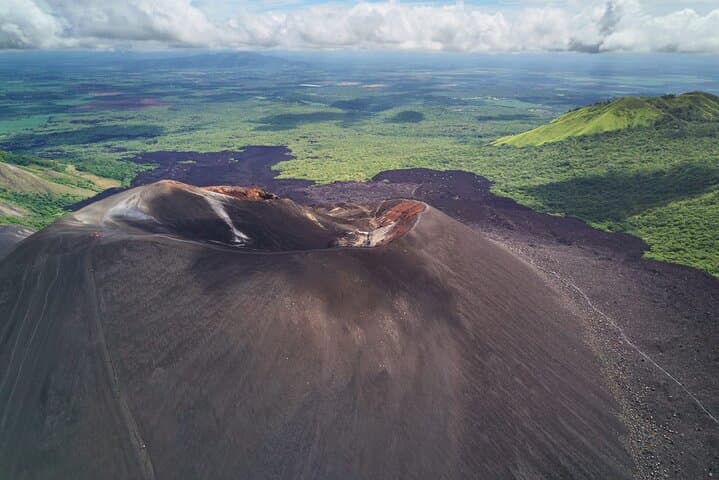
You start on a shoulder of black rock under a pale Central American sky; the wind takes the loose volcanic sand and teases it across your face like a dare. From the trail the cone rises sharply—raw, recent, and startlingly black—its crest a thin rim above cultivated fields and the colonial roofs of León.
Verified experiences and guided adventures in the surrounding area.
Operated by Opatrip.com Nicaragua · León, León Department
You start on a shoulder of black rock under a pale Central American sky; the wind takes the loose volcanic sand and teases it across your face like a dare. From the trail the cone rises sharply—raw, recent, and startlingly black—its crest a thin rim above cultivated fields and the colonial roofs of León.
Cerro Negro is the youngest volcano in Nicaragua, first erupting in the mid-19th century and still considered active. Its slopes are built of scoria and volcanic ash that break underfoot, creating the very surface that makes volcano boarding possible. The region around León is rich in history: the city’s cathedral squares and revolutionary murals contrast with the prehistoric geology you ascend.
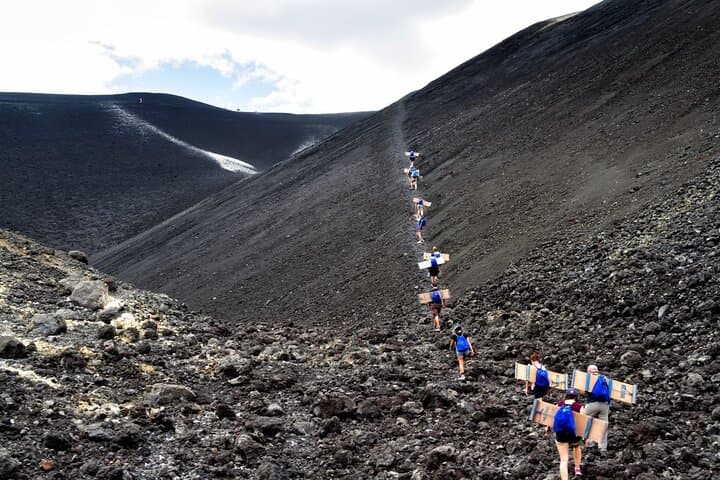
The tour typically includes a safety briefing, protective suit and goggles, a guided 30–60 minute ascent over steep, dusty switchbacks, and one- to several downhill runs on a specially designed board. Expect loose, abrasive sand that accelerates quickly; falls are usually superficial but dusty. Guides read the wind and slope for safe runs and often demonstrate steering and braking techniques before you push off.
Practical notes: aim for the dry season (roughly November–April) for firm, fast runs; wear sturdy shoes, long sleeves, and bring at least 1–2 liters of water. Cameras survive better in sealed bags because ash and grit are everywhere. If you have back, heart, or pregnancy concerns, skip this one—the steep hike and rapid descent demand moderate fitness and a willingness to get gritty. When it works—the wind, the board, the slope—the volcano gives a raw, transportive ride you’ll remember long after the soot is washed away.
moderate.
3–4 hours.
Moderate cardiovascular fitness and the ability to hike steep, loose terrain for up to an hour; comfortable standing and bracing during fast descents.
Expect a steep, dusty ascent of roughly 30–60 minutes depending on fitness; guides set the pace and often stop for rest and photos.
Yes—most tours cater to beginners with instruction, protective suits, and guided runs, but you should be in moderate physical condition and comfortable with speed.
Closed-toe shoes, long sleeves, goggles, sun protection, and 1–2 liters of water; leave loose valuables and keep electronics sealed from ash.
Many operators restrict young children and advise against participation for pregnant travelers or those with serious back or heart conditions; check with the operator for their exact rules.
Cerro Negro erupted first in 1850 and has had frequent activity since; its young, angular cone is a product of repeated scoria and ash deposits rather than slow soil formation.
The fragile volcanic surface erodes easily; stick to established trails and follow guides to limit widening of paths and minimize scoria disturbance.
Opatrip.com Nicaragua operates guided outdoor trips and adventures with an emphasis on safety, stewardship, and memorable experiences.
You start on a shoulder of black rock under a pale Central American sky; the wind takes the loose volcanic sand and teases it across your face like a dare. From the trail the cone rises sharply—raw, recent, and startlingly black—its crest a thin rim above cultivated fields and the colonial roofs of León.
You start on a shoulder of black rock under a pale Central American sky; the wind takes the loose volcanic sand and teases it across your face like a dare. From the trail the cone rises sharply—raw, recent, and startlingly black—its crest a thin rim above cultivated fields and the colonial roofs of León.
Cerro Negro is the youngest volcano in Nicaragua, first erupting in the mid-19th century and still considered active. Its slopes are built of scoria and volcanic ash that break underfoot, creating the very surface that makes volcano boarding possible. The region around León is rich in history: the city’s cathedral squares and revolutionary murals contrast with the prehistoric geology you ascend.
The tour typically includes a safety briefing, protective suit and goggles, a guided 30–60 minute ascent over steep, dusty switchbacks, and one- to several downhill runs on a specially designed board. Expect loose, abrasive sand that accelerates quickly; falls are usually superficial but dusty. Guides read the wind and slope for safe runs and often demonstrate steering and braking techniques before you push off.
Practical notes: aim for the dry season (roughly November–April) for firm, fast runs; wear sturdy shoes, long sleeves, and bring at least 1–2 liters of water. Cameras survive better in sealed bags because ash and grit are everywhere. If you have back, heart, or pregnancy concerns, skip this one—the steep hike and rapid descent demand moderate fitness and a willingness to get gritty. When it works—the wind, the board, the slope—the volcano gives a raw, transportive ride you’ll remember long after the soot is washed away.