THE ADVENTURE COLLECTIVE® · Independent discovery and booking for outdoor travel

Visit Q'eswachaka, the last functioning Inca rope bridge, on a private full-day trip from Cusco. Experience a UNESCO-recognized renewal ritual, short highland walks, and guided cultural interpretation at 3,700 m.
Visit Q'eswachaka, the last functioning Inca rope bridge, on a private full-day trip from Cusco. Experience a UNESCO-recognized renewal ritual, short highland walks, and guided cultural interpretation at 3,700 m.
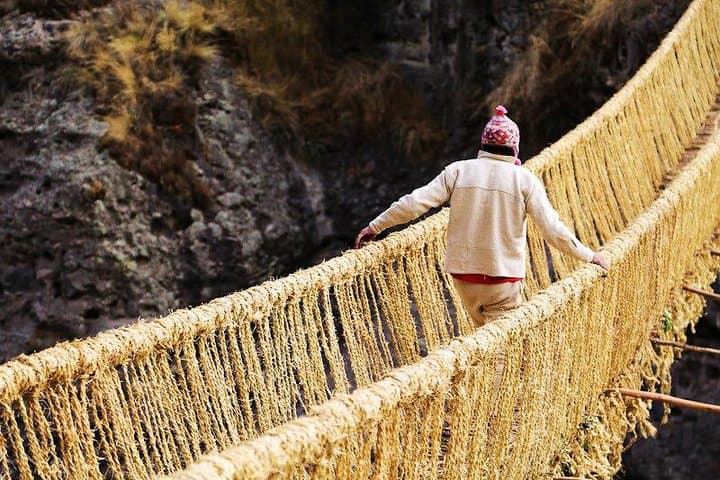
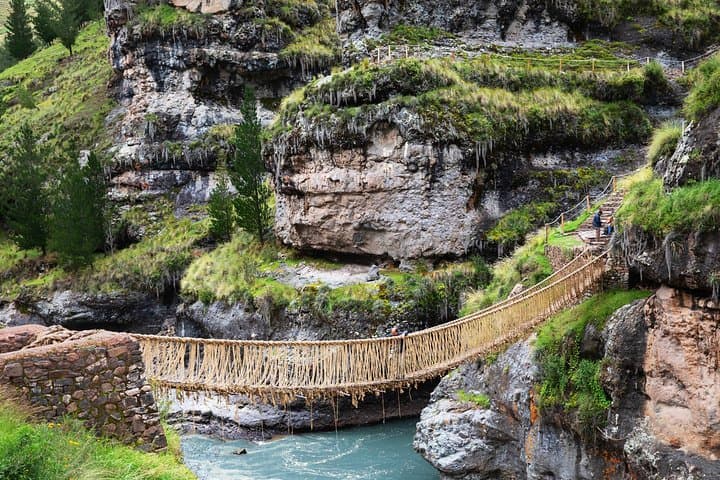
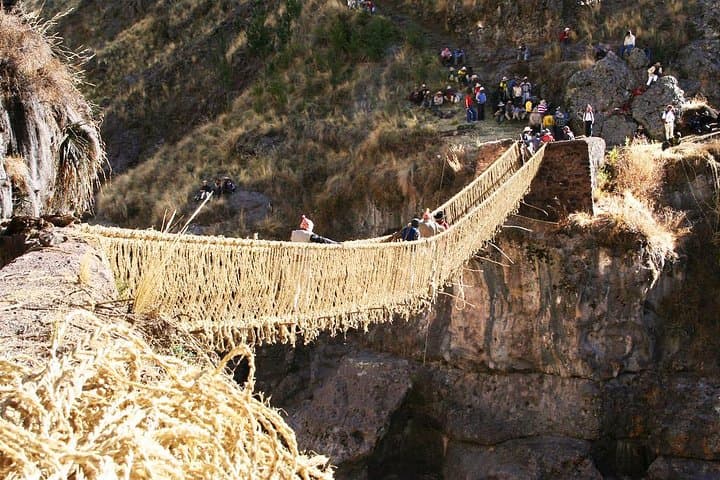
You step off the van onto high Andean grassland and the Apurímac valley opens like a carved bowl; wind pulls at your jacket and the river below dares you to look over the lip. The Q'eswachaka rope bridge hangs a short walk away, a living line of braided ichu grass that still connects four Quechua communities and the present to a pre-Columbian road network.
Verified experiences and guided adventures in the surrounding area.
Operated by Peru Vip - Day Tours · Pomacanchi, Cusco
You step off the van onto high Andean grassland and the Apurímac valley opens like a carved bowl; wind pulls at your jacket and the river below dares you to look over the lip. The Q'eswachaka rope bridge hangs a short walk away, a living line of braided ichu grass that still connects four Quechua communities and the present to a pre-Columbian road network.
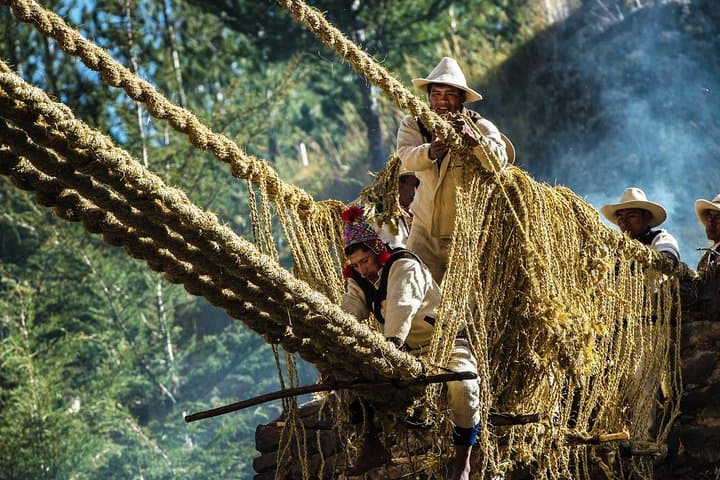
This bridge is part of the Qhapaq Ñan — the Inca road — and every year local families reweave the structure in a communal ritual recognized by UNESCO as Intangible Cultural Heritage. Geologically the site sits on steep volcanic and sedimentary walls carved by the Apurímac River; underfoot are puna grasses and small glacial-fed lagoons that seasonally rim the approach.
Culturally the visit is intimate: guides explain weaving techniques and the social role of mita-style cooperation that keeps the tradition alive. Expect short walks, photo stops at small highland lagoons (Acopia, Asnaqocha, Pampamarca), and a careful, supervised crossing if allowed.
Practicalities are straightforward but essential. The tour is a private, full-day transfer from Cusco (about 3–4 hours each way depending on road conditions). Altitude reaches roughly 3,700 m — pace yourself, hydrate, and use sun protection. Terrain is mostly dirt tracks with brief rocky approaches; good boots and layered clothing matter more than technical gear. The operator provides pickup, lunch, oxygen and first aid, and an accredited guide familiar with local customs.
A private visit gives time to watch the weavers, learn the history, and leave with a better sense of how living traditions survive at altitude.
moderate.
6 hours (door-to-door 8–10 hours from Cusco).
Reasonable fitness for multiple short walks at high altitude; comfortable with several hours of sitting in transfer vehicles.
Driving time is typically 3–4 hours each way depending on traffic and road conditions; many operators run it as a full-day trip with hotel pickup.
The braided-ichu bridge is maintained annually by local communities; guides will advise whether visitors may cross and supervise for safety and respect.
Yes — the site sits around 3,700 meters. Allow time to acclimatize, hydrate, and avoid strenuous exertion if you feel unwell; the tour provides oxygen if needed.
Private transfers, an accredited guide, breakfast or box lunch, buffet lunch option, first aid, oxygen, and visits to nearby lagoons are commonly included per the operator’s listing.
Q'eswachaka is the last actively maintained Inca suspension bridge on the Qhapaq Ñan; every year four communities gather to rebuild it using ancestral weaving techniques.
The bridge’s renewal is a community-led conservation of cultural heritage; visitors are asked to minimize waste, follow guided paths, and support respectful interaction with local custodians.
Peru Vip - Day Tours operates guided outdoor trips and adventures with an emphasis on safety, stewardship, and memorable experiences.
You step off the van onto high Andean grassland and the Apurímac valley opens like a carved bowl; wind pulls at your jacket and the river below dares you to look over the lip. The Q'eswachaka rope bridge hangs a short walk away, a living line of braided ichu grass that still connects four Quechua communities and the present to a pre-Columbian road network.
You step off the van onto high Andean grassland and the Apurímac valley opens like a carved bowl; wind pulls at your jacket and the river below dares you to look over the lip. The Q'eswachaka rope bridge hangs a short walk away, a living line of braided ichu grass that still connects four Quechua communities and the present to a pre-Columbian road network.
This bridge is part of the Qhapaq Ñan — the Inca road — and every year local families reweave the structure in a communal ritual recognized by UNESCO as Intangible Cultural Heritage. Geologically the site sits on steep volcanic and sedimentary walls carved by the Apurímac River; underfoot are puna grasses and small glacial-fed lagoons that seasonally rim the approach.
Culturally the visit is intimate: guides explain weaving techniques and the social role of mita-style cooperation that keeps the tradition alive. Expect short walks, photo stops at small highland lagoons (Acopia, Asnaqocha, Pampamarca), and a careful, supervised crossing if allowed.
Practicalities are straightforward but essential. The tour is a private, full-day transfer from Cusco (about 3–4 hours each way depending on road conditions). Altitude reaches roughly 3,700 m — pace yourself, hydrate, and use sun protection. Terrain is mostly dirt tracks with brief rocky approaches; good boots and layered clothing matter more than technical gear. The operator provides pickup, lunch, oxygen and first aid, and an accredited guide familiar with local customs.
A private visit gives time to watch the weavers, learn the history, and leave with a better sense of how living traditions survive at altitude.