THE ADVENTURE COLLECTIVE® · Independent discovery and booking for outdoor travel

Experience the Giza Plateau on a private VIP tour with a licensed Egyptologist, skip-the-line access, optional entry inside a pyramid, a camel ride, and a panoramic lunch. This tailored half-day visit combines ancient history with practical logistics for a seamless visit.
Experience the Giza Plateau on a private VIP tour with a licensed Egyptologist, skip-the-line access, optional entry inside a pyramid, a camel ride, and a panoramic lunch. This tailored half-day visit combines ancient history with practical logistics for a seamless visit.
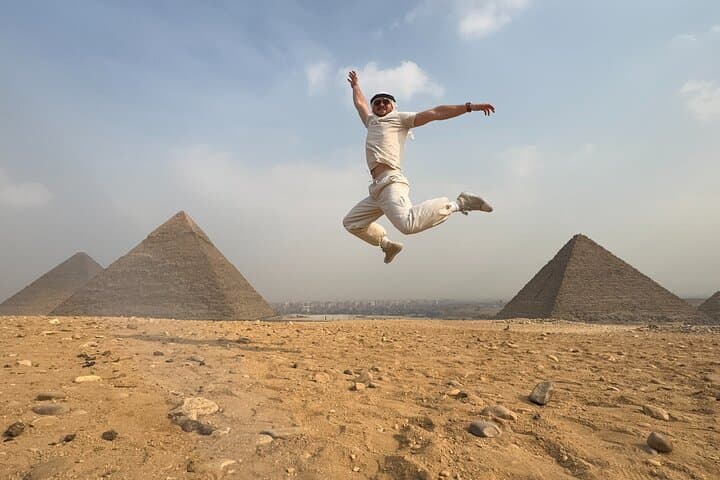
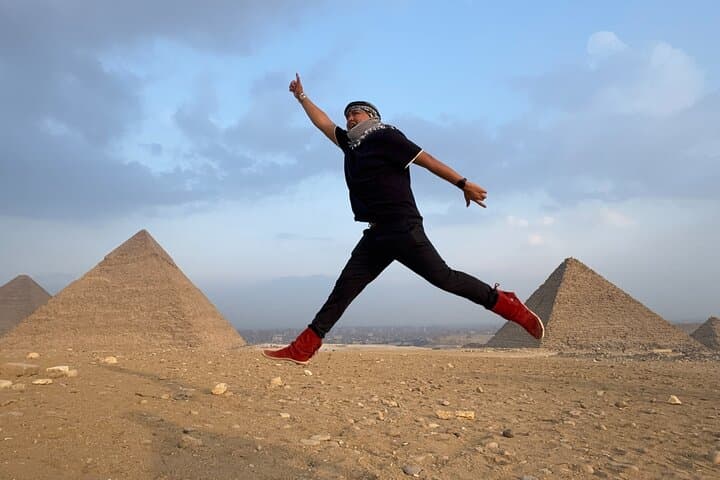
The morning light arrives flat and golden across the Giza Plateau, dust lifting in slow ribbons as the pyramids cast long, confident shadows. You step from an air-conditioned vehicle onto wind-scoured limestone; the Great Pyramid looms, geometric and immense, and a line of camels waits like patient silhouettes against the desert horizon.
Verified experiences and guided adventures in the surrounding area.
Operated by Travel me Egypt · Giza, Cairo Governorate
The morning light arrives flat and golden across the Giza Plateau, dust lifting in slow ribbons as the pyramids cast long, confident shadows. You step from an air-conditioned vehicle onto wind-scoured limestone; the Great Pyramid looms, geometric and immense, and a line of camels waits like patient silhouettes against the desert horizon.
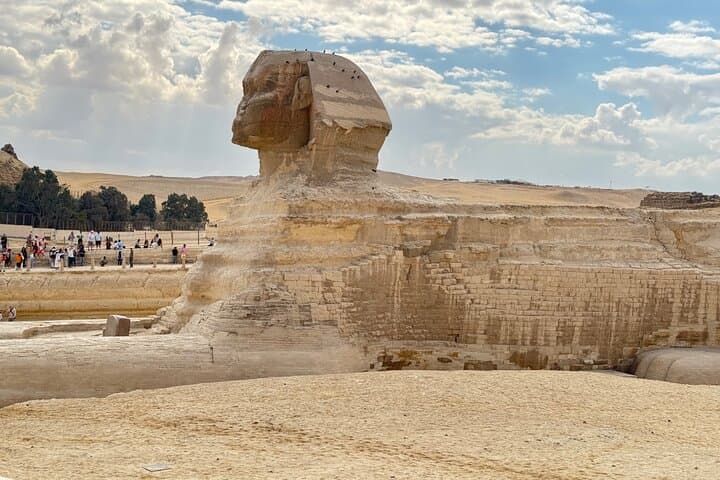
These stone giants date to around 2560 BC, when the Great Pyramid (Khufu) was erected after a 14–20 year program of monumental labor. The plateau is a geology of worked limestone benches and reclaimed quarry faces, the same bedrock that supplied blocks for the tombs and temples. Nearby, the Sphinx keeps its silent watch—an engineered guardian sculpted from the living rock and reworked through millennia.
Modern Giza is a collision of ancient craft and present-day life: vendors, camel handlers, and licensed Egyptologists translating hieroglyphs and ritual into living stories. Expect a guided circuit of the three pyramids, a close panoramic viewpoint, the Sphinx and Valley Temple, plus optional entry into a pyramid and a short camel ride near the stones. Lunch at a terrace restaurant gives a rare civilized pause with views back across the plateau.
Practical: schedule morning or late-afternoon to avoid peak heat, bring a hat, plenty of water and comfortable walking shoes for uneven, sandy surfaces. If you plan to enter a pyramid, buy the special entry ticket in advance where possible and pack light—access corridors are narrow and low. Respect signage—climbing or touching fragile masonry accelerates decay—use certified guides to ensure fast-track entry and a safe, informative experience.
easy.
5–6 hours.
Light physical fitness required—walking on uneven ground and short climbs; suitable for most travelers.
Entry inside a pyramid is optional and usually requires an additional ticket; your guide can assist with purchasing and logistics on the day.
A short camel ride is offered as an optional add-on in many VIP packages; confirm inclusion when booking to avoid surprises.
The private tour offers wheelchair-accessible transport, but access around the plateau and into some sites can be uneven—check specifics with the operator ahead of time.
Tipping is customary in Egypt; plan to tip your guide, driver, and any camel handler—small amounts are typical and appreciated.
The Great Pyramid of Khufu was completed around 2560 BC and remained the tallest man-made structure for millennia; the Sphinx likely dates to the reign of Khafre and served ritual and protective roles.
The Giza Plateau faces erosion and pollution pressures; follow marked paths, avoid touching stone, and support certified guides who work with conservation protocols.
Travel me Egypt operates guided outdoor trips and adventures with an emphasis on safety, stewardship, and memorable experiences.
The morning light arrives flat and golden across the Giza Plateau, dust lifting in slow ribbons as the pyramids cast long, confident shadows. You step from an air-conditioned vehicle onto wind-scoured limestone; the Great Pyramid looms, geometric and immense, and a line of camels waits like patient silhouettes against the desert horizon.
The morning light arrives flat and golden across the Giza Plateau, dust lifting in slow ribbons as the pyramids cast long, confident shadows. You step from an air-conditioned vehicle onto wind-scoured limestone; the Great Pyramid looms, geometric and immense, and a line of camels waits like patient silhouettes against the desert horizon.
These stone giants date to around 2560 BC, when the Great Pyramid (Khufu) was erected after a 14–20 year program of monumental labor. The plateau is a geology of worked limestone benches and reclaimed quarry faces, the same bedrock that supplied blocks for the tombs and temples. Nearby, the Sphinx keeps its silent watch—an engineered guardian sculpted from the living rock and reworked through millennia.
Modern Giza is a collision of ancient craft and present-day life: vendors, camel handlers, and licensed Egyptologists translating hieroglyphs and ritual into living stories. Expect a guided circuit of the three pyramids, a close panoramic viewpoint, the Sphinx and Valley Temple, plus optional entry into a pyramid and a short camel ride near the stones. Lunch at a terrace restaurant gives a rare civilized pause with views back across the plateau.
Practical: schedule morning or late-afternoon to avoid peak heat, bring a hat, plenty of water and comfortable walking shoes for uneven, sandy surfaces. If you plan to enter a pyramid, buy the special entry ticket in advance where possible and pack light—access corridors are narrow and low. Respect signage—climbing or touching fragile masonry accelerates decay—use certified guides to ensure fast-track entry and a safe, informative experience.