THE ADVENTURE COLLECTIVE® · Independent discovery and booking for outdoor travel

Spend five hours moving from regenerating native bush to windswept headlands and sunlit vineyards on Waiheke Island. This private walk pairs coastal panoramas with tastings at two of the island’s best wineries.
Spend five hours moving from regenerating native bush to windswept headlands and sunlit vineyards on Waiheke Island. This private walk pairs coastal panoramas with tastings at two of the island’s best wineries.
The guide waits on the ferry wharf with a small sign and a ready smile as the Hauraki Gulf slides past the ship’s rail — the start of a day that alternates between scrubby native bush, open headlands and postcard vineyard rows. On Waiheke Island, wind and sea shape the land: gulls circle, the bush smells of manuka, and the headland rewards a slow ascent with a broad sweep of islands and shipping lanes glittering like a scatter of coins.
Verified experiences and guided adventures in the surrounding area.
Operated by Terra & Tide · Oneroa, Auckland
The guide waits on the ferry wharf with a small sign and a ready smile as the Hauraki Gulf slides past the ship’s rail — the start of a day that alternates between scrubby native bush, open headlands and postcard vineyard rows. On Waiheke Island, wind and sea shape the land: gulls circle, the bush smells of manuka, and the headland rewards a slow ascent with a broad sweep of islands and shipping lanes glittering like a scatter of coins.
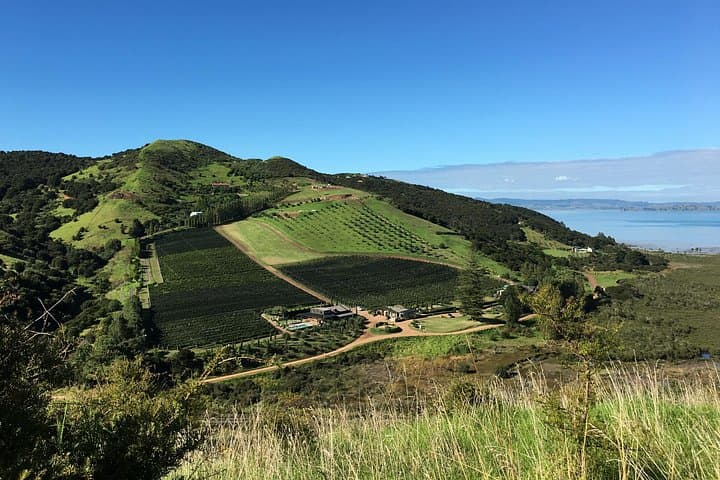
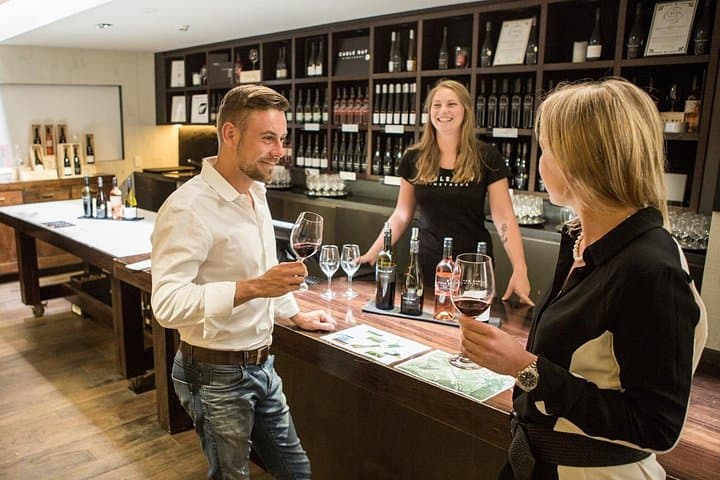
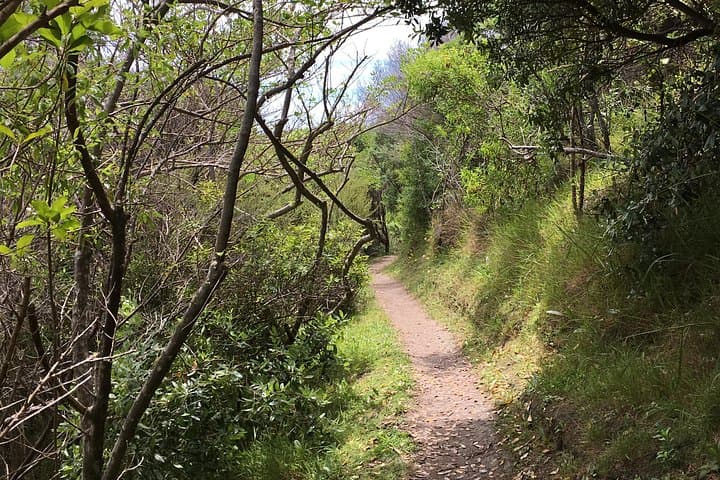
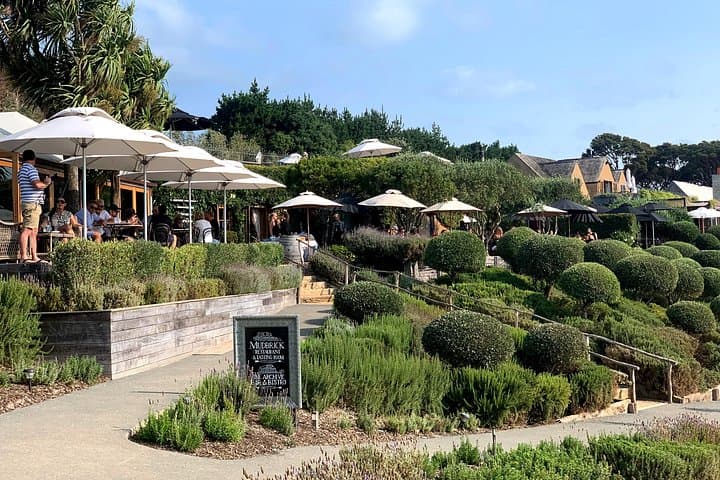
The route itself moves deliberately from restored and regenerating forest up to a grassy headland. Tracks are formed, often gravel or compact dirt; expect rolling hills rather than steep climbs. Over five hours the group covers roughly 6–8 km with about 200–300 m cumulative ascent — enough to raise the pulse but not enough to require technical gear. After the headland, the walk threads through older bush and open farmland, trading fern and kanuka for manicured vineyard terraces. The finale is a pair of winery visits — options include Mudbrick, Jurassic Ridge or Cable Bay — where tasting rooms open onto vineyard slopes and ocean views.
Waiheke’s landscape reflects recent human history: Māori have long-used the island’s sheltered bays and stone tool deposits mark earlier occupation, while European arrival brought orchards and, more recently, boutique viticulture. Geologically the island sits on folded sedimentary rock uplifted by tectonic forces; the thin, free-draining soils and maritime climate are why the island favors Syrah, Chardonnay and other warm-climate varieties.
Culturally, the island balances a small-community arts scene with tourism and sustainable farming. Many landowners participate in native-plant regeneration projects; on the walk guides point out restoration areas and native birds that are returning as canopy recovers.
Practicalities: book the 9:00 ferry from Auckland and arrive a little early — the meeting point is as you disembark. Wear sturdy walking shoes, pack a lightweight rain layer and carry at least 1–1.5 liters of water. Wine tastings are included (minimum age 18) but lunches and extra purchases are not; bring cash or card. The tracks are suitable for most fitness levels, but uneven ground and short hills mean ankle-supporting shoes are recommended. Check ferry times for your return; weather on the Gulf can shift quickly, so a windbreaker and sunscreen are equally important.
This tour is private and guided, ideal for a small group wanting a mix of nature and local flavor. Whether the goal is a gentle bush ramble, a coastal eye-opener, or relaxed vineyard time, the day is paced to show multiple faces of Waiheke without rush: sea, bush, hill and glass.
easy.
5 hours.
Suitable for most people who can walk 6–8 km over rolling terrain; short hills and uneven ground require basic stamina
The full experience is about 5 hours total and covers 6–8 km with roughly 200–300 m of cumulative ascent; it’s classified easy and suitable for most fitness levels.
Yes — two wine tastings are included; lunch and extra purchases are not covered unless specified.
No — the meeting point is at the ferry terminal on Waiheke; guides will meet groups as they disembark.
Children are welcome but wine tastings require participants to be 18+. The walk is family-friendly if younger walkers can manage the distance.
The tour operates in most weather conditions; guides recommend dressing appropriately. If the operator cancels for operational reasons, you’ll receive a refund according to their policy.
Tracks include uneven surfaces and short climbs, so it’s not ideal for guests with significant mobility restrictions; contact the operator to discuss accessibility options.
Waiheke has long-standing Māori connections and later became a site for orchards and small-scale farming; boutique viticulture expanded in the late 20th century.
Many landowners on Waiheke run native-plant regeneration projects and pest-control programs; stay on tracks to protect recovering understorey and nesting birds.
Terra & Tide operates guided outdoor trips and adventures with an emphasis on safety, stewardship, and memorable experiences.
The guide waits on the ferry wharf with a small sign and a ready smile as the Hauraki Gulf slides past the ship’s rail — the start of a day that alternates between scrubby native bush, open headlands and postcard vineyard rows. On Waiheke Island, wind and sea shape the land: gulls circle, the bush smells of manuka, and the headland rewards a slow ascent with a broad sweep of islands and shipping lanes glittering like a scatter of coins.
The guide waits on the ferry wharf with a small sign and a ready smile as the Hauraki Gulf slides past the ship’s rail — the start of a day that alternates between scrubby native bush, open headlands and postcard vineyard rows. On Waiheke Island, wind and sea shape the land: gulls circle, the bush smells of manuka, and the headland rewards a slow ascent with a broad sweep of islands and shipping lanes glittering like a scatter of coins.
The route itself moves deliberately from restored and regenerating forest up to a grassy headland. Tracks are formed, often gravel or compact dirt; expect rolling hills rather than steep climbs. Over five hours the group covers roughly 6–8 km with about 200–300 m cumulative ascent — enough to raise the pulse but not enough to require technical gear. After the headland, the walk threads through older bush and open farmland, trading fern and kanuka for manicured vineyard terraces. The finale is a pair of winery visits — options include Mudbrick, Jurassic Ridge or Cable Bay — where tasting rooms open onto vineyard slopes and ocean views.
Waiheke’s landscape reflects recent human history: Māori have long-used the island’s sheltered bays and stone tool deposits mark earlier occupation, while European arrival brought orchards and, more recently, boutique viticulture. Geologically the island sits on folded sedimentary rock uplifted by tectonic forces; the thin, free-draining soils and maritime climate are why the island favors Syrah, Chardonnay and other warm-climate varieties.
Culturally, the island balances a small-community arts scene with tourism and sustainable farming. Many landowners participate in native-plant regeneration projects; on the walk guides point out restoration areas and native birds that are returning as canopy recovers.
Practicalities: book the 9:00 ferry from Auckland and arrive a little early — the meeting point is as you disembark. Wear sturdy walking shoes, pack a lightweight rain layer and carry at least 1–1.5 liters of water. Wine tastings are included (minimum age 18) but lunches and extra purchases are not; bring cash or card. The tracks are suitable for most fitness levels, but uneven ground and short hills mean ankle-supporting shoes are recommended. Check ferry times for your return; weather on the Gulf can shift quickly, so a windbreaker and sunscreen are equally important.
This tour is private and guided, ideal for a small group wanting a mix of nature and local flavor. Whether the goal is a gentle bush ramble, a coastal eye-opener, or relaxed vineyard time, the day is paced to show multiple faces of Waiheke without rush: sea, bush, hill and glass.