THE ADVENTURE COLLECTIVE® · Independent discovery and booking for outdoor travel

Trace the decisive lines of the Battle of Verdun on a private day trip from Reims. Visit the Douaumont Ossuary, Fort Douaumont and an augmented-reality Citadelle, with steady transport and time to reflect by the Meuse.
Trace the decisive lines of the Battle of Verdun on a private day trip from Reims. Visit the Douaumont Ossuary, Fort Douaumont and an augmented-reality Citadelle, with steady transport and time to reflect by the Meuse.
You arrive before the town wakes: mist hangs low over the Meuse and the road into Verdun tightens around low limestone hills scarred by trenches. The guide pulls up near the Verdun Memorial and the first hush of the day is the right kind—measured, attentive. Here the landscape still speaks in lines and scars that mark a battle fought at scale.
Verified experiences and guided adventures in the surrounding area.
Operated by Uncork Champagne Tours · Verdun, Grand Est
You arrive before the town wakes: mist hangs low over the Meuse and the road into Verdun tightens around low limestone hills scarred by trenches. The guide pulls up near the Verdun Memorial and the first hush of the day is the right kind—measured, attentive. Here the landscape still speaks in lines and scars that mark a battle fought at scale.
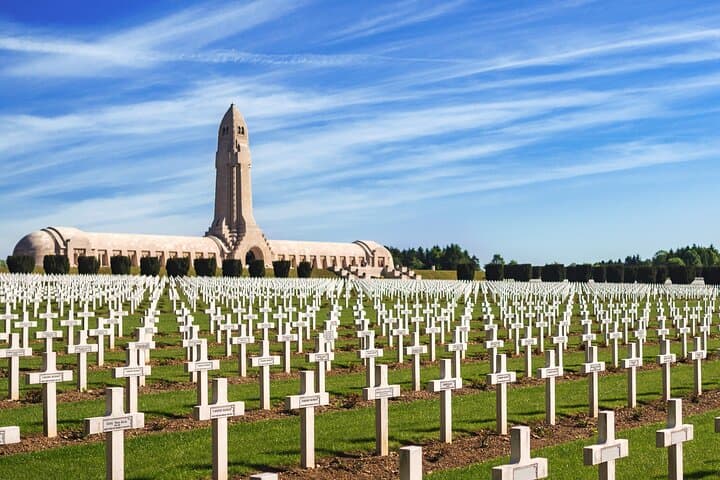
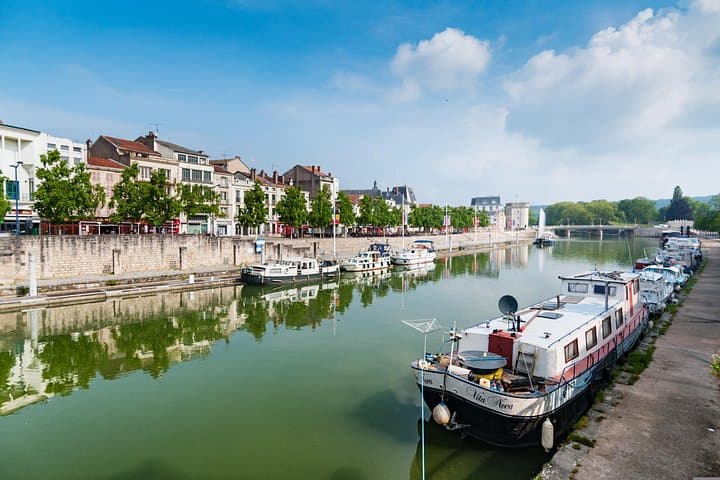
The tour threads history into place—art déco stone of the Douaumont Ossuary, concrete ribs of Fort Douaumont, and the narrow alleys of a city that learned to live with loss. Geologically the area sits on chalk and marl; those soft soils shaped how trenches were dug and how water pooled in shell craters. Culturally Verdun is both a site of pilgrimage and of everyday French life: the Quai de Londres offers a calm riverside lunch that deliberately shifts mood from memorial to human scale.
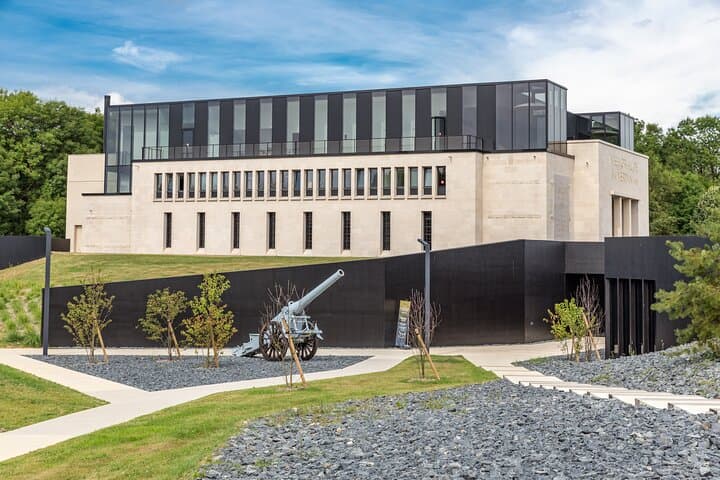
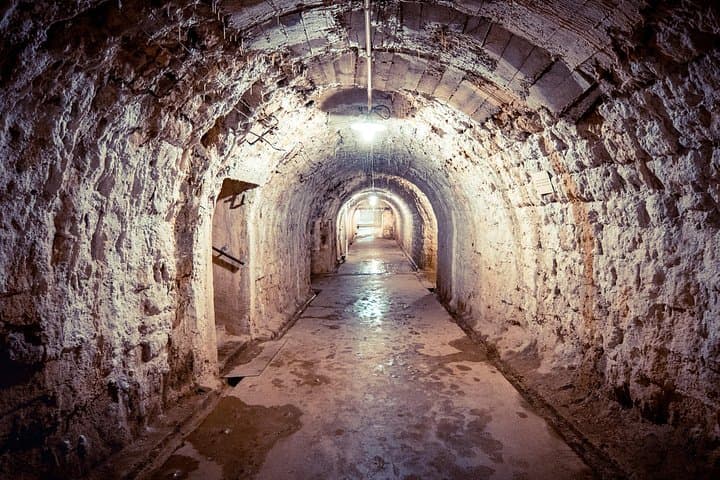
Expect immersive stops: a museum with original artifacts and films, a 130,000–person ossuary that catalogs the anonymous dead, the battered corridors of the fort, and an AR-enhanced Citadelle that reconstructs soldier life in tunnels. Walking is moderate—mostly confined to paths, stairs and museum floors—so wear sensible shoes and allow time for reflection.
Practical notes: the tour is private, departs Reims early, and returns the same day; bring identification for some memorial access, respect photography rules inside sacred spaces, and plan a quiet lunch along the Meuse to finish the day.
easy.
10 hours.
Suitable for most fitness levels; participants should be able to walk short distances and manage stairs and uneven historic surfaces.
The coach transfer is about 1.5 hours each way, making the full experience roughly a 10‑hour round trip from Reims.
This tour includes guided visits and admissions noted by the operator; confirm specifics at booking as some sites list admission as included while others may vary.
Children under 8 are not permitted inside certain memorials and ossuaries; check with the operator about age restrictions and alternative arrangements.
The fort involves stairs, narrow passages and uneven surfaces—it's not highly strenuous but requires mobility and caution.
Verdun was the focal point of a 1916 battle that became shorthand for attrition and national endurance; the Douaumont Ossuary shelters over 130,000 unidentified French and German soldiers.
Sites are managed to preserve fragile structures and human remains—stay on paths, avoid taking artifacts, and support museums that fund conservation and educational programs.
Uncork Champagne Tours operates guided outdoor trips and adventures with an emphasis on safety, stewardship, and memorable experiences.
You arrive before the town wakes: mist hangs low over the Meuse and the road into Verdun tightens around low limestone hills scarred by trenches. The guide pulls up near the Verdun Memorial and the first hush of the day is the right kind—measured, attentive. Here the landscape still speaks in lines and scars that mark a battle fought at scale.
You arrive before the town wakes: mist hangs low over the Meuse and the road into Verdun tightens around low limestone hills scarred by trenches. The guide pulls up near the Verdun Memorial and the first hush of the day is the right kind—measured, attentive. Here the landscape still speaks in lines and scars that mark a battle fought at scale.
The tour threads history into place—art déco stone of the Douaumont Ossuary, concrete ribs of Fort Douaumont, and the narrow alleys of a city that learned to live with loss. Geologically the area sits on chalk and marl; those soft soils shaped how trenches were dug and how water pooled in shell craters. Culturally Verdun is both a site of pilgrimage and of everyday French life: the Quai de Londres offers a calm riverside lunch that deliberately shifts mood from memorial to human scale.
Expect immersive stops: a museum with original artifacts and films, a 130,000–person ossuary that catalogs the anonymous dead, the battered corridors of the fort, and an AR-enhanced Citadelle that reconstructs soldier life in tunnels. Walking is moderate—mostly confined to paths, stairs and museum floors—so wear sensible shoes and allow time for reflection.
Practical notes: the tour is private, departs Reims early, and returns the same day; bring identification for some memorial access, respect photography rules inside sacred spaces, and plan a quiet lunch along the Meuse to finish the day.