THE ADVENTURE COLLECTIVE® · Independent discovery and booking for outdoor travel

Explore Serra da Estrela’s high granite shoulders on a private van tour that hits Torre, Poço do Inferno and glacial coves in one day. Expect short walks, dramatic viewpoints and local cultural stops — bring layers and plan for a village lunch.
Explore Serra da Estrela’s high granite shoulders on a private van tour that hits Torre, Poço do Inferno and glacial coves in one day. Expect short walks, dramatic viewpoints and local cultural stops — bring layers and plan for a village lunch.
You step into a compact van as morning light slips across granite ridges and the driver eases up the mountain road. The van threads hairpin turns while the Mondego River, born higher on this massif, dares you to follow its course through cleft valleys. By midmorning the engine quiets and the largest waterfall here, Poço do Inferno, thunders nearby — spray catching on cold air.
Verified experiences and guided adventures in the surrounding area.
You step into a compact van as morning light slips across granite ridges and the driver eases up the mountain road. The van threads hairpin turns while the Mondego River, born higher on this massif, dares you to follow its course through cleft valleys. By midmorning the engine quiets and the largest waterfall here, Poço do Inferno, thunders nearby — spray catching on cold air.
Serra da Estrela is Portugal’s highest range; its spine is hard granite carved by Pleistocene glaciers into bowl-shaped coves and flat high plateaus. Human history has long adapted to this geology: transhumant shepherding, stone hamlets, and the regional burel wool craft that still makes heavy cloaks and rugs. The Torre summit reaches roughly 2,000 m — a thin-air landmark that rewards clear days with sweeping views of glacial valleys and the Vale do Mondego below.
The private van format packs several short walks — viewpoints, a glacial cirque at Covão d’Ametade, and village stops like Folgosinho — into a six-hour loop. Practicalities: bring layered clothing for rapid temperature shifts, sturdy shoes for uneven rock and short hill scrambles, and a refillable water bottle; lunch is not included so plan for a village meal or packed food. Roads are paved but can be narrow and winter-slick; photographers should aim for morning fog or late-afternoon light. Consider adding the traditional burel factory visit to see local craft and reduce microplastic use by favoring natural-fiber souvenirs. This route suits travelers who want maximum landscape variety with minimal hiking effort.
easy.
6 hours.
Low; participants should be comfortable with short walks (10–30 minutes) on uneven terrain and occasional steps.
No — the itinerary includes a lunch stop in Folgosinho but the meal is not included, so bring cash or a packed lunch if you prefer.
Yes — the tour reaches the Torre area at about 2,000 m with a short walk to viewpoints; accessibility depends on weather and snow in winter.
Generally yes for those able to manage short walks and vehicle transfers; discuss mobility concerns with the operator to confirm timing and stop choices.
Basic facilities are available in villages like Folgosinho and at tourist viewpoints, but they are limited in more remote coves, so plan accordingly.
The range’s granite plateau was sculpted by Pleistocene glaciers; local economy historically centered on seasonal shepherding and the production of burel wool cloth.
Much of Serra da Estrela is protected as a natural reserve; visitors are asked to stay on marked routes, avoid leaving waste, and respect grazing areas to minimize impact.
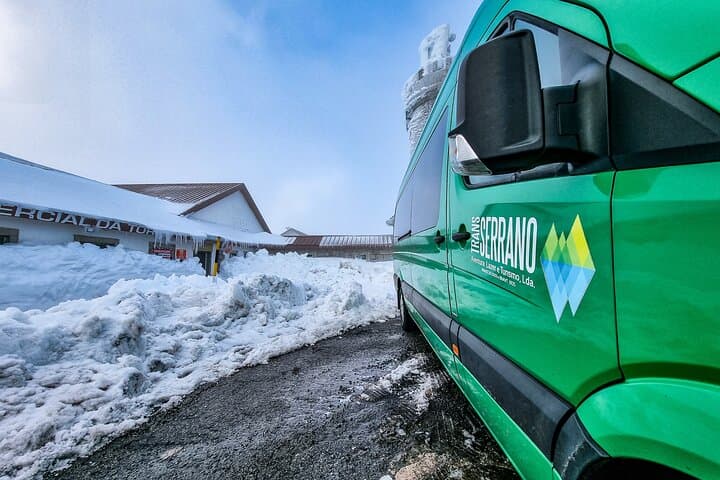
You step into a compact van as morning light slips across granite ridges and the driver eases up the mountain road. The van threads hairpin turns while the Mondego River, born higher on this massif, dares you to follow its course through cleft valleys. By midmorning the engine quiets and the largest waterfall here, Poço do Inferno, thunders nearby — spray catching on cold air.
You step into a compact van as morning light slips across granite ridges and the driver eases up the mountain road. The van threads hairpin turns while the Mondego River, born higher on this massif, dares you to follow its course through cleft valleys. By midmorning the engine quiets and the largest waterfall here, Poço do Inferno, thunders nearby — spray catching on cold air.
Serra da Estrela is Portugal’s highest range; its spine is hard granite carved by Pleistocene glaciers into bowl-shaped coves and flat high plateaus. Human history has long adapted to this geology: transhumant shepherding, stone hamlets, and the regional burel wool craft that still makes heavy cloaks and rugs. The Torre summit reaches roughly 2,000 m — a thin-air landmark that rewards clear days with sweeping views of glacial valleys and the Vale do Mondego below.
The private van format packs several short walks — viewpoints, a glacial cirque at Covão d’Ametade, and village stops like Folgosinho — into a six-hour loop. Practicalities: bring layered clothing for rapid temperature shifts, sturdy shoes for uneven rock and short hill scrambles, and a refillable water bottle; lunch is not included so plan for a village meal or packed food. Roads are paved but can be narrow and winter-slick; photographers should aim for morning fog or late-afternoon light. Consider adding the traditional burel factory visit to see local craft and reduce microplastic use by favoring natural-fiber souvenirs. This route suits travelers who want maximum landscape variety with minimal hiking effort.