THE ADVENTURE COLLECTIVE® · Independent discovery and booking for outdoor travel

Walk ancient causeways at sunrise, watch banyan roots weave through stone, then cross Tonle Sap to see floating villages at sunset. This private two‑day tour covers Angkor’s highlights with guided context and small-group flexibility.
Walk ancient causeways at sunrise, watch banyan roots weave through stone, then cross Tonle Sap to see floating villages at sunset. This private two‑day tour covers Angkor’s highlights with guided context and small-group flexibility.
Dawn breaks over a stone horizon and the first towers of Angkor Wat cut a silhouette against a pale sky. You step from the minivan into warm air that smells faintly of incense and wet earth, and the day becomes a measured rhythm of carved galleries, root-entwined façades, and slow boat crossings.
Verified experiences and guided adventures in the surrounding area.
Operated by Private Tour Guide-Cambodia · Siem Reap, Siem Reap Province
Dawn breaks over a stone horizon and the first towers of Angkor Wat cut a silhouette against a pale sky. You step from the minivan into warm air that smells faintly of incense and wet earth, and the day becomes a measured rhythm of carved galleries, root-entwined façades, and slow boat crossings.
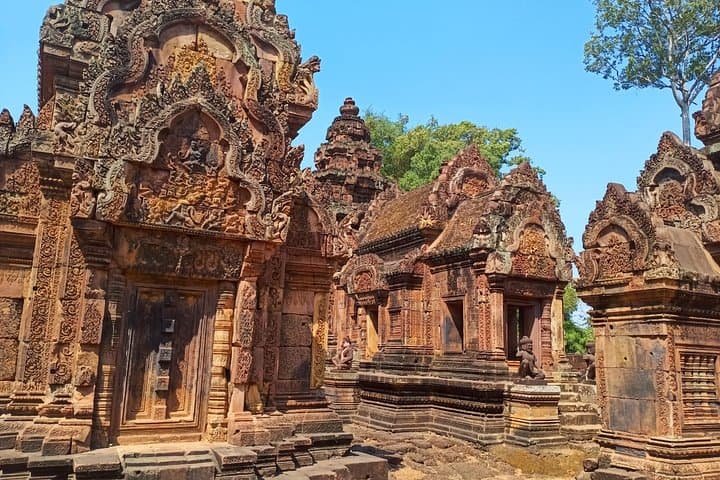
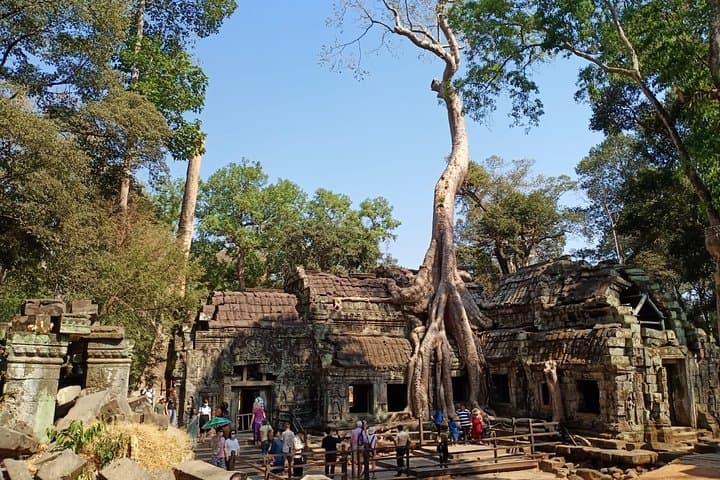
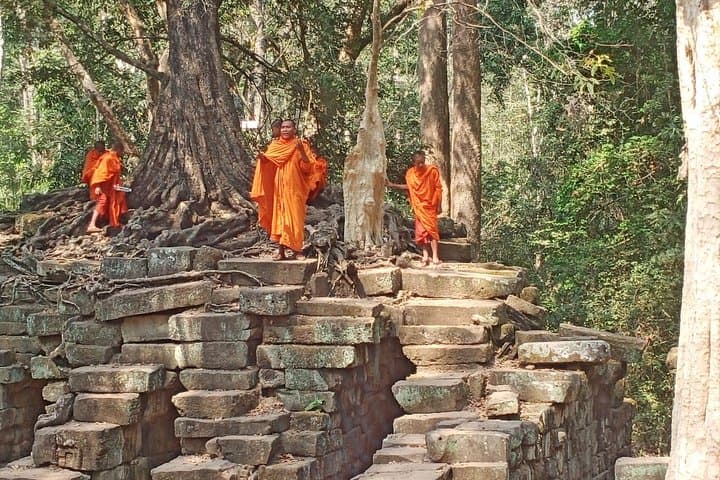
The two-day route threads classical Khmer sites—Angkor Wat, Angkor Thom and Bayon, Ta Prohm, Banteay Srei—before turning to the living landscape of Tonle Sap. Angkor Wat, begun in the early 12th century under Suryavarman II, holds both Hindu and Buddhist layers; its sandstone reliefs and axial layout reveal imperial ambition and hydraulic ingenuity. Banteay Srei’s pink sandstone preserves delicate carvings; Ta Prohm shows how banyan roots can seize and sculpt the architecture, as if the forest insists on its role.
On day two the stone faces of Bayon watch over broad terraces once used for royal processions, while Neak Pean and Preah Khan demonstrate how water and temple intent were closely linked—especially in the wet season when causeways become islands.
Practically, expect significant walking on uneven steps and heat; mornings and late afternoons are best for photography and crowds thin. Respect dress codes at religious sites: shoulders and knees covered. Hydrate frequently, carry a light rain layer in monsoon months, and bring cash for local craftsmen and floating-village boats. Guides add context to inscriptions and local life on Tonle Sap, turning each ruin into a readable chapter of Cambodia’s history rather than merely a picture spot.
moderate.
2 days (approx. 8–10 hours/day).
Able to walk several miles per day on uneven surfaces in hot, humid conditions; basic mobility required for stairs and boat boarding.
Yes; entry to the main Angkor sites requires a paid pass available for 1-, 3-, or 7-day periods—your operator can advise which pass fits the itinerary.
Some main areas have limited accessibility; large vehicles can reach viewpoints and guides can adapt the route, but many temples have steps and uneven ground.
The dry season (November to March) offers cooler mornings and less rain, while the wet season (May to October) brings lush surroundings and dramatic reflections but heavier showers.
Yes, when using licensed local boats with experienced operators; expect basic wooden boats and variable water levels depending on the season.
Angkor was the capital of the Khmer Empire between the 9th and 15th centuries; its temples reflect shifting religious practices from Hinduism to Mahayana and Theravada Buddhism.
Preservation is managed by APSARA Authority and UNESCO efforts focus on stabilizing structures and managing visitor impact; support local craftsmen and follow on-site rules to reduce wear.
Private Tour Guide-Cambodia operates guided outdoor trips and adventures with an emphasis on safety, stewardship, and memorable experiences.
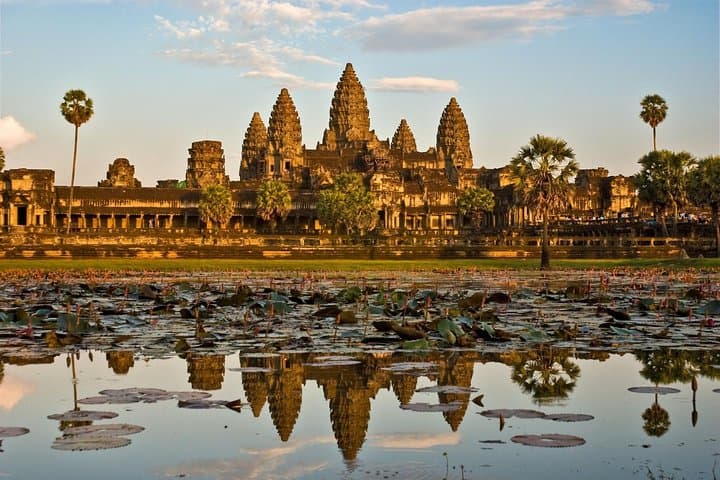
Dawn breaks over a stone horizon and the first towers of Angkor Wat cut a silhouette against a pale sky. You step from the minivan into warm air that smells faintly of incense and wet earth, and the day becomes a measured rhythm of carved galleries, root-entwined façades, and slow boat crossings.
Dawn breaks over a stone horizon and the first towers of Angkor Wat cut a silhouette against a pale sky. You step from the minivan into warm air that smells faintly of incense and wet earth, and the day becomes a measured rhythm of carved galleries, root-entwined façades, and slow boat crossings.
The two-day route threads classical Khmer sites—Angkor Wat, Angkor Thom and Bayon, Ta Prohm, Banteay Srei—before turning to the living landscape of Tonle Sap. Angkor Wat, begun in the early 12th century under Suryavarman II, holds both Hindu and Buddhist layers; its sandstone reliefs and axial layout reveal imperial ambition and hydraulic ingenuity. Banteay Srei’s pink sandstone preserves delicate carvings; Ta Prohm shows how banyan roots can seize and sculpt the architecture, as if the forest insists on its role.
On day two the stone faces of Bayon watch over broad terraces once used for royal processions, while Neak Pean and Preah Khan demonstrate how water and temple intent were closely linked—especially in the wet season when causeways become islands.
Practically, expect significant walking on uneven steps and heat; mornings and late afternoons are best for photography and crowds thin. Respect dress codes at religious sites: shoulders and knees covered. Hydrate frequently, carry a light rain layer in monsoon months, and bring cash for local craftsmen and floating-village boats. Guides add context to inscriptions and local life on Tonle Sap, turning each ruin into a readable chapter of Cambodia’s history rather than merely a picture spot.